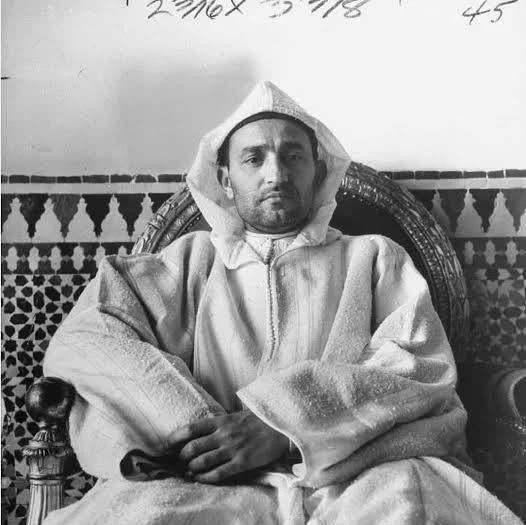
At a Glance
Fez 1909: The Sultan's Son Who Would Become the Father of the Nation
Mohammed V was born on 10 August 1909 in Fez — in the imperial palace of the Alawite dynasty that had ruled Morocco since the seventeenth century, in the city that was simultaneously Morocco's most important Islamic centre and the home of the Qarawiyyin university whose tradition of learning gave the Moroccan sultanate its specific religious legitimacy. The Alawite dynasty claimed descent from the Prophet Muhammad — a lineage that gave the Sultan's authority both its religious dimension and its specific standing in the eyes of the Moroccan people, for whom the Sultan was not merely a political ruler but the Commander of the Faithful, the religious as well as the temporal head of the Moroccan Muslim community.
This dual authority — political and religious simultaneously — was the specific quality of the Moroccan sultanate that gave Mohammed V's eventual alignment with the nationalist movement its extraordinary political power. When the Sultan of Morocco, as Commander of the Faithful, aligned himself with the Moroccan people's demand for independence, he was not simply a political figure supporting a political movement; he was the religious head of the Moroccan Muslim community expressing, through his own political choices and personal suffering, the conviction that the French protectorate was incompatible with the dignity and the sovereignty of Moroccan Islam. This combination — political nationalism and religious legitimacy — gave the Moroccan independence movement a moral authority and a popular resonance that purely political nationalism could not have generated on its own.
The Education of a Sultan: From Compliance to Nationalism
Mohammed V's political formation was gradual and not always linear — the development of a political consciousness that moved from the cautious accommodation of the early sultanate years toward the increasingly explicit nationalist alignment of the 1940s through the specific combination of observation, relationship, and the accumulation of experience that political education under conditions of colonial pressure produces. He observed the Moroccan nationalist movement's development with sympathy that grew over time into open alignment; he received the Istiqlal's leaders, learned from Allal al-Fassi's Islamic nationalist thought and from Ahmed Balafrej's diplomatic analysis; and he gradually developed the conviction that the protectorate framework was incompatible with the dignity of the Moroccan sultanate and the sovereignty of the Moroccan people.
The 1930 Berber Dahir was a formative political moment — not because he resisted it effectively (he did not) but because the popular reaction to it demonstrated the depth of Moroccan nationalist feeling and the specific ways in which the French administration's policies were generating the resistance that would eventually make the protectorate untenable. The dahir's attempt to separate Berber and Arab Morocco provoked precisely the cross-ethnic, cross-linguistic national solidarity that French policy was attempting to prevent, and the protest movement it generated was the first indication of the mass political consciousness that the independence movement would eventually mobilise. Mohammed V observed this and drew conclusions that the protectorate administration was not drawing.
The Tangier Moment: Choosing His People
The April 1947 speech in Tangier was the decisive public moment — the moment when Mohammed V stopped hedging and chose his people over the French with sufficient clarity that the subsequent deterioration of his relationship with the protectorate administration became irreversible. The speech's specific political content — the references to the Arab League, the framing of Moroccan aspirations in terms incompatible with continued protectorate governance — was carefully calibrated: explicit enough to be understood by the Moroccan nationalists as the alignment they had been hoping for, ambiguous enough to give the French administration some room to pretend that it had not heard what it had clearly heard.
The French administration was not deceived, and its subsequent pressure on Mohammed V to distance himself from the Istiqlal and from the nationalist cause was the pressure that the years between 1947 and 1953 were defined by. He resisted the pressure — refusing to sign the dahirs demanding denunciation of the Istiqlal, maintaining his connections to the nationalist leadership, and using the limited political space available to him to support the independence cause without crossing the specific lines that would have given the administration the immediate pretext for more drastic action. The administration's decision to cross those lines itself — to depose and exile him regardless of whether he had provided the pretext — was the act that ended the ambiguity and made the specific political choice concrete.
20 August 1953: The Exile That Backfired
The French decision to exile Mohammed V was made by Resident-General Guillaume, supported by the French government, and implemented with the specific brutality of a colonial administration that had run out of political options and was reaching for the military solution. Guillaume mobilised the Glaoui — the powerful pasha of Marrakech, Thami el-Glaoui, who had been a French collaborator and who detested Mohammed V's nationalist alignment — to provide the Moroccan cover for the deposition: a gathering of Moroccan tribal leaders and religious figures who declared their opposition to Mohammed V and their support for his replacement by Moulay Arafa.
The Glaoui's mobilisation and the subsequent installation of Moulay Arafa were presented by France as a Moroccan political development rather than a French colonial act; the Moroccan people were not deceived. The exile of Mohammed V — who was sent first to Corsica and then, when Corsica proved insufficiently remote, to Madagascar — was understood across Morocco as what it was: the French administration removing the Sultan because he had chosen his people over the protectorate, and replacing him with a puppet who would not make the same choice. The popular response was the most intense and the most sustained that the protectorate had yet encountered, and it did not diminish but grew through the two years of the exile.
Madagascar: The Exile's Dignity and Its Power
Mohammed V's conduct during the exile — his refusal to abdicate, his refusal to make the political statements that France hoped exile would pressure him into making, his maintenance of his dignity and his connection to the Moroccan nationalist cause through the limited channels available to him — was itself a political act of the first importance. The exile was designed to break or to marginalise him; it achieved neither. His continued presence in the imagination of the Moroccan people as the exiled Sultan who had chosen his people over his throne gave the nationalist resistance a symbolic centre that no amount of repression could remove, because the symbol was a man whose very absence made him more rather than less powerful as an object of popular identification and popular loyalty.
The specific character of this symbolic power — rooted in the Alawite dynasty's religious legitimacy as well as in Mohammed V's personal political choices — was the quality that distinguished the Moroccan independence movement from independence movements whose symbolic resources were purely political. When Moroccans prayed for the exiled Sultan's return, they were not only expressing political solidarity with an independence movement; they were expressing a religious commitment to the restoration of the Commander of the Faithful to his rightful place at the head of the Moroccan Muslim community. The fusion of political nationalism and religious loyalty in the figure of the exiled Sultan was the specific alchemy that made the Moroccan independence movement in 1953–55 irresistible.
The Return: November 1955
Mohammed V returned to Morocco on 16 November 1955 — to the largest and most emotionally overwhelming popular welcome in Moroccan history, as millions of Moroccans who had prayed for his return for two years and who had sustained the resistance through the specific personal sacrifice of boycotts and protests and armed resistance expressed the full depth of their connection to the man who had chosen to suffer with them rather than to collaborate against them. The scenes at Rabat airport, the procession through the streets, the spontaneous demonstrations of love and relief and triumph across Morocco — these were not organised political performances but genuine expressions of a mass popular feeling that had been building through two years of exile and resistance.
The return was not the completion of the independence process but its decisive turning point. The negotiations between the Moroccan nationalist leadership, the palace, and the French government that followed the return produced the formal independence declaration of 2 March 1956 — the document that ended the protectorate and restored Moroccan sovereignty. The speed with which this happened — three and a half months from the return to formal independence — reflected the degree to which the exile and the resistance had made the protectorate's continuation politically impossible: France was negotiating not from a position of colonial strength but from a position of colonial failure, acknowledging in the terms of the independence settlement that the protectorate framework had been defeated by the combination of popular resistance and its own political miscalculations.
King Mohammed V: The Brief Reign of the Father of the Nation
Mohammed V became King — rather than Sultan — in 1957, as part of the post-independence transformation of the Moroccan state's institutional identity. His reign as king lasted less than four years: he died on 26 February 1961, at fifty-one years old, of complications from a routine medical procedure — a death as abrupt and as prematurely final as Mustafa Kamil's in Egypt or Sylvanus Olympio's in Togo, removing from the scene a leader whose specific qualities his successor could not replicate and whose absence shaped the political development of the subsequent decades as much as his presence had shaped the independence period.
The five years of his post-independence reign were years of institution-building in conditions that were simultaneously promising and precarious: the construction of a Moroccan state apparatus from the foundations of the protectorate, the negotiation of the specific terms of the relationship between the monarchy and the political parties, the management of the internal tensions within the independence coalition that independence had liberated from the common purpose that French colonial rule had provided. He managed these tensions with the combination of religious authority and personal prestige that the exile had enhanced, but the specific political arrangements he was working toward — the constitutional monarchy that the Istiqlal and the UNFP both hoped to participate in as genuine parliamentary actors — were left incomplete by his death and were subsequently managed very differently by Hassan II.
Legacy: The Symbol and the Man
Mohammed V's legacy is inseparable from the specific fusion of person and symbol that his exile created. He was simultaneously a real historical figure — a man with specific political choices, specific relationships, specific limitations, and specific achievements — and the crystallising symbol around which the entire Moroccan independence movement organised its most powerful emotional expression. The reality and the symbol were not identical, and the historical assessment of Mohammed V requires holding both simultaneously without allowing the power of the symbol to obscure the complexity of the man or the limitations of the political arrangements he left behind.
The symbol's power was real: the exile did produce the mass resistance that made independence possible; his return did represent the triumph of the Moroccan people's sustained commitment to their own sovereignty; and his personal dignity during exile and his genuine alignment with the independence cause rather than with French colonial convenience were the qualities that gave the symbol its moral foundation. He did, genuinely, choose his people over the easier path of continued collaboration with the power that had installed him — and in making that choice, and in accepting its consequences, he became what the independence movement needed him to become: the father of the nation, the figure in whom the entire Moroccan people's aspiration for sovereignty was concentrated and from whom it drew its most powerful expression.