At a Glance
The Rif: A Mountain World Apart
The Rif mountains of northern Morocco — the chain of steep, heavily forested peaks that run parallel to the Mediterranean coast from Tetouan in the west to the Moulouya River in the east — were, in the early twentieth century, one of the most effectively autonomous territories in North Africa. The Berber tribes of the Rif had maintained their independence from both the Moroccan sultanate and successive external powers through the simple virtue of terrain: the mountains were too steep, too forested, and too thinly populated by too determined a people to be worth the cost of subjugation. The tribal social structure — the loosely federated communities of the Beni Uriaghel, the Temsamane, the Beni Tuzin, and dozens of other tribes — had no single political authority that could surrender on behalf of all, and the dispersed character of tribal society made the colonial administrative techniques of indirect rule, which worked by identifying and manipulating existing hierarchies, relatively ineffective.
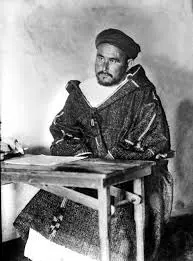
This was the world that formed Abd el-Krim — a world of fierce communal independence, of detailed knowledge of terrain, of martial tradition rooted in the specific requirements of mountain life, and of a relationship to external authority that was reflexively resistant rather than reflexively deferential. He brought to this world the additional formation of his education: the Islamic legal training that gave him religious authority within the tribal system, and the Spanish colonial education that gave him the specific knowledge of European military and political institutions that he would use against them.
The Rif War and the Military Genius of Terrain
Abd el-Krim's military achievement in the Rif War of 1921–26 was the product of a specific military intelligence that combined the traditional knowledge of the Rif's terrain with a modern understanding of the vulnerabilities of conventional European armies operating in conditions for which their training had not prepared them. He understood that the Spanish and French armies' advantages — their artillery, their superior weapons, eventually their air power — were partly neutralised in the Rif's mountain terrain, where artillery was difficult to move, aircraft struggled to identify concealed fighters, and large-scale troop movements were channelled through the specific valleys and passes that his forces could observe and defend.
He also understood — and this was the specific intellectual contribution that later theorists of guerrilla warfare would study — that the objective of the guerrilla was not to defeat the enemy army in open battle but to make the cost of continued occupation exceed its benefits: to kill enough soldiers, destroy enough equipment, deny enough territory, and create enough political embarrassment at home that the occupying power eventually concluded that the campaign was not worth its price. The Annual disaster was the most dramatic single expression of this principle — twelve thousand Spanish soldiers killed in two days, the commanding general dead, the entire Spanish position in the eastern Rif collapsed — but it was the five years of sustained attrition that followed that demonstrated the principle most fully.
The specific tactics Abd el-Krim developed — the use of concealed positions in the mountain scrub, the concentration of fire at the moment of maximum vulnerability, the rapid dispersal after each engagement that denied the enemy a target to counterattack, the maintenance of supply lines through the tribal networks — were innovations in the specific context of early twentieth-century colonial warfare that would be systematised and theorised by the military analysts and revolutionary strategists of the following decades. Mao Zedong's acknowledgement of Abd el-Krim's influence, Ho Chi Minh's study of the Rif War tactics, and the broader incorporation of Abd el-Krim's methods into the theory and practice of anti-colonial guerrilla warfare across Asia and Africa represent one of the most remarkable instances of intellectual cross-pollination in twentieth-century military history.
The Republic: Building a State While Fighting a War
The Republic of the Rif that Abd el-Krim declared in 1921 was the political dimension of a military campaign — the attempt to transform the tribal resistance of the Rif into a modern political entity that could claim international recognition, negotiate on equal terms with European powers, and establish the institutional framework for a genuinely sovereign Moroccan Berber state. The republic's institutions — its constitution, its government ministries, its army, its flag, its postal service and treasury — were the expression of this political vision, and their establishment alongside and during the sustained military campaign was itself a significant political achievement.
The international recognition attempt was the most explicitly political dimension of the republic's project. Abd el-Krim sent representatives to European capitals, appealed to the League of Nations, and attempted to engage the international press in ways that would give the Rif's cause the international visibility and sympathy that might translate into diplomatic pressure on Spain. The attempt largely failed — the League was dominated by the colonial powers, the European press was generally unsympathetic, and the specific political conditions of the early 1920s were not favourable to the claims of non-European peoples against European colonial powers — but the attempt itself was significant as the first sustained effort by a Moroccan political movement to engage the international community on the specific terms of sovereignty and self-determination that the post-First World War international order had proclaimed as universal principles.
Chemical Weapons and the Price of Resistance
The use of chemical weapons by Spain against the Rif population — mustard gas dropped from aircraft on Rif villages, used systematically in the final years of the campaign — was one of the earliest and most extensive uses of chemical warfare against a civilian population in the twentieth century. The decision to use mustard gas reflected both the military desperation of a Spain that had been humiliated at Annual and the specific colonial logic that treated the lives of colonised peoples as less protected than the lives of European combatants. The Hague Conventions of 1907 had prohibited the use of certain weapons in warfare between their signatories; they had not been understood as applying to colonial warfare against non-European peoples.
The medical consequences of the chemical weapons use — the long-term health effects on Rif communities, including elevated cancer rates that epidemiological studies have documented in the regions most exposed — were among the most lasting consequences of the war for the Rif population. They were also among the least acknowledged: Spain's use of chemical weapons in Morocco was not the subject of international condemnation at the time, was not treated as a war crime, and received the kind of silence that colonial violence consistently received from the international community that was theoretically committed to the principles of humanitarian law.
Exile and the Second Life
Abd el-Krim's twenty-one years in Réunion — from his surrender in 1926 to his escape in 1947 — were years of enforced inactivity in a comfortable isolation that the French managed with the care of people who understood that his continued political activity would be more dangerous than his continued survival. Réunion removed him from Morocco, from North Africa, from the Arab world, and from any possibility of the kind of international political networking that Cairo or Tunis or Tangier would have allowed. He studied, wrote his memoirs, maintained his faith and his intellectual life, and waited.
The escape in 1947 — the stop in Port Said during the transfer to France, the decision to leave the ship and request Egyptian asylum — was one of the most politically significant individual acts of the postwar anti-colonial moment. Egypt under Farouk was not yet the revolutionary Egypt of Nasser's post-1952 government, but it was a country whose political elite included significant figures sympathetic to North African independence, and Cairo was one of the most important centres of the Arab world's political life. Abd el-Krim's arrival in Cairo established him immediately as a figure of continental significance — the man who had defeated a European colonial army, who had held off two colonial powers for five years, who had built the first modern anti-colonial republic in North Africa — and his subsequent years in Cairo gave him the platform to contribute to the independence movements that were building across North Africa.
The Global Influence: From the Rif to Indochina and Beyond
The specific military and political legacy of Abd el-Krim's Rif campaign extended far beyond Morocco and North Africa into the global history of anti-colonial warfare. The Rif War's tactics were studied systematically by the military theorists and revolutionary leaders of the following decades, and the specific innovations that Abd el-Krim had developed — the use of terrain, the dispersal-and-concentration rhythm of guerrilla engagement, the maintenance of political organisation alongside military resistance, the strategic calculation that attrition rather than pitched battle was the guerrilla's most effective method — became foundational concepts of anti-colonial military thought.
The specific acknowledgements are documented: Mao Zedong's references to Abd el-Krim in his writings on guerrilla warfare; Ho Chi Minh's study of the Rif War in the preparation of the Viet Minh's resistance to French and American power; the Algerian FLN's use of the Rif example in developing its own tactics in the 1954–62 independence war that took place partly in terrain similar to the Rif. The line of intellectual descent from Abd el-Krim's practice to the theory of people's war that shaped anti-colonial armed resistance across Asia, Africa, and Latin America in the mid-twentieth century is one of the most remarkable instances of the specific ways in which African resistance to colonialism influenced the global history of liberation movements.
Death in Cairo: The Man Who Refused to See Morocco Subject
Abd el-Krim died in Cairo on 6 February 1963, having spent the last sixteen years of his life in Egypt. Morocco had become independent in 1956 — thirty years after his surrender in the Rif — and the Moroccan government had repeatedly invited him to return to the country whose independence his resistance had helped to make imaginable. He refused, on the grounds that French and Spanish troops remained on Moroccan soil and that the specific terms of independence had not been completed to his satisfaction. The refusal was principled: he had spent his entire career insisting that complete independence rather than managed dependence was the only acceptable outcome, and he maintained that insistence to the end.
He died in Cairo, in voluntary exile from the independent Morocco he had done so much to make possible, and was buried in Egypt. His body was not repatriated to Morocco until 1999 — thirty-six years after his death — when his remains were returned to Morocco in a ceremony that acknowledged, belatedly, what the independent Moroccan state had not always been willing to acknowledge during his lifetime: that the man who had fought Spain and France to a standstill in the Rif mountains, who had built the first modern North African republic, and who had inspired anti-colonial fighters across the world was a founding figure of Moroccan independence whose legacy the state had an obligation to honour.