At a Glance
Rabat and the Exceptional Student
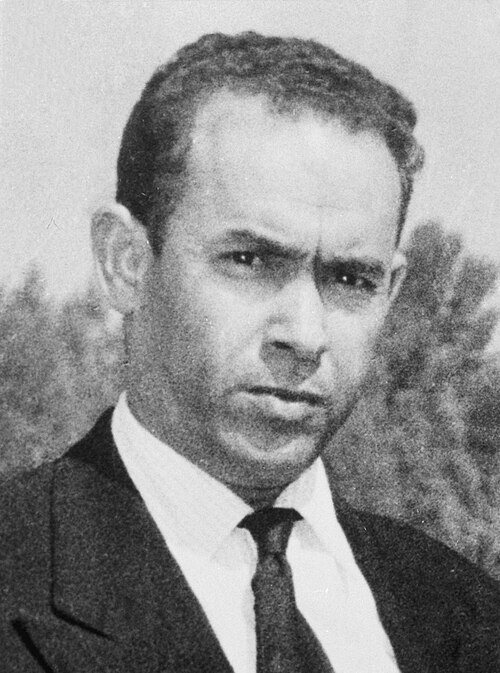
Mehdi Ben Barka was born in 1920 in Rabat — the administrative capital of the French protectorate, the city where the French Resident-General governed and where the Moroccan Makhzen administration maintained a nominal continuity with the pre-colonial state. His family was of modest means — his father was a small official — without the commercial wealth of the Fez notable families or the landed resources of the rural elite. What the family had, and what proved to be more consequential than any material inheritance, was a son of exceptional intellectual ability who demonstrated his gifts early enough to be channelled through the educational system at its highest levels.
Ben Barka's mathematical talent was recognised and developed through the French educational system in Morocco and then in Paris — where he studied at a level of mathematical sophistication that very few Moroccans of his generation had been able to reach. The specific character of mathematical training — its insistence on precision, its development of the capacity to distinguish between what follows rigorously from given premises and what is merely asserted, its training of the mind to identify the structural conditions that determine specific outcomes — gave Ben Barka's subsequent political thinking a quality that set it apart from most of his contemporaries. He was not a politician who worked primarily through emotion or through personal charisma, though he had both; he was a politician who worked primarily through analysis, and whose analysis was distinguished by the specific rigour of a mind trained in the most precise of the sciences.
From Independence Activist to Democratic Socialist
Ben Barka's early political career followed the path of the Moroccan independence generation: involvement in nationalist activity through the Istiqlal, participation in the organisation of the independence movement's political structures, and an expanding network of connections to the Arab world and the international anti-colonial left that his Paris years had given him access to. He returned to Morocco to teach mathematics and to organise, and his combination of intellectual prestige, political connections, and genuine popular following made him one of the most significant figures in the independence movement's younger generation.
His appointment as president of Morocco's first National Consultative Assembly after independence gave him the formal political position from which his increasingly sharp critique of the post-independence political direction was most visible. He used the assembly platform to press for the genuine constitutional democracy that the independence movement had promised — for a government accountable to an elected parliament rather than to royal prerogative, for economic policies that served the majority of Moroccans rather than the interests of the palace's allies and the international capital whose relationship with the monarchy was being carefully managed. The specific political positions he took from the assembly platform were positions that the palace found threatening precisely because they were not the positions of an isolated radical but of a figure with genuine mass political credibility.
The UNFP and the Programme of Genuine Independence
The Union Nationale des Forces Populaires that Ben Barka helped to found in 1959 was the institutional expression of his analysis that the Istiqlal had failed the independence movement's social and democratic promises — that the party's accommodation with the palace and its acceptance of the specific terms of the post-independence political settlement had converted it from the vehicle of a genuine popular liberation into an instrument of a managed post-colonial order that served the interests of the Moroccan elite and their international partners rather than the majority of the Moroccan people. The UNFP's programme — democratic socialism, genuine constitutional government, economic development oriented toward the majority — was the alternative to that managed order, and Ben Barka was its most articulate advocate.
The specific quality of his advocacy was its combination of theoretical sophistication and popular accessibility — his ability to translate the analytical framework of democratic socialist theory into the specific political language of Moroccan conditions, connecting the abstract claims of the programme to the concrete experiences of Moroccan workers, peasants, and educated youth who were discovering that formal independence had not transformed their material conditions in the ways the independence movement's promises had suggested it should. His speeches and writings in this period — circulated through the UNFP's publications and through the clandestine networks of the Moroccan left — combined the rigour of political analysis with the emotional force of genuine conviction in ways that made him the most compelling political voice in Morocco's emerging democratic left.
The Third World Vision: Beyond Moroccan Borders
Ben Barka's political vision was not confined to Morocco. From early in his political career he understood the independence of specific African and Asian countries as dimensions of a single global process — the dismantling of the imperial system that had organised the world for European benefit since the fifteenth century — and he dedicated increasing energy to the analysis and the organisation of the international dimensions of that process. His connections to the Algerian FLN, to African liberation movements south of the Sahara, to the Cuban revolution and the Latin American left, and to the anti-imperial movements of Asia gave his political work a continental and global range that very few figures of his generation matched.
The theoretical framework he developed for this global analysis — the argument that the liberation struggles of Africa, Asia, and Latin America were aspects of a single anti-imperial process that required international solidarity and coordination rather than isolated national campaigns — was one of the most significant contributions to the political theory of decolonisation made by any figure of his generation. His analysis of the specific mechanisms through which neo-colonialism reproduced imperial economic relationships after formal political independence, his assessment of the conditions under which genuine rather than nominal independence was achievable, and his prescription for the international solidarity structures that the anti-imperial movement required were the intellectual foundations of the Tricontinental project.
The Tricontinental: Building the Global Anti-Imperial Front
The Tricontinental Conference that Ben Barka was organising when he was killed — the gathering in Havana in January 1966 that brought together liberation movements and revolutionary parties from sixty-two countries in Africa, Asia, and Latin America — was the most ambitious attempt in the postcolonial era to build a genuinely global institutional framework for anti-imperial solidarity. The conference was conceived as the response to the specific problem that Ben Barka's analysis had identified: that individual liberation struggles were vulnerable to the imperial powers' capacity to isolate and defeat them one by one, and that only the collective strength of a global anti-imperial movement could provide the solidarity and the mutual support that would make liberation irreversible rather than merely temporary.
The conference's guest list — Che Guevara, representatives of the Vietnamese NLF, the ANC, FRELIMO, the PAIGC, the PLO, the FLN, and dozens of other liberation movements — reflected the extraordinary reach of Ben Barka's personal connections and his organisational achievement. He had spent years building the relationships and the institutional framework that the conference required, and the conference's proceedings — which were shaped significantly by the intellectual programme he had developed even though he was not present to lead them — reflected the specific vision of global anti-imperial solidarity that had been his most ambitious political project.
29 October 1965: The Boulevard Saint-Germain
The abduction of Mehdi Ben Barka outside the Brasserie Lipp on the Boulevard Saint-Germain in Paris on 29 October 1965 was one of the most consequential political crimes of the twentieth century — consequential not only for what it did to Ben Barka personally but for what it demonstrated about the specific mechanisms through which the imperial system and its local allies eliminated the figures who threatened them most seriously.
The operation's broad outlines have been documented across decades of French and Moroccan judicial investigation and journalistic inquiry. Ben Barka was lured to the meeting by Georges Figon, an informer connected to French intelligence, who had been approached by a French film producer ostensibly interested in making a documentary about decolonisation for which Ben Barka's participation was sought. At the Brasserie Lipp, he was seized by men who included French secret service officers and Moroccan SDECE agents. He was taken to a villa in Fontenay-le-Vicomte. From that point, what happened to him — whether he was tortured, when he died, and what was done with his body — has never been established with legal certainty. His body has never been found. No one has been convicted of his murder.
The political responsibility for the operation — the chain of decision-making that led from whoever ordered it to the men who carried it out — has been the subject of sustained controversy. The Moroccan government under Hassan II was clearly involved at the operational level; the question of the French government's direct authorisation or knowledge, as opposed to the involvement of specific French intelligence officers acting with or without ministerial knowledge, has never been definitively resolved. The broader context — the American CIA's awareness of and possible role in the operation, the specific political interests of the various parties who had reason to want Ben Barka removed from the political landscape — adds layers of complexity to a crime whose basic facts are clear but whose full truth remains officially unestablished.
The Absence and Its Political Effects
Ben Barka's disappearance created an absence in Moroccan and global anti-imperial politics that was felt immediately and that has been felt ever since. The Tricontinental Conference proceeded without him — his name was invoked repeatedly, and his intellectual framework shaped the conference's proceedings — but the specific combination of analytical rigor, organisational capacity, and political credibility that he had brought to the project of global anti-imperial solidarity was not replaced. The Moroccan left lost its most intellectually formidable figure at precisely the moment when the Years of Lead were beginning and when the capacity for principled opposition was most urgently required.
The specific political message that the disappearance sent — to Ben Barka's colleagues in the Moroccan left, to the liberation movements whose connections to him had been one of the most important dimensions of their international solidarity, and to anyone considering a political career of the kind he had pursued — was the message that all political murders send: that this kind of politics, this degree of commitment and this level of threat to established power, could be ended by violence without accountability. Whether that message achieved its intended deterrent effect is a question that the subsequent history of the Moroccan left — its continued existence, its continued advocacy, the continued efforts of Abderrahim Bouabid and others who survived him — answers partly in the negative.
Legacy: The Revolutionary Who Was Not Allowed to Complete His Work
Mehdi Ben Barka's legacy is among the most vivid in the history of African anti-colonial politics — partly because of the genuine brilliance of his political thought and the genuine scale of his organisational achievement, and partly because his violent disappearance at forty-five years old, in the middle of his most ambitious project, gives his life the specific quality of an interrupted masterpiece: the sense of what might have been, the knowledge that the work was cut short before it was complete.
The intellectual legacy is real. His analysis of neo-colonialism — the mechanisms through which formal political independence was converted back into economic and political dependency through the specific institutional arrangements of the post-colonial order — anticipated the academic debates about neo-colonialism that would occupy African and Third World political thought for decades. His framework for Third World solidarity — the argument that the liberation struggles of Africa, Asia, and Latin America were aspects of a single global process requiring international coordination — was one of the most sophisticated contributions to the political theory of decolonisation produced by any figure of his generation. His specific vision of what genuine Moroccan independence required — the democratic accountability, the economic transformation, the cultural sovereignty — remains the standard against which Moroccan political life is measured by those who believe that the independence achieved in 1956 was the beginning rather than the completion of the liberation project.
His physical absence — the fact that his body has never been found, that the full truth of his murder has never been officially established, that those responsible for his death have never been held legally accountable — is itself a political fact. The Moroccan state's sustained failure to resolve the case, and the French state's sustained unwillingness to provide full disclosure of its intelligence services' involvement, are part of the story of what post-colonial power looks like when its mechanisms of control are threatened by figures who understand those mechanisms clearly enough to challenge them effectively.