At a Glance
Belle Rive and the Indo-Mauritian World
Mauritius in 1900 was a British colony built on the wreckage of two successive labour systems: the slave economy that the French had established in the eighteenth century and the British had inherited and then abolished in 1835, and the system of Indian indentured labour that replaced it and that brought several hundred thousand workers from India to the island's sugar plantations between 1835 and the early twentieth century. The result was a society of extraordinary ethnic complexity on a small island — barely 2,000 square kilometres — in the middle of the Indian Ocean: Indo-Mauritians of Hindu and Muslim background constituting the largest single community, Creoles of African and mixed descent forming the second-largest, Franco-Mauritians representing the former planter class, Sino-Mauritians maintaining a commercial presence, and the British colonial administration presiding over the whole with the administrative machinery of empire.
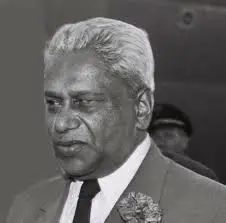
Seewoosagur Ramgoolam was born into the Indo-Mauritian community that constituted the majority but that, in 1900, was largely confined to agricultural labour and the rural economy — without the political voice, the professional representation, or the civic power that its numerical majority should have produced in any genuinely democratic system. His family's origins in the indentured labour system gave him a personal connection to the history of exploitation that the colonial order had imposed on his community, and his exceptional academic ability gave him access to the educational path — through the colonial scholarship system — that could convert individual talent into the professional and political standing that would eventually be the foundation of his independence campaign.
He trained as a doctor — a qualification that in the colonial world of the 1930s represented not only professional status but a form of authority that transcended ethnic community, that allowed a man from an indentured labourer's family to speak to and for his community from a position of established professional respectability. The doctor's role in a colonial society was simultaneously a service to the community and a statement about the community's capacity — evidence that the people the colonial system had defined as labourers could produce professionals, intellectuals, and eventually political leaders.
The Mauritius Labour Party and the Entry into Politics
The Mauritius Labour Party, co-founded by Ramgoolam and others in 1936, was the vehicle through which the Indo-Mauritian working class entered organised political life. The context was the labour unrest of the 1930s — the strikes and protests that swept through the British Caribbean and Indian Ocean colonies as the Great Depression reduced wages and worsened conditions on the sugar plantations. The labour movement that produced the MLP was responding to these immediate economic conditions, but it was also part of the broader wave of anti-colonial political organisation that was developing across the British Empire in the 1930s and 1940s.
Ramgoolam's leadership of the MLP combined the doctor's practical authority with the political skill of someone who understood both the specific conditions of Mauritius and the broader anti-colonial movement's strategic requirements. He was elected to the Legislative Council, participated in the constitutional negotiations that progressively extended the franchise, and built the MLP into the dominant political force on the island — the organisation that would eventually lead Mauritius to independence.
The challenge was not simply to build a majority — the Indo-Mauritian community's size gave the MLP a natural electoral base — but to build a political programme that could manage the island's ethnic complexity in ways that made independence viable rather than threatening. The Creole community's concerns about minority rights under Indo-Mauritian majority rule, the Franco-Mauritian planter class's concerns about property and economic dominance, and the varied interests of the island's other communities all needed to be accommodated if the independent Mauritius that Ramgoolam was working toward was to function as a democratic state rather than collapsing into communal conflict.
Building Independence Across the Ethnic Divide
The constitutional negotiations that produced Mauritian independence were among the most complex in the history of British decolonisation, precisely because of the island's ethnic composition. The 1965 constitutional conference in London — which brought together representatives of the island's various communities with the British government — had to design a political architecture that could accommodate the legitimate concerns of all communities while establishing the democratic self-governance that the majority demanded.
The Best Loser System — the constitutional provision that allocated additional parliamentary seats to ensure that no community was under-represented relative to its population — was one of the innovations that the Mauritian constitutional design produced. It was a compromise: not the pure majoritarianism that a simple first-past-the-post system would have produced, but not proportional representation either. It was a specifically Mauritian solution to a specifically Mauritian problem, designed to give the minority communities enough representation to feel secure in the independent state while preserving the democratic principle that the majority should govern.
Ramgoolam's acceptance of these constraints — his willingness to accept a constitutional architecture that limited the majoritarianism his party's electoral dominance could have imposed — was the political choice that made independence viable. It was not a choice forced on him entirely by British pressure or minority community demands; it was also a reflection of his own understanding of what kind of independent Mauritius he was trying to build. He wanted a genuinely multi-ethnic democracy, not simply a democracy in which the Indo-Mauritian majority exercised unconstrained power over the other communities. The constitution he accepted was the instrument of that vision.
The Chagos Shadow
The most enduring controversy of Ramgoolam's independence campaign is the detachment of the Chagos Archipelago from Mauritius before independence. The British government, under American pressure to establish a strategic military base in the Indian Ocean, identified Diego Garcia in the Chagos group as the ideal location. Britain's price for Mauritius's independence included the cession of the Chagos Archipelago to British administration — creating the British Indian Ocean Territory — and the displacement of the Chagossian community, which was removed from its home islands to Mauritius and the Seychelles to make way for the American military base that was subsequently constructed.
Ramgoolam has been criticised for accepting this arrangement, and the criticism is not without force. The Chagossians — a community with deep roots in the islands — were displaced from their homes to enable a military base that served neither Mauritian nor Chagossian interests, and the legal and political dispute over the islands has continued for decades, with Mauritius asserting sovereignty and Britain maintaining that the cession was valid. The International Court of Justice's 2019 advisory opinion found that the separation of the Chagos Archipelago from Mauritius was unlawful and that Britain should end its administration of the islands — vindicating the Mauritian position that Ramgoolam had conceded too much.
His defenders argue that the power imbalance between Britain and Mauritius in the 1960s left him with limited options — that refusing the Chagos detachment might have delayed or prevented independence, and that the achievement of independence for Mauritius's million people outweighed the forced displacement of the Chagossian community. The argument has moral weight alongside its practical logic, but it does not eliminate the injustice done to the Chagossians, and it remains one of the difficult legacies of a career that was otherwise marked by political integrity.
12 March 1968: Independence and the Pattern It Established
Mauritius became independent on 12 March 1968 — the 150th anniversary of the British acquisition of the island from France. Ramgoolam was sworn in as Prime Minister at midnight on the date that became Mauritius's National Day. The ceremony was attended by representatives from across the Commonwealth and the international community, and the independence of this small Indian Ocean island — with a GDP per capita that made it one of the poorer countries in the world at independence — attracted relatively little attention in the international press.
What Mauritius has done with its independence since 1968 has attracted rather more attention. The island has developed, over the decades since independence, into one of the most successful small-state economies in the developing world — combining a democratic political system that has maintained genuine competitive elections and peaceful transfers of power, an economy that diversified from sugar into textiles and then into financial services and tourism, and a multi-ethnic social fabric that has been managed without the communal violence that has torn apart other diverse societies. None of this was guaranteed at independence; much of it reflects the political institutions and the democratic culture that Ramgoolam helped to build.
Post-Independence Governance and the Democratic Transfer
Ramgoolam served as Prime Minister for fourteen years, from independence in 1968 to his electoral defeat in 1982. His governments managed the transition from sugar-dependent colonial economy to diversified developing economy — establishing the free trade zones that attracted textile manufacturing investment, building the social services infrastructure of an independent state, and maintaining the democratic institutions and the inter-communal political accommodation that independence had established.
His electoral defeat in 1982 — when Anerood Jugnauth's Mouvement Militant Mauricien swept to power on a platform that combined socialist economics with younger political energy — was handled with the democratic composure of a leader who had built the democratic system he was being asked to submit to. He accepted the result, left office, and allowed the transfer of power to proceed according to the constitutional conventions he had helped to establish. This acceptance of electoral defeat — not a trivial act in the context of African post-independence politics, where the leaders who had built the state often refused to submit to the democratic processes they claimed to champion — was one of the clearest demonstrations of the quality of the Mauritian democracy he had built.
His appointment as Governor-General in 1983, by the government that had defeated him, was the recognition that his national significance transcended partisan politics. He died in office on 15 December 1985, having served his country in one form or another for nearly fifty years.
Legacy: Father of a Nation That Worked
Seewoosagur Ramgoolam's legacy is the Mauritius that exists — the small island democracy that has maintained competitive multi-party elections, peaceful transfers of power, and a diverse economy for more than fifty years since independence. It is not a perfect country; the Chagos dispossession is a genuine injustice that his independence achievement cannot fully redeem, and the inequalities of the colonial sugar economy were not eliminated by independence. But it is a functioning democracy with a record of political stability, economic development, and inter-communal peace that few post-independence African states have matched.
He is called Chacha — Uncle — by the Mauritian people, a term of affectionate respect that captures the quality of his public presence: not the charismatic revolutionary, not the authoritarian father-of-the-nation who demanded deference, but the patient, principled elder who built something real and then submitted to the democratic processes that required him to step aside when the electorate chose differently. The title is more accurate than most political honorifics. He was genuinely a paternal figure for the nation — protective, principled, and ultimately respectful of the people's right to choose their own government even when they chose someone else.
Mauritius is independent. It is democratic. It is diverse and functioning. It is, in the specific and concrete terms of a small island that could easily have become a failed state, one of the success stories of African independence. That is, in very large part, his work. That is the measure of the doctor from Belle Rive who went to London and came back with a medical degree and an unshakeable conviction that his people deserved to govern themselves.