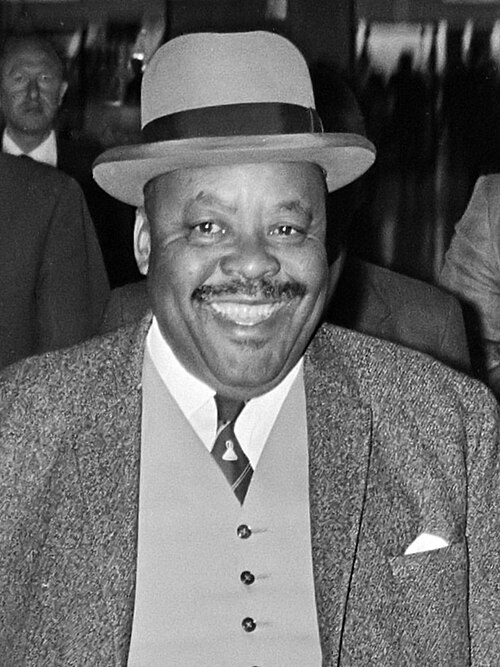
At a Glance
The Mountain Kingdom and the Impossible Geography
Lesotho's geographic situation is unique in the world. It is one of only three countries — along with San Marino and Vatican City — that are completely surrounded by a single other country. Every road, every railway, every telephone line, every import and every export must transit South African territory. In 1966, when Lesotho became independent, that surrounding country was apartheid South Africa — a state that regarded Black African nationalism as an existential threat, that was systematically suppressing liberation movements within its own borders, and that had both the will and the capability to use its geographic stranglehold over Lesotho as a tool of political control.
For Leabua Jonathan, this geography was not an abstraction. It was the fundamental political reality within which he had to govern. Lesotho's economy was dependent on remittances from the roughly forty percent of its adult male workforce who laboured in the South African mines — men whose employment, whose physical movement, and whose access to their families in Lesotho were all controlled by South African pass law administration. The goods that Lesotho's people needed — food, fuel, manufactured goods, medicines — all entered through South African ports and crossed South African territory. If South Africa chose to close its borders, Lesotho would face an economic crisis within days.
Jonathan understood this reality from the beginning of his political career, and his initial approach to it was accommodation — the recognition that a newly independent micro-state with no leverage, no resources, and no geographic options had to find a way to coexist with its dominant neighbour. In the early years of independence, his government maintained working relations with Pretoria, avoided the most provocative forms of anti-apartheid solidarity, and focused on the internal challenges of state-building, economic development, and political consolidation. This was not moral enthusiasm for apartheid — Jonathan had no sympathy for the system — but a realistic assessment of what was possible for a state in Lesotho's position.
The 1970 Election Annulment: Democracy's Delayed Start
The elections of January 1970 were Lesotho's first post-independence electoral test, and they produced a result that Jonathan was not prepared to accept. The counting showed that Ntsu Mokhehle's Basutoland Congress Party — the more radical, Pan-Africanist nationalist movement that had been Jonathan's principal political rival since the late 1950s — was winning. Jonathan's Basotho National Party, with its base in the chieftaincy, the Catholic Church, and the more conservative rural communities, was losing to the BCP's appeal to the urban workers, the educated youth, and the more politically radical sections of Basotho society.
Jonathan's response was to annul the election. He declared a state of emergency, suspended the constitution, detained opposition leaders including Mokhehle, and assumed emergency powers that he would exercise for the next sixteen years without the legitimating framework of democratic elections. The annulment was indefensible as a matter of democratic principle — it was precisely the kind of electoral manipulation that African nationalism was supposed to be fighting against, the denial of the popular will by a leader who had decided that his own continuation in power mattered more than the democratic process that had been established.
The annulment had consequences that rippled through Lesotho's politics for decades. Mokhehle's BCP, denied power through the democratic process, eventually formed the Lesotho Liberation Army and pursued armed resistance from bases in South Africa — a development that gave the apartheid government the perfect instrument for destabilising Jonathan's government when his foreign policy pivot made him an enemy of Pretoria. The irony was acute: Jonathan's 1970 anti-democratic move had created the conditions that South Africa would later exploit to undermine his government.
The Foreign Policy Pivot: From Accommodation to Confrontation
The transformation of Jonathan's foreign policy — from cautious accommodation with South Africa to open alignment with the anti-apartheid cause — was one of the more remarkable political evolutions of the southern African independence era. It was driven by a combination of factors: the growing international isolation of the apartheid regime, the radicalisation of southern African politics following the Portuguese colonial collapse and the independence of Mozambique and Angola in 1975, the pressure from within Lesotho's own political culture for a more assertive African nationalist stance, and Jonathan's own genuine conviction — which deepened through the 1970s — that apartheid was a system that Lesotho could not indefinitely accommodate without moral and political cost.
By the late 1970s, Lesotho under Jonathan had become one of the more outspoken members of the Organisation of African Unity's anti-apartheid coalition. He was hosting ANC exiles in Maseru and allowing the ANC to use Lesotho's territory as a transit point for operatives entering South Africa. He was pursuing diplomatic and economic relationships with the Soviet Union, China, North Korea, and Cuba — states whose support he sought precisely because their geographic distance from South Africa meant that South Africa could not control their relationship with Lesotho in the way it could control the relationships of Lesotho's closer neighbours. He was speaking at international forums with a directness about apartheid's illegitimacy that bore no resemblance to the cautious accommodation of his early years in power.
This pivot was an act of considerable courage. Jonathan understood what South African retaliation might look like — Pretoria had demonstrated its willingness to use economic and military pressure against neighbouring states that defied its preferences, in Mozambique, in Angola, in Zimbabwe. He understood that Lesotho's geographic vulnerability made it far more exposed to such retaliation than any of these countries. He proceeded anyway, apparently having concluded that the moral cost of continued accommodation with apartheid was a price he was no longer willing to pay and that the international support he could attract through his anti-apartheid stance might provide some counterweight to South African pressure.
The Maseru Massacre and South African Destabilisation
South Africa's response to Jonathan's foreign policy pivot was systematic and increasingly violent. The support for the Lesotho Liberation Army — which conducted raids into Lesotho from South African territory, killing Jonathan's officials and creating a climate of insecurity — was the lower-level, deniable form of destabilisation. The Maseru massacre of December 1982 was the undeniable, direct form.
On the night of 9 December 1982, South African Defence Force commandos entered Lesotho and attacked houses in Maseru that the South African government claimed were ANC bases. Forty-two people were killed, including thirty South African exiles and twelve Lesotho citizens. The raid was conducted without warning, without legal authority, and without any pretence of consultation with the Lesotho government. It was a demonstration of South Africa's contempt for Lesotho's sovereignty and a message to Jonathan that his harboring of ANC exiles would have lethal consequences.
The international response was outrage — condemnation from the United Nations, from the Organisation of African Unity, from governments around the world. The domestic response in Lesotho was more complex: the massacre strengthened the resolve of those who supported Jonathan's anti-apartheid stance but also created pressure from those who feared what further South African retaliation might bring. Jonathan's government continued to maintain its position, but the political and security environment had become significantly more difficult.
The 1986 Coup and the End of the Jonathan Era
The coup of January 1986 came after South Africa imposed an economic blockade on Lesotho — closing the borders to goods traffic in ways that created immediate shortages and economic disruption. The blockade was a pretext as much as a cause: it created the conditions of crisis within which the military, led by Major General Justin Lekhanya, could justify intervention as a response to national emergency. The coup plotters had been in communication with South African officials, and the timing of the blockade and the coup was not coincidental.
Jonathan was placed under house arrest. The new military government promptly expelled the ANC exiles whose presence had been one of South Africa's principal stated grievances against Jonathan's government. The expulsions demonstrated the coup's essentially South African character — it had achieved, within days of the military takeover, the primary foreign policy objective that South Africa had been pursuing for years. Jonathan was moved to Pretoria, where he remained under effective house arrest until his death in April 1987.
He died in the capital of the state that had spent a decade trying to destroy his government — a death in Pretoria that was, in its setting, one of the more eloquent statements of the structural reality that had defined his entire political career. The mountain kingdom that he had led could not escape its geography. Its prime minister could not escape it either, even in death.
Legacy
Leabua Jonathan's legacy is irreducibly complex. His annulment of the 1970 election was an act of democratic betrayal that damaged Lesotho's political development and created the conditions for the South African-supported destabilisation that eventually destroyed his government. His governance style was authoritarian, his tolerance for dissent limited, and the democratic institutions he had inherited from the British were badly weakened by his years in power.
Against this must be set the extraordinary courage of his anti-apartheid pivot — the decision by the leader of a country completely encircled by apartheid South Africa to defy Pretoria openly, to host ANC exiles, and to use whatever international relationships he could construct as counterweights to South African dominance. This decision cost him his government and ultimately his life. It was made in the full knowledge of what South Africa's retaliation might look like, and it was maintained through the Maseru massacre, through the ongoing destabilisation campaign, and through the economic blockade that preceded his overthrow.
In the longer history of the southern African frontline states — the countries that bore the costs of opposing apartheid while being economically and geographically dependent on South Africa — Jonathan's Lesotho occupies a distinctive place. No other frontline state was as completely exposed to South African retaliation as Lesotho. That its leader chose defiance over accommodation is a fact that the history of the anti-apartheid struggle should record with appropriate acknowledgement.