At a Glance
Kanye, Cattle, and the Practical Formation of a Builder
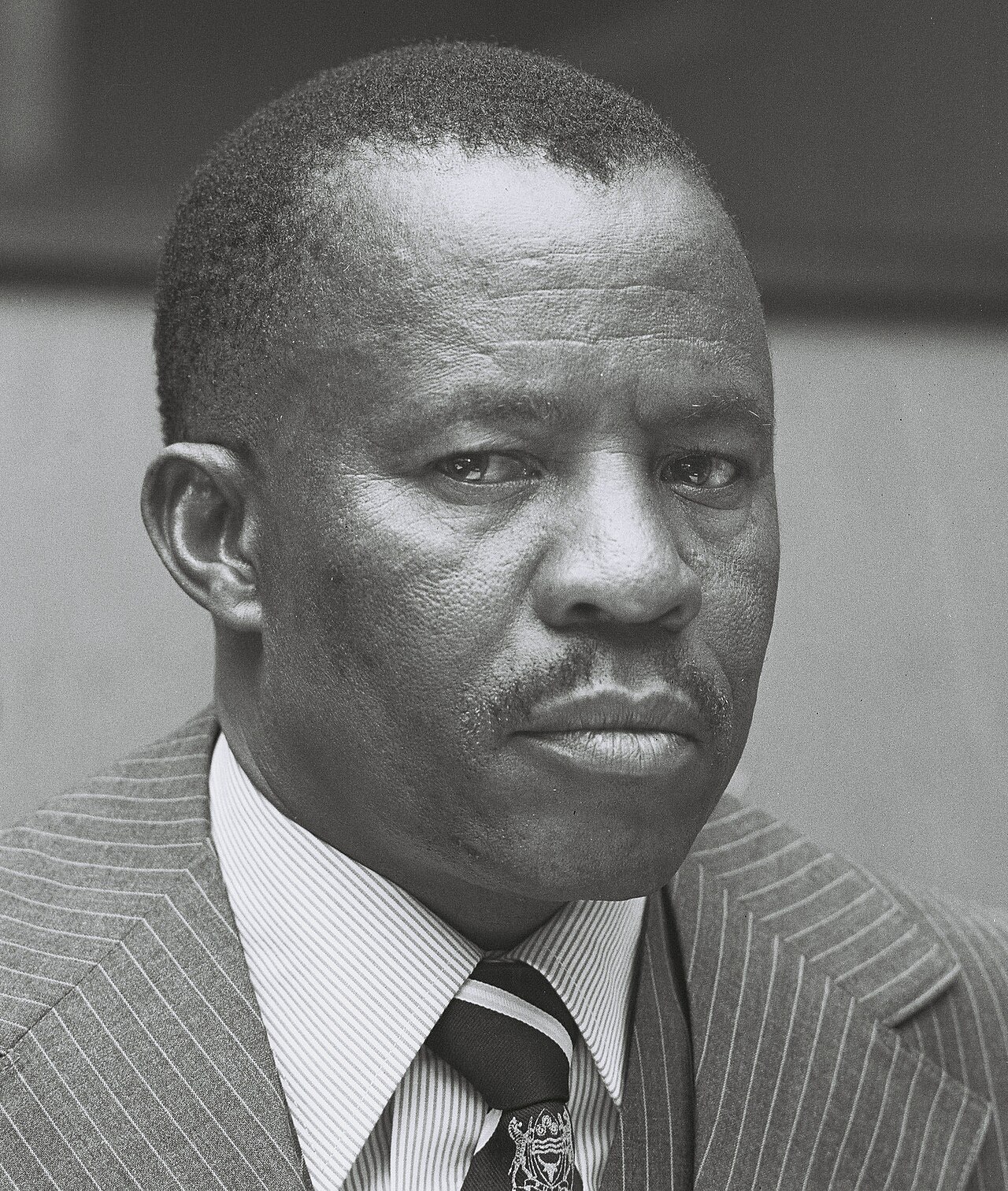
Quett Masire was formed by the land. He grew up in Kanye in the Ngwaketse territory of southern Bechuanaland, a community whose life was organised around cattle, agriculture, and the traditional structures of Ngwaketse society, and he became a farmer and rancher in his own right before politics drew him into a different kind of work. This agricultural background was not incidental to his subsequent political career — it gave him a practical, empirical orientation toward problems that distinguished him from the more theoretically inclined independence-era leaders of other African states, and it grounded his political judgements in the material conditions of the people he was governing rather than in ideological frameworks that might be disconnected from those conditions.
His education at Tiger Kloof in the Northern Cape — one of the mission schools that educated Bechuanaland's professional class across the colonial period — gave him the intellectual formation that his subsequent career required without producing the kind of abstract idealism that sometimes led African independence-era leaders into economic policies that their own people could not afford. Masire came away from Tiger Kloof with literacy, numeracy, and the practical skills of administration, and he applied these skills first to journalism — he worked for a local newspaper — and then to farming and ranching, before the independence movement called him into politics.
The combination of agricultural experience and journalistic training gave Masire a particular capacity for communication and for the translation of complex policy questions into terms that ordinary Batswana could engage with — a capacity that would prove invaluable in the work of building public support for the sometimes difficult economic choices that the development state required. He was never the most charismatic figure in Botswana's public life — that role belonged to Seretse Khama — but he was effective in the ways that matter for governance: consistent, honest, technically competent, and genuinely committed to the public interest rather than to personal accumulation.
Building the BDP: The Organisational Partnership with Khama
The founding partnership between Quett Masire and Seretse Khama was one of the most consequential political partnerships in southern African independence history. The two men complemented each other in ways that were unusual and unusually productive. Khama was the national symbol — the heir to the Bangwato chieftaincy who had been exiled by the British for marrying a white English woman, whose story had attracted international attention, and whose personal charisma and moral authority gave the BDP its emotional appeal and its claim to represent all of Botswana's people regardless of their tribal or racial backgrounds. Masire was the organisational builder — the practical politician who recruited members, built branch structures, managed the party's finances, and translated the democratic vision that the BDP represented into the day-to-day organisational work that kept the party functioning.
When they founded the BDP in 1962, Bechuanaland's political landscape was already shaped by the earlier founding of the Bechuanaland People's Party, which had positioned itself as the more radical alternative to whatever conservative nationalist movement the establishment might produce. The BDP's challenge was to build a broad coalition that could win the pre-independence election of 1965 against the BPP's appeal to the urban workers and educated youth, while also maintaining the support of the chieftaincy networks and the rural communities that formed the majority of the electorate.
Masire's organisational work was central to this achievement. He understood the sociology of Botswana's electorate better than almost anyone — understood the ways in which the cattle economy, the chieftaincy structures, the migrant labour system, and the mission school networks all shaped the political preferences and the organisational possibilities of different communities. His recruitment of candidates, his management of the party's grassroots organisation, and his coordination of the BDP's campaign strategy in the 1965 election were the practical foundations of the victory that brought the BDP to power at independence.
The Vice Presidency: Fourteen Years of Institutional Construction
Masire's fourteen years as Vice President — from independence in October 1966 until Khama's death in July 1980 — were the period in which Botswana's governmental institutions were built from essentially nothing into a functioning, professional state apparatus. At independence, Botswana had almost no institutional capacity: fewer than a hundred university graduates among its African population, a civil service that had been staffed almost entirely by British colonial officers, no revenue base beyond the British budget grant and the cattle export levy, and physical infrastructure so underdeveloped that the country had only a handful of kilometres of paved road and its capital was being built from scratch on a site that had been little more than a railroad siding.
The work of building a state in this context was primarily the work of institutional design and human capacity development — creating the government ministries, the budgeting systems, the regulatory frameworks, the educational institutions, and the professional training programs that a modern state required. Masire's role as Vice President placed him at the centre of this work. His management of the government's finances — establishing the fiscal discipline and the transparent budgetary processes that would later be identified as central to Botswana's development success — was a specific and consequential contribution that reflected his practical, empirically grounded approach to governance.
The discovery of diamonds at Orapa in 1967, just a year after independence, transformed the potential trajectory of the state-building project by providing the fiscal resources that the colonial state had never possessed. But the discovery of mineral wealth is not, by itself, a development success — the history of sub-Saharan Africa is full of mineral-rich states whose wealth was captured by elites, dissipated through corruption, or squandered through mismanagement. The critical question was not whether Botswana had diamonds but what institutional choices it made about how to use them. Those choices were made, in significant part, by Masire during his years as Vice President and Finance Minister, and they established the frameworks that his subsequent presidency would build upon.
The Presidency: Managing the African Miracle
When Seretse Khama died of pancreatic cancer in July 1980, Masire succeeded to the presidency of a country that was already on a distinctive developmental trajectory — mineral revenues flowing, institutions functioning, democratic framework intact, and an international reputation as one of Africa's governance success stories already established. His challenge was to maintain and deepen this trajectory through the more complex challenges of the 1980s and 1990s: managing the HIV/AIDS epidemic that was devastating Botswana's population, sustaining macroeconomic stability through global commodity price cycles, maintaining the democratic institutions against the pressures that long periods of single-party dominance tend to generate, and positioning Botswana as a constructive regional actor in the era of southern African liberation and the South African transition.
The macroeconomic management of Masire's presidency was built on two principles that distinguished Botswana from many of its resource-wealthy peers. The first was fiscal discipline — the refusal to allow current expenditure to grow beyond what sustainable revenue streams could support, the maintenance of foreign exchange reserves that gave the economy a buffer against commodity price shocks, and the avoidance of the inflationary monetary policies that undermined macroeconomic stability in many other African states. The second was investment orientation — the decision to use diamond revenues not for current consumption but for capital investment in education, health, infrastructure, and the institutions of governance that would sustain development after the diamond reserves were eventually exhausted.
These choices produced Botswana's extraordinary development record. The country's GDP per capita grew from approximately one hundred US dollars at independence to over three thousand dollars by the end of Masire's presidency — one of the fastest sustained growth rates in the world over that period. Life expectancy, literacy, access to clean water, and child survival rates all improved dramatically. The diamond revenues were used to build the University of Botswana, to achieve universal primary education, to construct the road network that connected the country's dispersed population, and to fund the health system — before the HIV/AIDS epidemic overwhelmed it — that had produced substantial improvements in population health outcomes.
Democracy and the Management of Single-Party Dominance
One of the more remarkable features of Masire's presidency was his maintenance of genuine democratic governance through a period of overwhelming BDP electoral dominance. The BDP won every election from 1965 to the end of his presidency, and in some elections the opposition was reduced to a handful of seats. In many African states, this kind of dominance has been used to justify the erosion of democratic institutions — the weakening of judicial independence, the harassment of opposition parties, the manipulation of electoral frameworks, the restriction of press freedom. Masire resisted these temptations consistently.
The opposition parties in Botswana — the BPP, the BNF, and their successors — operated freely, contested elections without systematic harassment, and maintained the ability to organise, campaign, and advocate publicly for their positions throughout Masire's presidency. The press operated with a degree of freedom unusual for the region. The judiciary maintained its independence. The electoral commission administered elections that were recognised internationally as free and fair. These were choices, not inevitable outcomes — choices that reflected Masire's genuine commitment to democratic governance rather than merely to the forms of democracy that were useful for international legitimacy.
His voluntary retirement in 1998 — handing power to Festus Mogae rather than seeking to extend his tenure beyond two terms — was the final demonstration of this commitment. In a region and a continent where the voluntary transfer of power by long-serving presidents was still the exception rather than the rule, Masire's retirement was a statement about the relationship between democratic governance and personal power that carried real weight.
Legacy
Quett Masire died on 22 June 2017 in Gaborone, aged ninety-one. He had lived long enough to see the Botswana he had helped to build become, despite the devastating impact of HIV/AIDS, a recognisable middle-income country with functioning democratic institutions and an international reputation for governance quality that was the envy of much of the continent. He had also lived long enough to see some of the limitations and contradictions of the model he had helped to create — the inequality that the diamond economy produced despite the genuine development achievements, the BDP's increasingly entrenched dominance, the questions about what Botswana's democracy would look like when the institutional habits built by Khama and Masire were no longer reinforced by the personal commitments of the founding generation.
His legacy is the legacy of the builder — the practical, disciplined, institutionally serious politician who did the unglamorous work of constructing the frameworks within which development was possible and then maintained those frameworks through the temptations of long tenure and overwhelming dominance. The Botswana miracle — whatever its limitations and contradictions — was built on choices that Masire made and maintained. That is a legacy that the history of African independence should acknowledge with appropriate seriousness.