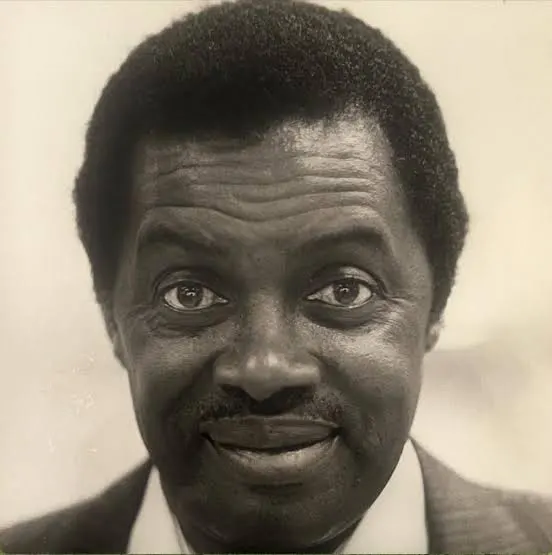
At a Glance
Bechuanaland, South Africa, and the Making of a Cross-Border Activist
Michael Dingake's political formation cannot be understood without understanding the specific relationship between Bechuanaland and South Africa in the mid-twentieth century. The Bechuanaland Protectorate — the territory administered by Britain that would become independent Botswana in 1966 — was economically and physically integrated with South Africa in ways that made the boundary between the two territories, for most practical purposes, less significant than the map suggested. Batswana men went to the South African mines in enormous numbers, as migrant labourers working the gold and diamond mines of the Rand on contracts that took them away from their families for months or years at a time. Bechuanaland's cattle economy depended on the South African market. Its imported goods came through South African ports. Its educated elite was trained in South African universities and mission schools.
This integration meant that the racial capitalism of apartheid South Africa was not a foreign system to Batswana — it was the system within which their own economy functioned, within which their men laboured, within which the political and social conditions of their lives were substantially determined. The apartheid pass system, the job colour bar, the racial wage differential, the systematic exclusion of Black workers from skilled and managerial positions — these were conditions that Batswana experienced directly in the South African mines and workplaces where so many of them spent their working lives.
Dingake went to South Africa as a young man — the same journey that hundreds of thousands of Batswana had made before him — and in South Africa he encountered the organised response to apartheid that the ANC and the Communist Party represented. The decision to join both organisations was a decision to commit himself to a struggle that was, in one sense, not his own — he was a citizen of the British Protectorate, not of South Africa — but that was, in another sense, directly relevant to the conditions of his own people and his own region. The apartheid system that the ANC and the SACP were fighting was not confined to South Africa's borders. Its effects reached across the entire southern African region, and Dingake's political analysis led him to conclude that fighting it was not merely a South African obligation.
Underground Work and the Building of Clandestine Networks
The period of Dingake's underground work — the late 1950s and early 1960s — was the period in which the ANC was making its most consequential strategic decisions. The Sharpeville massacre of March 1960, in which South African police killed sixty-nine unarmed demonstrators at a pass law protest in the Transvaal, transformed the political landscape by demonstrating the apartheid state's willingness to use lethal force against peaceful resistance and by triggering the banning of the ANC and PAC. The movement's leadership was forced underground, and the question of whether to maintain the commitment to non-violent resistance or to move toward armed struggle became unavoidable.
The formation of Umkhonto we Sizwe in 1961 — the ANC's decision to begin a sabotage campaign targeting economic infrastructure rather than people — opened a new phase of the liberation struggle that required different organisational capacities. Clandestine networks, secure communication, the recruitment and training of operatives for underground work, the maintenance of security against infiltration by police informers — these were the skills that the liberation movement needed to develop, and the people who developed and exercised them were the movement's underground organisers of the early 1960s.
Dingake was among those organisers. His work placed him in the clandestine structures that the ANC was building inside South Africa during this period, doing the unglamorous but essential work of building cells, recruiting members, maintaining communication between the movement's various structures, and keeping the organisation functioning under conditions of escalating surveillance and repression. The security forces were hunting these networks systematically, using informers, interrogation, and surveillance to map the ANC's underground structures and identify its members. The risk of arrest was constant and the consequences of discovery were severe.
Fifteen Years on Robben Island
Dingake's fifteen years on Robben Island — from 1966 to 1981 — placed him in one of the most remarkable communities in the history of political imprisonment. The island prison held the South African liberation movement's most significant figures: Mandela, Sisulu, Govan Mbeki, Ahmed Kathrada, Andrew Mlangeni, Elias Motsoaledi, Wilton Mkwayi, and dozens of others whose names have become part of the history of the anti-apartheid struggle. It also held hundreds of less celebrated activists — the organisers, the cell leaders, the ordinary ANC and PAC members whose contribution to the movement was no less important for being less publicly known.
Dingake's position in this community was distinctive. As a Motswana — a citizen of the Bechuanaland Protectorate and then of independent Botswana — he was not South African, and this created both a particular form of distance from the specifically South African political debates that consumed the prison community and a particular form of connection to the broader southern African liberation story. He had chosen to commit himself to the South African struggle as an outsider, as someone who had no personal obligation to do so under the frameworks of national citizenship and political loyalty that most political prisoners could invoke. This choice — made freely, costing him fifteen years of his life — was itself a statement about the nature of political commitment and about the relationship between national liberation struggles and the broader African liberation project.
The Robben Island experience was designed by the apartheid state to break the liberation movement's imprisoned leaders — to reduce them through isolation, through hard labour in the lime quarry, through the systematic petty humiliations of prison administration, to isolated individuals focused only on their own survival. It largely failed in this objective. The prison community maintained its political coherence, its organisational culture, and its intellectual vitality through the system of internal communication, collective education, and mutual support that the prisoners developed. Dingake participated in this community and contributed to it, learning from the movement's senior figures and contributing his own experience and perspective to the collective life of the prison.
My Fight Against Apartheid: The Memoir and Its Significance
The publication of My Fight Against Apartheid in 1987 placed Dingake in the small but significant body of Robben Island prisoners who produced written accounts of their experience. The Robben Island memoir literature — which includes Mandela's Long Walk to Freedom, Ahmed Kathrada's Letters from Robben Island, and accounts by several other prisoners — is one of the most important documentary records of the South African liberation struggle, providing first-person perspectives on the movement's internal culture, its debates, its daily life under imprisonment, and the personalities of the figures who have become central to the movement's history.
Dingake's memoir occupies a distinctive place in this literature because of his outsider perspective. His account of Robben Island is the account of someone who came to the South African liberation struggle from a neighbouring country, who was imprisoned for a struggle that was not, in the narrow national sense, his own, and who observed the South African political community on the island with the particular clarity that a slight distance from its internal debates sometimes provides. His analysis of the ANC's politics, of the relationship between the ANC and PAC prisoners, of the generational tensions in the movement — these are not the analyses of a South African insider defending his movement's choices, but of someone committed to the same objectives but positioned slightly differently in relation to the movement's internal dynamics.
The memoir also documents the specific experience of a Botswana citizen imprisoned in a South African jail — the legal and diplomatic complications that his non-South African citizenship created, the relationship between the Botswana government and the apartheid state over the question of its citizen's imprisonment, and the ways in which his Botswana identity both connected him to and distinguished him from his South African fellow prisoners. This perspective gives the book a value that extends beyond the individual memoir to the broader history of how the South African liberation struggle intersected with the political lives of the neighbouring countries from which so many of its activists came.
Return to Botswana and the Post-Independence Political Landscape
Dingake's return to Botswana in 1981 brought him into a political landscape that had been transformed by independence in 1966 and by fifteen years of development under the Botswana Democratic Party governments of Seretse Khama and, from 1980, Quett Masire. Botswana had become one of Africa's economic success stories — the discovery of diamonds had transformed the country's fiscal position, and the BDP's governance had produced a level of economic development and institutional stability that distinguished Botswana from many of its neighbours. But Botswana's political landscape was also one in which the opposition parties — including the Botswana People's Party, with which Dingake became associated — argued that the benefits of development were not being equitably distributed and that Botswana's democratic institutions needed to be more genuinely participatory.
Dingake brought to these debates the experience and the moral authority of someone who had committed fifteen years of his life to the liberation movement and who had a direct, personal understanding of what the fight against racial oppression required. His political analysis, shaped by the ANC's non-racial framework and the Communist Party's class analysis, gave him a perspective on Botswana's post-independence political economy that was distinct from both the BDP's developmental nationalism and the more narrowly communal politics of some of the opposition formations.
Legacy
Michael Dingake's legacy is the legacy of the cross-border activist — the person who looked at a liberation struggle in a neighbouring country, concluded that it was his struggle too, and committed himself to it with the full knowledge of the consequences that commitment might bring. The fifteen years on Robben Island were not something that happened to him through bad luck or historical accident. They were the direct consequence of choices he made freely, in the full knowledge that the apartheid state was prepared to imprison people who made exactly those choices.
His memoir gives his experience a permanence in the historical record that might otherwise have eluded him — a Motswana imprisoned for a South African struggle is not the most obvious subject for the standard histories of either the South African liberation movement or Botswana's independence story, and My Fight Against Apartheid ensures that his experience is documented in his own words. The book stands as evidence that the struggle against apartheid was not only a South African story — it was a southern African story, involving people from Botswana and Lesotho and Zimbabwe and Mozambique and Zambia and Namibia who concluded that apartheid's evil was not geographically bounded and that fighting it was not a privilege reserved for its immediate victims.