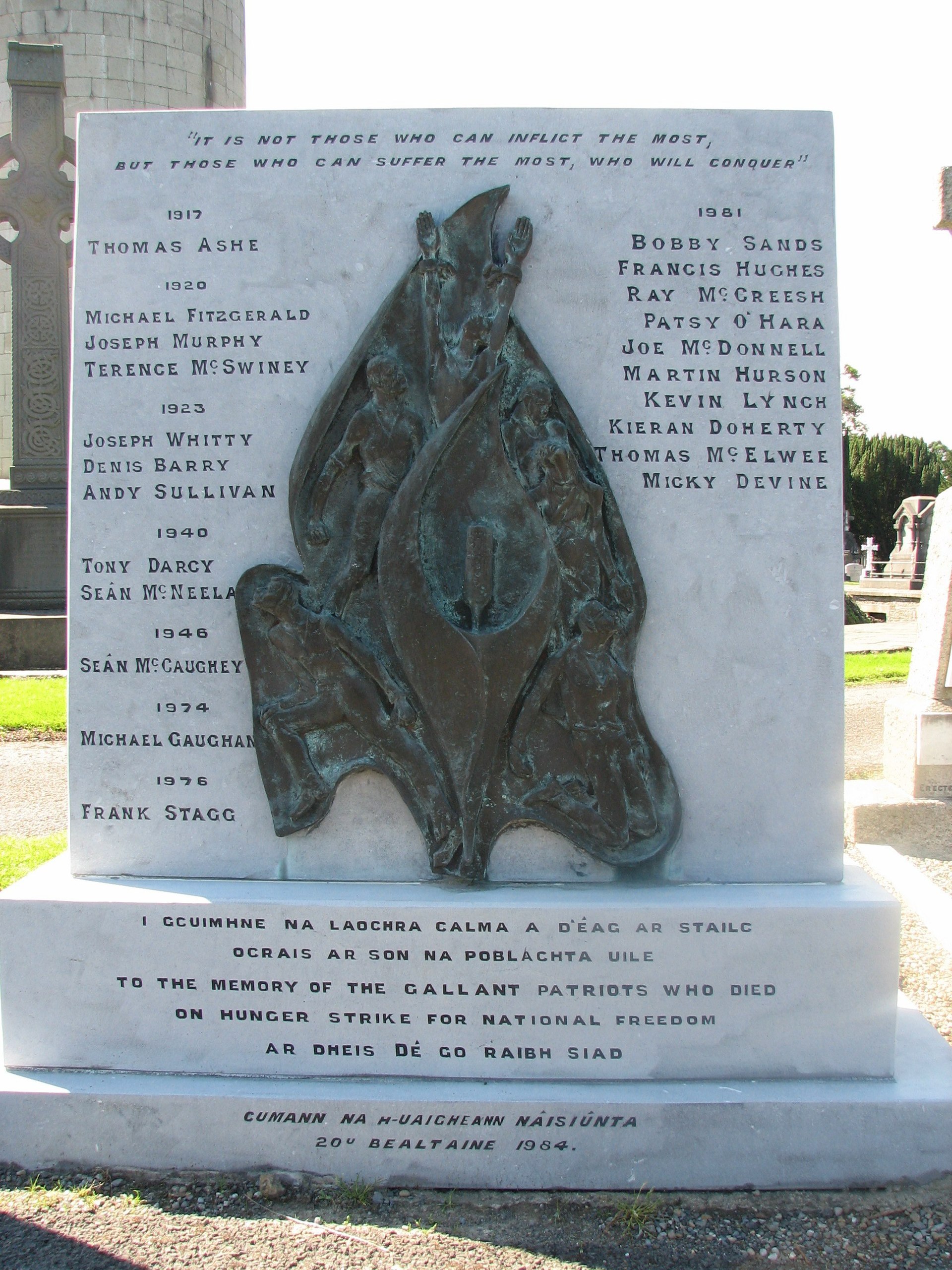
Camlough: Seven Generations in South Armagh
Raymond Peter McCreesh was born on 25 February 1957 in a small semi-detached house at St Malachy's Park, Camlough, County Armagh — a village a few miles south of Newry, tucked in the hills between the Mourne Mountains and the border with County Louth. He was the seventh of eight children born to James McCreesh, a retired local council worker, and his wife Susan, née Quigley. The McCreesh family had been rooted in south Armagh for seven generations, James aged sixty-five and Susan sixty at the time of Raymond's birth, and both parents came from the nearby townland of Dorsey — a family of the deepest local roots, part of a staunchly nationalist community in a landscape that had acquired, since the onset of the Troubles, a reputation in British military circles for the resourcefulness and determination of its republican volunteers.
South Armagh — the rural district straddling the border between County Armagh and County Louth — was the most intensively policed area of Northern Ireland, patrolled by constant British Army helicopter overflights because ground patrols had proved too dangerous, and known in the tabloid press and in official military communications as "bandit country." The label was not entirely wrong as a description of operational reality: the IRA units there were effective, disciplined, and possessed an intimate knowledge of terrain developed over generations. Raymond McCreesh grew up surrounded by the physical and political landscape of that conflict. His Republican politics were not a conversion but an inheritance.
He attended the local primary school, St Malachy's, and later St Colman's College in Newry. After leaving school he attended Newry Technical College and served a two-year apprenticeship as a sheet metal worker, later taking a job as a steelworker in a predominantly Protestant factory in Lisburn. The work in Lisburn brought him into daily proximity with the sectarian tensions of the workplace — threats and intimidation rising as the Troubles deepened — and he eventually left the job and returned to Camlough, working as a milk roundsman, a role that gave him comprehensive knowledge of the roads, the farms, and the movement patterns of British Army patrols across the south Armagh countryside. He joined Fianna Éireann, the republican youth movement, in 1973, and later that year transferred to the South Armagh Brigade of the Provisional IRA. He was sixteen years old.
The Ambush at Beleek and Capture
On 25 June 1976, McCreesh — then nineteen years old — was part of a four-man IRA unit that attempted to ambush a British Army observation post at Beleek in south Armagh, positioned opposite the Mountain House Inn on the Newry–Newtonhamilton Road. The unit approached the post armed, masked, and in uniform — IRA standard operating procedure for a military operation intended to assert combatant status. They were spotted by British paratroopers on a hillside above the road who opened fire. The unit scattered. McCreesh and his comrade Paddy Quinn took cover in a nearby farmhouse. The paratroopers surrounded the building, fired shots into it, and after a standoff, McCreesh and Quinn surrendered.
The rifle in McCreesh's possession at the time of his capture was subsequently identified as one of the weapons used in the Kingsmill massacre on 5 January 1976, when ten Protestant civilians were shot dead by IRA gunmen at a roadblock near the village of Kingsmill after Catholic workers were separated and spared. The identification of the weapon deepened the political complexity surrounding McCreesh's case — he had not been at Kingsmill, but the weapon's provenance was a constant reference in British and unionist commentary on his hunger strike. After nine months on remand in Crumlin Road jail, he was tried at a non-jury Diplock Court. He refused to recognise the court — standing in silence while the proceedings continued around him — and on 2 March 1977 was sentenced to fourteen years for the attempted murder of British soldiers and possession of a rifle and ammunition, with a concurrent five years for IRA membership. He was sent to the Maze Prison.
Four Years and Two Months on the Blanket
Raymond McCreesh joined the blanket protest immediately on his arrival at the Maze. For the next four years and two months, he refused to wear prison uniform, instead wrapping himself in the rough grey prison blanket that gave the protest its name. The conditions of the blanket protest were designed by the prison authorities to make sustained resistance physically and psychologically impossible: prisoners were isolated in single cells, unable to wash, unable to leave their cells without wearing the prison uniform, and subjected to regular searches and harassment. Many men broke under the pressure. McCreesh did not.
The most telling detail of his protest was his decision to forgo monthly family visits for the entirety of his time on the blanket. Visits were permitted only to prisoners who wore the prison uniform for the duration of the visit — a requirement that McCreesh refused to meet. His parents, James and Susan, did not see their son for four years. His brother Brian, a Catholic priest who would later say Mass at his bedside as he died, could not visit him. The first time Raymond McCreesh's parents saw him after his imprisonment was in early 1981, when he asked them to come to the Maze to tell them in person that he intended to join the hunger strike. His mother, who had not recognised him when she saw him — his hair, naturally fair, had turned black during the years of imprisonment — began to cry. He told her: don't be crying mammy, hold your head high and be proud.
In a letter smuggled out of the H-Blocks during the blanket protest, his friend and comrade Paddy Quinn wrote of McCreesh: he will be one of the ones to go all the way. The observation proved accurate. When the first hunger strike of October–December 1980 ended without the expected concessions from the British government, the prisoners' bitterness hardened. Bobby Sands began the second hunger strike on 1 March 1981. McCreesh was the third IRA prisoner to join, doing so on 22 March — the same day as INLA volunteer Patsy O'Hara from Derry, who had started his strike alongside him and would die alongside him sixty-one days later.
The Hunger Strike: Sixty-One Days
Raymond McCreesh's brother Fr Brian McCreesh became one of the most visible public advocates for a negotiated solution to the hunger strike, appearing on platforms and in the media to appeal for British government movement on the prisoners' five demands. When Fr Brian told reporters that his brother had said "all he has left is his pride as an Irishman and his loyalty to fellow prisoners," the remark was understood as simultaneously a plea for clemency and a statement of what kind of man Raymond McCreesh was — a man whose sense of obligation to his comrades was indistinguishable from his sense of self.
McCreesh himself, during the strike, showed the same understated wit that his family had always associated with him. When told his brother Brian had been speaking at rallies on his behalf, Raymond joked from his hospital bed: "He'll probably get excommunicated for it." The quip — made while starving to death in a concrete room — is the kind of detail that those who have tried to understand the 1981 hunger strikers have always found both humanising and vertiginous: that a man dying of starvation in his mid-twenties could still make a dry joke about his priest brother's ecclesiastical exposure.
The hardest thing Raymond McCreesh had to do on hunger strike, by his own account conveyed through his brother, was to say no to Pope John Paul II. The Pope's personal envoy, Monsignor John Magee — a native of Newry, and a man whose childhood the McCreesh family knew personally because Susan McCreesh had nursed him as a baby — visited the hunger strikers with golden crucifixes sent by the Pope and a personal appeal to end the strike. McCreesh accepted the crucifix. He refused to come off the strike. He told his brother: it was the hardest thing I have had to do.
On the Wednesday evening before his death, Fr Brian McCreesh said Mass at his brother's bedside in the prison hospital. Raymond was semi-conscious by that point but appeared to show some sign of recognition. He died at 2:11 in the morning on Thursday 21 May 1981, after sixty-one days without food. It was the same day Patsy O'Hara died, seven hours later. They had begun the strike together and they ended it together. Raymond McCreesh was twenty-four years old. He had been due for release in approximately two years if he had not gone on hunger strike.
Funeral and the Community of South Armagh
His remains were returned to Camlough for a funeral held on the Saturday following his death. The cortege left the family home at St Malachy's Terrace and paused at the lane outside the house where an IRA guard of honour, Cumann na mBan members, and Fianna Éireann joined the procession. Led by a lone piper, the mourners accompanied the Tricolour-draped coffin to the church. After Mass, the procession moved the short distance to the cemetery where, in sight of the family home he had grown up in, Raymond McCreesh was buried in the Republican plot. His brothers Malachy and Brian shouldered the coffin to the grave. An IRA firing party delivered the final salute. The graveside oration was delivered by Sinn Féin president Ruairí Ó Brádaigh, who had defied a British government exclusion order to attend. Ó Brádaigh described McCreesh as a man who had fought imperialism — "the enemy of mankind" — and declared that British policy was now in ribbons.
Cardinal Tomás Ó Fiaich, the Catholic Archbishop of Armagh, whose pastoral area encompassed south Armagh and who had made several visits to the H-Blocks during the blanket protest, issued a statement that said simply: Raymond McCreesh was born in a community that has always proclaimed that it is Irish, not British. The statement placed McCreesh's death in the context of a community's self-understanding rather than in the language of terrorism or criminality that the British government deployed, and it was widely read as a significant moral endorsement, however ambiguous, of the hunger strikers' position by the most senior Catholic churchman in Ireland.
Legacy: Bandit Country's Son
Raymond McCreesh is buried in the Republican plot at Camlough Cemetery within sight of the family home. He is commemorated in the annual hunger strike commemoration in south Armagh, attended by republican organisations and local community figures, as one of the most complete embodiments of south Armagh republican character — quiet, determined, laconic, loyal. In 2011 a motion on Newry and Mourne District Council, led jointly by Sinn Féin, the SDLP, and independent representatives, named a playground in Newry in his honour. The decision provoked protest from unionist politicians and from the families of Kingsmill massacre victims, who objected to a public amenity being named for a man in possession of one of the Kingsmill weapons. The council's decision was upheld after review, and the playground carries his name.
The most enduring detail of his story — the four years of forfeited visits, the decision not to see his mother for the entirety of his imprisonment rather than wear prison uniform for half an hour — remains the most unambiguous testament to his character. It was not made for an audience. No one announced it; no one wrote it down at the time. It was simply what he did, in a cell in the H-Blocks of Long Kesh, day after day, month after month, for four years and two months, until his mother arrived and he did not recognise him and he told her not to cry. The vote on the five demands had not yet been taken when he died. His body was twenty-four years old and had consumed itself to the bone.