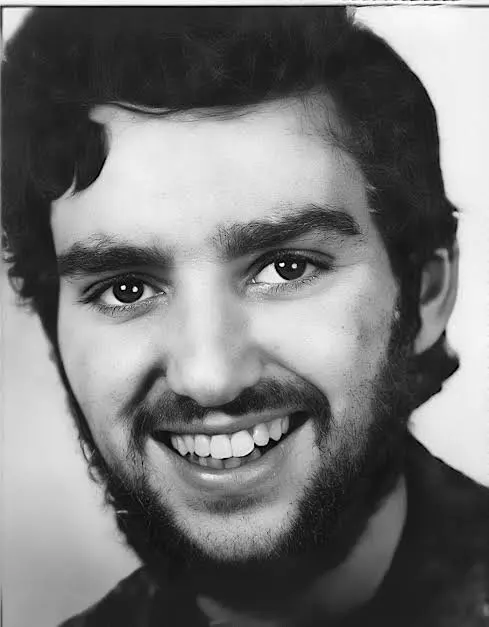
Bishop Street, Derry: A Republican Family
Patrick Joseph O'Hara was born on 11 July 1957 in Bishop Street, in the heart of Derry's Catholic community, the third of four children of James O'Hara, a publican and grocer, and his wife Peggy, née McCluskey. The O'Haras were a family with republican roots stretching back across the twentieth century. Peggy's grandfather had served in the British Army in the First World War but had also, like many Irish veterans, come home to join the IRA in the 1920s — the generation for whom loyalty to Ireland superseded loyalty to the empire that had sent them to the Somme. He transported men and weapons along the River Foyle into Derry during the War of Independence. The family's small public house and grocery shop on Bishop Street was the centre of their social world, and the O'Hara household was intensely aware of the political reality of living as Catholics in a city whose government was structured by deliberate gerrymandering to exclude the Catholic majority from power.
His eldest brother Seán Séamus was interned in Long Kesh for almost four years during the early Troubles — one of the hundreds of Catholics detained without trial under the Special Powers Act. His second brother Tony was imprisoned in the H-Blocks throughout Patsy's hunger strike, serving a five-year sentence. His youngest sibling was his sister Elizabeth, who was twenty-one in 1981 and who would be with him when he died. The O'Hara family, in other words, was not a family on the margins of the republican movement but one threaded through it — shaped by the political structures of the city and the violence that surrounded them from Patsy's earliest years.
Patsy attended the local schools and grew up in the political maelstrom of Derry in the late 1960s. His own account of his radicalisation identified the October 1968 civil rights march — when the RUC batoned marchers off the streets in front of television cameras — as the moment when politics became unavoidable. He was eleven years old and marching with his parents. A year later he witnessed the Battle of the Bogside, when the RUC invaded the nationalist area and was repelled behind barricades. He joined Na Fianna Éireann — the republican youth movement — in 1970 and became active in the Official Sinn Féin cumann in Derry in 1971.
Shot at Fourteen; Absent from Bloody Sunday
In late 1971, at the age of fourteen, Patsy O'Hara was shot in the leg by a British soldier while manning a barricade in Derry. He was taken to hospital and spent time recovering from his wound. On 30 January 1972 — Bloody Sunday — he was still on crutches and unable to march. He watched from the Brandywell as the civil rights march he could not join passed by him, and listened to the shots from the Bogside as British paratroopers opened fire on the marchers. Thirteen people died that day; a fourteenth died later of wounds. For Patsy O'Hara, watching unable to march, the day had the quality of a defining wound. From that point, he later said, there was no going back.
He joined the Republican Clubs — the political organisation aligned with the Official IRA — in 1972 but became increasingly disillusioned with the Officials' direction toward ceasefire and away from active resistance to British rule. When virtually all the Derry republicans left the Officials in 1974 and 1975, Patsy moved with them. In April 1975, on his release from his first internment — he had been interned in Long Kesh in October 1974 — he joined the Irish Republican Socialist Party and the Irish National Liberation Army. The INLA in Derry in those years was small, poorly resourced, and operating in difficult circumstances: harassed by both the British security forces and the Provisional IRA, which regarded the new organisation as a troublesome rival and had its members beaten and in one case tarred and feathered.
Arrests, Prison, and the Blanket
The years between 1975 and 1979 were a series of arrests, charges, and acquittals. Patsy was arrested in June 1975 and charged with possession of gelignite — he claimed it had been planted — and held on remand for six months before being acquitted. He was arrested again in September 1976 and held for four months before again being released without conviction. In May 1978 he was arrested on O'Connell Street in Dublin under the Offences Against the State Act and released after eighteen hours. He returned to Derry in January 1979 and resumed active involvement with the INLA.
On 14 May 1979 he was arrested and charged with possession of a hand grenade. In January 1980 he was sentenced to eight years' imprisonment. He was transferred to the Maze Prison and immediately joined the blanket protest. He became Officer Commanding of the INLA prisoners in the H-Blocks at the beginning of the first hunger strike in October 1980 — a strike that involved both INLA and IRA prisoners and lasted fifty-three days before being called off, with the prisoners believing — incorrectly, as it turned out — that the British government had agreed to make meaningful concessions on their five demands.
The collapse of the first hunger strike without the expected concessions deepened the bitterness in the H-Blocks and made the second hunger strike of 1981 more determined and more implacable than the first. Bobby Sands began the second strike on 1 March 1981. On 22 March, three weeks later, Patsy O'Hara joined the strike as the INLA's OC — on the same day as Raymond McCreesh of the IRA. They had begun together; they would die together. His comrade and friend Mickey Devine, who had been on the Lifford arms raid with him in 1976, took over as INLA OC of the H-Block prisoners and would himself join the strike three months later.
Sixty-One Days
During the hunger strike, Pope John Paul II's emissary to the H-Blocks presented Patsy O'Hara and the other hunger strikers with golden crucifixes from the Pope — a gesture that carried complex meanings in a Catholic republican community that simultaneously revered the papacy and rejected the hierarchy's opposition to their campaign. Patsy O'Hara accepted the crucifix. He held to the strike through sixty-one days of progressive deterioration: blindness, then deafness, then the dissolution of coherent speech and consciousness that marked the final stages of starvation.
In his final days, his mother Peggy threatened to authorise medical intervention to save his life. He told her: let the fight go on. When cotton wool was brought to moisten his lips — standard comfort care in the final stages — he pushed it away, fearing it contained medication. The determination was absolute and, from the outside, almost incomprehensible in its completeness. Patsy O'Hara had been shot at fourteen and kept going. He had been interned and kept going. He had been arrested three more times and kept going. He was not the kind of person who stopped.
He died at 11:29 in the evening on Thursday 21 May 1981 — the same day as Raymond McCreesh, who had started the strike with him exactly sixty-one days before and died that morning. By his bedside were his father James, his sister Elizabeth, and a family friend, James Daly. His father called his name. He seemed to hear it — moved his head slightly, one last time. Then he died. Elizabeth O'Hara told him: you're free, Patsy. You have won your fight and you're free. And then his face just changed, she said. He had a very, very distinct smile.
The Funeral: A City in Mourning
When Patsy O'Hara's body was returned to his family, relatives and those who washed the body found disturbing evidence: his face had been mutilated, there were cigarette burns on his body, his nose was broken. The injuries were inflicted after death. The family's protests to the prison authorities were met with silence. The marks were documented and reported by nationalist journalists and politicians, deepening the fury in Derry and confirming for many people what they already believed about the prison regime.
The funeral in Derry drew crowds described by those present as equivalent to those that had filled the streets for the Bloody Sunday funerals a decade before — a comparison that located Patsy O'Hara's death within the same continuum of British violence against the Derry nationalist community that had begun with the batons on Duke Street in 1968 and the bullets at the Bogside in 1972. The coffin, draped in the Tricolour and the Starry Plough, was carried through the streets by an INLA guard of honour. He was buried in the republican plot at Creggan Cemetery — the same grave where Mickey Devine, who had been his friend and comrade since the early days of the INLA, would be buried three months later.
Legacy: Derry's Own, the INLA's First
Patsy O'Hara holds a specific and important place in the memory of the 1981 hunger strike that is not always adequately recognised. He was the first INLA volunteer to die — the first indication that the three INLA prisoners on the strike would die as surely as the IRA men, and that the INLA's claim to republican legitimacy, however contested by the Provisionals, would be written in the same blood. His death on the same day as Raymond McCreesh — two men who had begun the strike together and ended it together — gave that day, 21 May, a particular weight. The symmetry was not accidental; it was the product of sixty-one days of simultaneous determination.
His mother Peggy O'Hara became one of the most visible voices of the hunger strike families, speaking at rallies, giving interviews, and maintaining the argument that the prisoners' demands were just long after the strike ended. In 2007, at the age of seventy-seven, she stood as a candidate in the Northern Ireland Assembly election for the Foyle constituency on a dissident republican ticket — opposed to Sinn Féin's acceptance of the peace process — and received a notable vote, demonstrating that the constituency she was speaking for remained real, if diminished. His sister Elizabeth toured the United States with NORAID representatives of other hunger strikers' families in 1981, raising funds and awareness. His brother Tony published an autobiography in 2021, thirty years after the events, whose title was The Time Has Come — the same words that could stand as Patsy's own epitaph.
His name appears on murals in the Bogside and the Creggan. The INLA's youth wing was named the Patsy O'Hara Youth Movement in the 1980s. An Irish-American artist, Ann McCoy, painted a work titled Osiris for Patsy O'Hara, now in the Des Moines Art Center in Iowa. Each year on the anniversary of his death, 21 May, the Irish Republican Socialist Movement holds a commemoration in Derry — a small gathering of people who have not forgotten a twenty-three-year-old from Bishop Street who told his mother to let the fight go on, and who died with a smile that his sister said she would never forget.