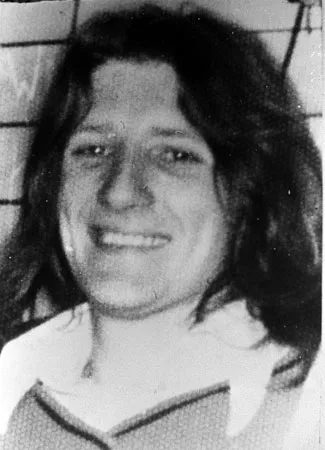
At a Glance
North Belfast: A Childhood Shaped by Sectarianism
Bobby Sands was born in 1954 in Abbots Cross, a mixed area of Newtownabbey on the northern outskirts of Belfast. His early childhood was not defined by political militancy — his father worked in an insurance office, his family was Catholic and nationalist but not republican in any organised sense, and the North Belfast of his early years was a place where sectarian tensions were real but had not yet produced the sustained communal violence of the late 1960s. What changed his world was what changed tens of thousands of similar lives in Northern Ireland: the eruption of the Troubles.
The family was intimidated out of their home in Rathcoole in 1972 — part of the wave of forced population movements that restructured Belfast along sectarian lines during the early years of the conflict — and relocated to Twinbrook, a nationalist estate on the western edge of the city that would become one of the heartlands of IRA recruitment. Sands was 18 at the time, had already been working as an apprentice coachbuilder, and was living in a community that was experiencing British Army harassment, loyalist violence, and the radicalising effect of internment without trial on young Catholic men who had no prior political commitments.
He joined the IRA in 1972, was arrested the same year for possession of handguns, and served his first sentence in the Maze Prison. The prison environment of the early 1970s was still operating under Special Category status — political prisoners had privileges that approximated prisoner-of-war conditions — and the republican community inside the prison was organised, politically conscious, and deeply embedded in the broader struggle outside. Sands emerged from that first sentence more committed, more politically educated, and more fully shaped by the republican tradition than he had been when he entered.
The H-Blocks and the Blanket Protest
In 1976, the British government made a decision that would have consequences far beyond its apparent administrative significance: it ended Special Category status for prisoners convicted of offences committed after 1 March 1976, reclassifying republican and loyalist prisoners as ordinary criminals. The political logic was clear — criminalisation was a key element of the broader strategy of normalisation that the government was pursuing, the attempt to reframe the conflict as a law-and-order problem rather than a political one. The practical consequence, inside the newly built H-Blocks of the Maze Prison, was a confrontation that neither side was willing to back down from.
Republican prisoners refused to wear prison uniforms, claiming they were political prisoners entitled to their own clothing. When this was denied, they wrapped themselves in their cell blankets — the blanket protest — and refused to leave their cells for washing or slopping out. When the protest escalated, the conditions became indescribable: prisoners smearing excrement on cell walls, living in cells without furniture, without books, without any of the normal amenities of prison life. Sands, arrested again in 1977 for possession of a firearm in connection with a bombing, was imprisoned in the H-Blocks and became one of the leading figures of the protest, eventually serving as Officer Commanding the IRA prisoners in the Maze.
He was also writing. On cigarette papers and other scraps, smuggled out of the prison in the traditional republican manner — concealed on the body in ways that prison searches rarely found — he produced poetry, short stories, and eventually the diary that would be published as One Day in My Life. The writing was not simply a personal outlet; it was part of the political communication strategy of the republican movement, evidence that the men in the H-Blocks were thinking, feeling human beings and not the criminals that British policy insisted they were.
"They have nothing in their whole imperial arsenal that can break the spirit of one Irishman who doesn't want to be broken."
The 1981 Hunger Strike
The decision to move from the blanket and dirty protests to hunger strike was not taken lightly. A previous hunger strike in 1980 had ended inconclusively — a prisoner near death had been shown what appeared to be a document offering concessions, the strike was called off, and the concessions did not materialise. The bitterness of that outcome, and the determination not to be deceived again, shaped the character of the 1981 hunger strike from the beginning. Sands began his fast on 1 March 1981 — the fifth anniversary of the end of Special Category status — as the first of a planned series of strikers who would begin at staggered intervals, ensuring that deaths would not come in a cluster but in a sustained sequence that maintained political pressure over weeks and months.
The five demands around which the protest was organised were specific and, to outside observers, relatively modest: the right to wear their own clothing, the right to refrain from prison work, freedom of association with other republican prisoners, the right to organise educational and recreational activities, and the restoration of remission lost through the protest. The British government under Margaret Thatcher refused all five. The conflict was not really about prison conditions — it was about the word "political," about whether the British government would acknowledge, even implicitly, that the men in the H-Blocks were something other than ordinary criminals.
The by-election in Fermanagh and South Tyrone in April 1981 — caused by the death of the sitting MP — created an opportunity that the republican movement seized with a decisiveness that surprised even themselves. Sands was nominated as a candidate while on hunger strike. The question of whether a starving prisoner could win a Westminster election in a nationalist constituency was answered on 9 April 1981: he received 30,492 votes, defeating the Ulster Unionist candidate by a margin of 1,446. He was now a Member of Parliament.
The British government's response was to do nothing — to neither meet his demands nor acknowledge his election as creating any new political reality. Thatcher's position was absolute: there would be no concessions to hunger strikers, there would be no political status, and the fact that one of them had been elected to Parliament changed nothing. Sands died on 5 May 1981, the sixty-sixth day of his fast. He was 27 years old.
Nine More Deaths and the Political Transformation
Nine more hunger strikers died after Sands — Francis Hughes, Raymond McCreesh, Patsy O'Hara, Joe McDonnell, Martin Hurson, Kevin Lynch, Kieran Doherty, Thomas McElwee, and Michael Devine. Each death produced renewed international attention, sustained street protests across nationalist Ireland, and growing pressure on both the British government and the Catholic Church to find a resolution. None came. The hunger strike was eventually called off in October 1981 when families of remaining strikers authorised medical intervention as prisoners approached death — a resolution that the republican movement accepted with the bitterness of men who believed they had been abandoned.
The political consequences, however, were transformative in ways that no one had fully anticipated. Sands's election had demonstrated something that challenged a fundamental assumption of the republican movement: that electoral politics was collaboration with British rule, that the only legitimate form of resistance was armed struggle. The 30,492 people who had voted for a hunger striker showed that there was a mass electoral constituency for republican politics that had not been mobilised before. The phrase attributed to a Sinn Féin strategist — winning with "a ballot box in one hand and an Armalite in the other" — captured the dual strategy that the movement now adopted.
Sinn Féin began contesting elections, north and south, with increasing success. Gerry Adams was elected to Westminster in 1983. The electoral dimension of the movement grew through the 1980s and 1990s, eventually making Sinn Féin the dominant party of Irish nationalism in the North and a significant force in the Republic — transformations that were directly traceable to the political lessons drawn from the 1981 hunger strike. The peace process that produced the Good Friday Agreement in 1998 depended on Sinn Féin's willingness to pursue political rather than purely military strategy, and that willingness was rooted, at least in part, in what Bobby Sands's election had shown was possible.
The Global Symbol
Bobby Sands's death was reported across the world, and the international reaction was far beyond anything the British government had anticipated or the republican movement had hoped for. In Iran, the street on which the British Embassy stood was renamed Bobby Sands Street — a gesture by the revolutionary government that was as much a jab at Britain as an expression of solidarity with Irish republicanism. In France, Italy, and across Latin America, his face appeared on murals and posters. In the United States, the Irish-American community's already substantial support for Irish republicanism intensified in the weeks and months after his death.
The murals that appeared on the gable walls of nationalist West Belfast in the weeks after his death began a tradition of republican political art that transformed the visual landscape of the area and became, over the subsequent decades, one of the most distinctive and most visited elements of Belfast's cultural geography. His face — the gaunt image from the last months of his life, the long hair and beard of the hunger striker — became one of the most reproduced political images of the late twentieth century, appearing on walls in cities from Havana to Tehran to Cape Town.
He remains, more than four decades after his death, a figure of intense contested meaning. To Irish republicans he is a martyr of the highest order — a man who chose death over surrender with a clarity and consistency that commands even the respect of those who opposed his politics. To unionists and to many in Britain he remains a convicted IRA member whose romantic mythologisation obscures the violence of the movement he served. To international observers he is something else again: one of the twentieth century's most vivid examples of the power of individual moral witness to shift political realities, a young man who understood that in the right circumstances, the willingness to die for a cause could accomplish what guns had not.