At a Glance
Gilan and the Constitutional Revolution: The Education of a Rebel
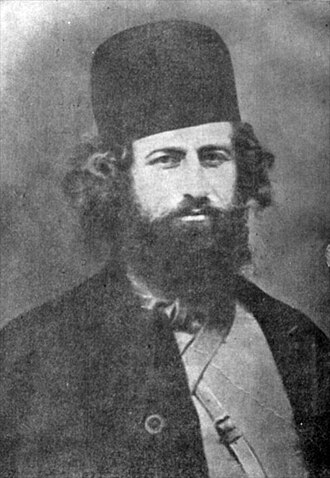
Mirza Kuchak Khan was born in 1880 in Rasht — the capital of Gilan Province, the lush, rain-soaked coastal strip along the southern shore of the Caspian Sea that was, by the standards of late Qajar Iran, one of the country's more commercially developed and internationally connected regions. Gilan's proximity to the Russian Caucasus made it a conduit for trade, for new ideas, and for the political currents sweeping through the revolutionary movements of the early twentieth century — Social Democratic, nationalist, and constitutionalist — that were beginning to reshape the political possibilities of the region.
His education was traditional and Islamic — seminary training in Rasht and then in Tehran, the path of the educated religious young man who might become a cleric or a teacher or a mullah of local standing. But the Tehran of the early 1900s was also the Tehran of the Constitutional Revolution, and Kuchak Khan absorbed its politics alongside his religious education. He became involved in the constitutional cause, participating in the armed defence forces that supported the constitutionalist movement against the royalist counter-revolution — gaining his first experience of organised armed resistance and his first understanding of how military organisation could serve political ends.
The Constitutional Revolution planted in him the commitments that would define the rest of his short life: to Iranian national sovereignty against foreign interference; to constitutional governance against royal despotism; to social reform in the interests of the peasant and artisan classes who constituted the overwhelming majority of Gilan's population; and to an Islam understood as a tradition of social justice and resistance to oppression rather than a justification for hierarchy and submission. These commitments were not a systematic ideology but a set of deeply held moral convictions that proved strong enough to sustain seven years of guerrilla warfare in difficult conditions.
The Jangali Movement: Taking to the Forests
The immediate context for the founding of the Jangali movement in 1915 was the catastrophic situation of Iran during the First World War. Despite Iranian declarations of neutrality, the country had effectively become a battleground for Russian, British, and Ottoman forces pursuing their own strategic objectives — with Russian troops occupying the north, British forces in the south and east, and Ottoman forces operating in the northwest. The weak Qajar government in Tehran was incapable of enforcing Iranian sovereignty, dependent on foreign loans that came with political strings, and regarded by much of the population as a corrupt intermediary class that served foreign interests rather than Iranian ones.
In Gilan specifically, Russian forces had occupied Rasht and much of the province. Kuchak Khan had returned from Tehran to his home province and concluded that conventional political activity was impossible in conditions of occupation and that the only viable form of resistance was armed guerrilla warfare conducted from a base that could not be easily reached by the occupying forces. The forests of the Alborz foothills — dense, mountainous, wet, penetrated by few roads, and known intimately to the local population but alien to foreign troops — provided exactly that base. The movement he built there took its name from this geography: the Jangalis, the Forest People.
The movement Kuchak Khan built was not simply a military organisation but a social movement with a moral and political programme. He attracted fighters from across Gilan's social landscape — peasants, artisans, smaller merchants, former soldiers, and young men with constitutional and nationalist sympathies — by combining the promise of armed resistance to foreign occupation with a vision of social reform that addressed the immediate grievances of Gilan's rural population: the predatory tax farming, the arbitrary power of large landlords, the corruption of local officials. He ran the Jangali-controlled territories with a discipline and a commitment to justice — preventing looting, punishing abuses by his own fighters, establishing rudimentary administrative structures — that earned him a reputation for personal integrity that transcended his military role.
Fighting on Three Fronts: Russians, British, and Tehran
The military history of the Jangali movement is one of extraordinary complexity — a decade of operations against shifting coalitions of enemies in difficult terrain, with limited resources, against forces that were in conventional military terms massively superior. Kuchak Khan's strategic genius was his ability to exploit the specific advantages that his situation provided: intimate local knowledge, popular support among the rural population that provided intelligence and supply, the natural defensive strength of the forested mountains, and the fractured and often contradictory objectives of his various adversaries.
Against the Russian occupation forces, the Jangalis conducted guerrilla operations that harassed supply lines, ambushed patrols, and prevented the Russians from consolidating control of the Gilan countryside beyond the main roads and towns. The February Revolution of 1917 and the subsequent collapse of Russian military coherence relieved the immediate pressure from this direction, though it simultaneously opened the possibility of Bolshevik contacts that would later complicate Kuchak Khan's political situation in ways he did not initially anticipate.
Against British forces — who entered northern Iran after the Russian withdrawal, ostensibly to prevent German or Bolshevik influence from reaching India through Iran — the Jangalis maintained their resistance through 1918 and 1919. The British South Persia Rifles and other forces operating in the region faced an enemy that refused conventional battle, melted into the forests when pressed, and reappeared to strike at extended lines of communication. The 1919 Anglo-Persian Agreement — a treaty negotiated between the British and the Tehran government that would have reduced Iran to a virtual protectorate — outraged Kuchak Khan and the nationalist movement and intensified the Jangali resistance by demonstrating exactly the kind of foreign-government collaboration against Iranian sovereignty that they had been fighting against.
Against the Tehran government itself — whatever its composition at any given moment — the Jangalis maintained an uneasy relationship that ranged from grudging toleration to open hostility. Kuchak Khan sought Iranian national unity against foreign occupation and was willing, in principle, to work within a reformed constitutional framework; the Tehran governments of the period were too weak to offer meaningful partnership and too compromised by foreign dependence to represent the kind of national sovereignty he was fighting for.
The Gilan Republic: The Revolutionary Gamble
The most controversial episode of Kuchak Khan's career was his alliance with Soviet Russia and the Iranian Communist Party that led to the proclamation of the Soviet Socialist Republic of Gilan in June 1920. The background was the Bolshevik consolidation of power in Russia, which created a new geopolitical situation: a Soviet government that was, for its own strategic reasons, willing to support anti-British resistance movements on its southern border, and an Iranian Communist Party — the Communist Party of Iran, founded in Baku in 1920 — that was seeking to link the Jangali movement to the international communist revolutionary wave.
Kuchak Khan's decision to enter this alliance was driven by pragmatic calculation rather than ideological conversion. Soviet material support — weapons, funds, military advisers, and the political backing of a great power — offered the Jangali movement capabilities it could not otherwise achieve. The shared enemy — British imperialism in Iran — provided a genuine basis for tactical cooperation. And the broader context of 1920, when revolutionary movements seemed to be on the advance across Asia and Europe, made the Soviet alignment seem less strategically aberrant than it would appear in retrospect.
But the alliance was fractured from the beginning by fundamental incompatibilities. Kuchak Khan was a devout Muslim who believed in private property, limited social reform, and Islamic ethics as the framework of political life. The communist faction led by Ehsanullah Khan and Haidar Khan Amu-Oghli was committed to radical land redistribution, class struggle, and the subordination of national liberation politics to the international communist programme. The tensions between these positions could not be papered over by anti-imperialist solidarity, and they produced open conflict within the republic's leadership. By late 1920, Kuchak Khan had broken with the communist faction, the republican experiment was in disarray, and the political situation was deteriorating rapidly.
A second attempt at the republic in 1921 — after further negotiations and realignments — was even shorter-lived. Reza Khan's reorganised Iranian Cossack force, moving north from Tehran with British backing, swept through Gilan and destroyed the republic's military forces in October 1921. Kuchak Khan fled into the Alborz mountains with a small group of followers as winter descended. In December 1921, he froze to death in the mountain passes. His head was cut off and sent to Tehran.
The Moral Legacy: What the Forests Remembered
Mirza Kuchak Khan's legacy in Iranian political memory is extraordinarily rich and has been claimed by multiple, often incompatible, political traditions. Iranian nationalists claim him as a defender of Iranian sovereignty against both Russian and British imperialism. Iranian Islamists claim him as a devout Muslim who grounded his resistance in Islamic ethics. The Iranian left — communist, socialist, and social democratic — claims him as an anti-imperialist revolutionary who was willing to work with the Bolsheviks against British colonialism. And Gilani regional identity claims him as a local son who made the forests of the Caspian coast into a theatre of world-historical significance.
All of these claims contain truth, and none of them is the whole truth. Kuchak Khan was genuinely all of these things simultaneously — a Muslim, a nationalist, an anti-imperialist, a Gilani — and the attempt to reduce him to any single dimension falsifies what made him historically important. He was a figure who held multiple commitments in productive tension, who found in the specific geography and social character of Gilan a space where those commitments could be embodied in a movement, and who died before the tensions between them could be fully resolved — which is perhaps why his legend has proven so durable.
What is not in dispute is his personal integrity — the quality that ran through every account written by those who knew him, whether supporters or opponents. He did not enrich himself. He shared the hardships of his fighters. He applied to his own forces the same standards of conduct he demanded of them. He refused the personal compromises that might have extended his life or broadened his political coalition. He died as he had lived: in the mountains, with his people, fighting. The frozen body in the Alborz passes was the body of a man who had been exactly what he claimed to be, and the head sent to Tehran was the head of a man who had never bowed it voluntarily. Iran has not forgotten, and is unlikely to.