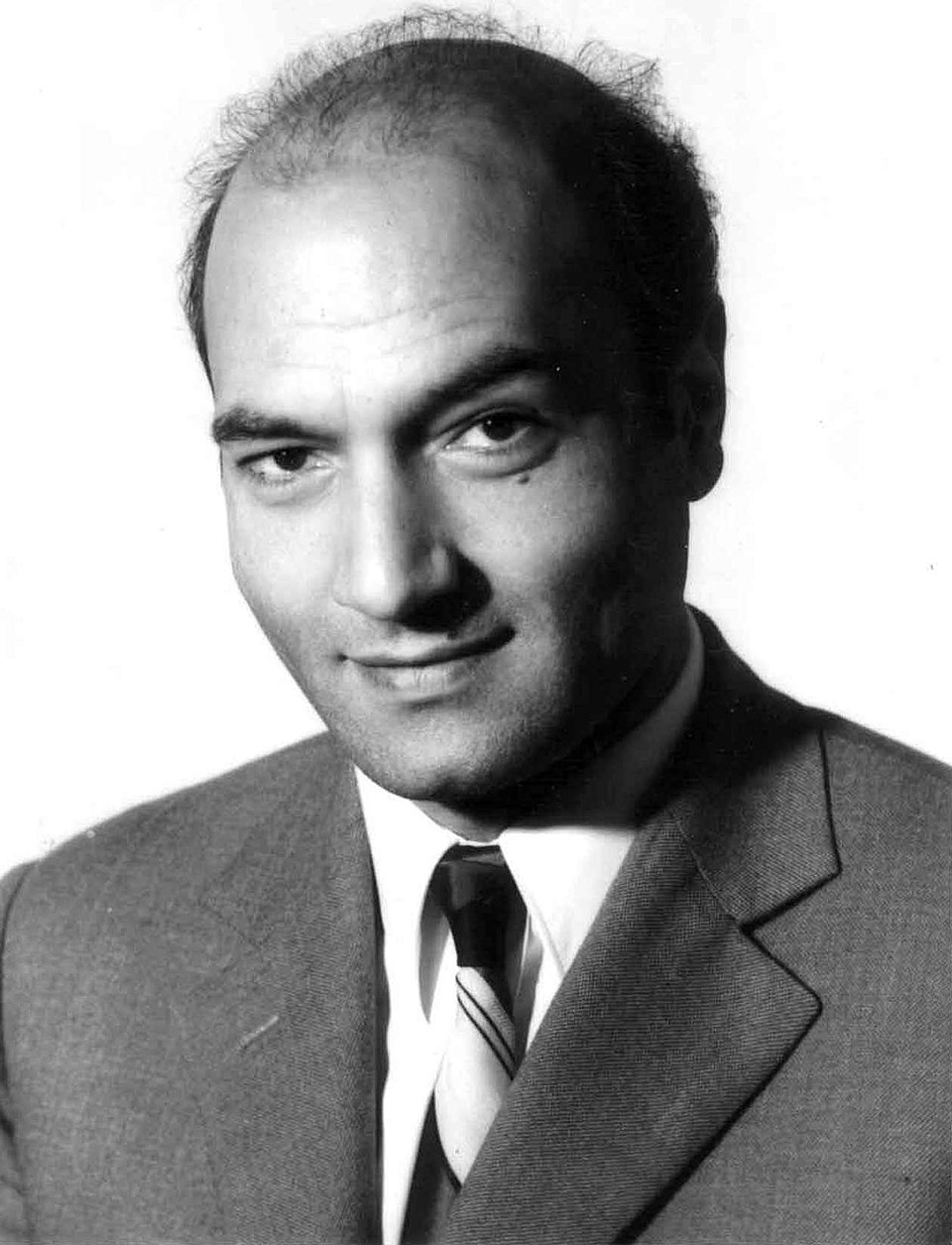
At a Glance
Mazinan and Mashhad: The Formation of a Revolutionary Mind
Ali Shariati was born in 1933 in the village of Mazinan in the arid highlands of Khorasan — far from Tehran, far from the main arteries of twentieth-century Iranian intellectual life, in a landscape of small agricultural communities where Shi'a Islamic practice was the organising principle of social existence rather than one cultural option among many. His father, Mohammad Taqi Shariati, was a religious scholar and teacher of unusual intellectual independence who had founded a Centre for the Propagation of Islamic Truths in Mashhad — an organisation committed to a modernist interpretation of Islam that sought to engage the secular currents of twentieth-century thought rather than retreat from them. The elder Shariati was a formative influence: from him Ali inherited both the framework of Islamic reference and the imperative to engage modernity on its own terms rather than by withdrawal.
Mashhad, the great pilgrimage city of northeastern Iran and home to the shrine of Imam Reza, was Shariati's real intellectual formation ground. He studied at the city's Teacher Training College, where he was drawn simultaneously into Persian classical literature, contemporary socialist politics, and the emerging discourse of Islamic modernism. He was involved in the National Front — the broad nationalist coalition associated with Mohammad Mosaddegh — and was briefly imprisoned in 1957, after the CIA-backed coup of 1953 had restored the Shah and the security services were systematically suppressing opposition political organisation. The coup against Mosaddegh — the destruction of Iran's most promising democratic experiment by Anglo-American intelligence services protecting oil interests — radicalized Shariati permanently. It confirmed for him that Iran's political problem was inseparable from its colonial subordination, and that any serious liberation politics had to grapple with both dimensions simultaneously.
Paris and the Sorbonne: The Making of a Revolutionary Intellectual
Shariati arrived in Paris in 1960 on a government scholarship to pursue graduate study in sociology and history of religions at the Sorbonne. The Paris he entered was one of the most intellectually explosive cities in the world: the Algerian War was reaching its climax, bringing the violence of anticolonial struggle directly into French political life; Frantz Fanon was writing The Wretched of the Earth; Jean-Paul Sartre was at the height of his political engagement; Third World liberation movements were transforming the global political map. Shariati immersed himself in all of it. He translated Fanon into Persian and wrote a preface arguing that Fanon's analysis of colonial alienation and the psychology of the colonised applied directly to Iran. He translated works of Che Guevara and the liberation theology emerging from Latin America. He read existentialism and engaged it as a resource for rethinking Islamic concepts of human freedom and responsibility.
His academic supervisors were figures of the first rank: Louis Massignon, the great French Catholic orientalist whose mystical sympathy for Islamic spirituality was a profound influence on Shariati's thinking about the inner dimensions of religious practice; and Georges Gurvitch, the Russian-French sociologist who provided him with the theoretical tools for a sociological analysis of religion as a living social force rather than a set of doctrinal propositions. Shariati's doctoral work engaged Islamic history and sociology with the analytical rigour of the French academic tradition, but his intellectual project was from the beginning aimed at a different audience and a different purpose: he was constructing a framework that could serve as the ideological foundation for an Iranian liberation movement.
He was also politically active in Paris. He participated in the activities of the Iran Liberation Movement, wrote for Persian-language oppositional publications, attended demonstrations in solidarity with the Algerian revolution, and developed the dense network of contacts among Third World intellectuals and anticolonial activists that would later inform both his ideas and his organisational reach. By the time he returned to Iran with his doctorate in 1964, he had synthesised a body of thought that had no real precedent in Iranian intellectual history: an Islamic liberation theology grounded in Western social theory, capable of speaking simultaneously to the religious and the secular, the traditional and the modern.
Red Shi'ism vs. Black Shi'ism: The Core Argument
The most important single conceptual move in Shariati's work was his distinction between what he called "Red Shi'ism" and "Black Shi'ism." This distinction, worked out across dozens of lectures and texts, was the intellectual key to his entire political project. Black Shi'ism, in Shariati's framework, was the Shi'ism of the clerical establishment — institutional, politically quietist, consolatory, focused on ritual commemoration of the martyrdom of Imam Husayn at Karbala in forms that produced grief and collective emotional release but no political mobilisation. Black Shi'ism had historically served the interests of ruling dynasties by providing a religious framework that directed popular energy into mourning rather than action, and by consolidating the clerical class's position as indispensable intermediaries between the people and the divine. It was, in Shariati's analysis, a form of ideological subjugation that disguised itself as authentic devotion.
Red Shi'ism was the recovered original: the Shi'ism of Ali and Husayn, which was in Shariati's reading a revolutionary tradition of resistance to unjust power, of standing with the oppressed against the oppressor unto death, of choosing martyrdom over complicity. The tragedy of Karbala, properly understood, was not a story of passive suffering to be commemorated in tears but a political act of defiance against tyranny that demanded emulation — not the ritual re-enactment of grief but the practical continuation of resistance. This reading allowed Shariati to redirect the enormous emotional charge of Shi'a piety — the most politically powerful affective resource in Iranian popular life — from quietism to revolutionary action. The martyr of Karbala became not a figure whose suffering called for mourning but a model whose example called for struggle.
The argument was simultaneously a critique of the clerical establishment — which profited from Black Shi'ism — and a vindication of Islamic tradition as a revolutionary resource against those secular leftists who argued that Islam was inherently a force of reaction. Shariati insisted that the failure of Islamic societies to achieve liberation was not the fault of Islam but of the clerical class that had distorted it in its own institutional interests. The authentic Islam of the Prophet, Ali, and Husayn was the original liberation theology — the first, and perhaps most powerful, tradition of standing with the dispossessed against those who exploited them.
The Husayniyya Irshad and the Mass Mobilisation of a Generation
Between 1967 and 1973, Shariati lectured at the Husayniyya Irshad — a religious-cultural institute in Tehran that had been founded as a modernist alternative to the traditional mosque-based religious education system. The lectures he delivered there, recorded on cassette tapes that circulated across Iran in the thousands, were the most important act of political education in twentieth-century Iranian history. Thousands crowded into the institute to hear him; thousands more listened to the tapes in living rooms, dormitories, and factories. He spoke for hours at a stretch, ranging across Islamic history, sociology, philosophy, Persian literature, and global anticolonial politics, in a Persian prose style that combined scholarly rigour with prophetic passion.
His audiences were the educated children of the Iranian middle class — university students, young professionals, people who had been exposed to secular modernity through Iranian and Western education but retained deep roots in Islamic culture and found the Shah's authoritarian modernisation both culturally alienating and politically suffocating. For this generation, the secular left offered ideological coherence but required them to regard their own religious tradition as a form of backwardness to be overcome. Shariati offered something more: an argument that their Islamic heritage was not an obstacle to liberation but its most authentic Iranian form — that they could be simultaneously modern, anticolonial, and Muslim, that these were not contradictions but expressions of a single revolutionary commitment.
SAVAK recognised the danger. In 1972, the institute was closed by government order, and Shariati was imprisoned. He spent eighteen months in Evin Prison before international pressure — including campaigns by Algerian intellectuals he had known in Paris — secured his release in 1975. He was placed under house arrest and forbidden to teach or publish. In May 1977, the restrictions were eased enough to allow him to leave Iran. He went to London. Three weeks later he was dead.
Fanon, Sartre, and the Third World: Shariati's Global Synthesis
What made Shariati's work uniquely powerful was its systematic synthesis of resources from traditions that were not supposed to be compatible. From Frantz Fanon he took the analysis of colonial alienation — the psychological damage inflicted on colonised peoples by the internalisation of the coloniser's values and the contempt for one's own culture — and the argument that liberation required first a return to authentic selfhood, a recovery of indigenous cultural identity, before political liberation could be achieved. Shariati's concept of bazgasht be khishtan — "return to self" — applied this directly to Iran: the Iranian intellectual class had been colonised not just politically but culturally, measuring itself by Western standards, ashamed of its Islamic heritage, trying to become something it was not. The first act of liberation was to stop pretending.
From existentialism — primarily Sartre, but also Camus and Heidegger filtered through the specific concerns of anticolonial thought — he drew a concept of human freedom as radical responsibility, of authentic existence as the willingness to choose one's values and act on them in the face of an indifferent or hostile world. This he mapped onto the Islamic concept of taklif — religious obligation — arguing that the authentic Muslim was precisely the person who chose their Islamic commitment freely and acted on it with full awareness of its consequences, rather than performing inherited ritual out of habit or social pressure. The intersection of existentialist freedom and Islamic obligation became one of the most generative conceptual spaces in his work.
From Western sociology — especially the tradition of Durkheim, Weber, and Gurvitch — he derived analytical tools for studying religion as a social institution, for distinguishing between religion as a force of emancipation and religion as a force of social control, for tracing the historical processes by which revolutionary religious movements become institutionalised and domesticated. These tools he turned, with characteristic intellectual honesty, on Islam itself — including the Shi'a tradition he was simultaneously championing as a liberation resource.
The Islamic Republic and the Suppression of Shariati's Legacy
The revolution that came in 1979 was in crucial respects Shariati's revolution — its language, its symbols, its emotional architecture bore the unmistakable marks of his two decades of intellectual labour. The young people who filled the streets calling for the Shah's overthrow had grown up on his cassette tapes. The synthesis of Islamic authenticity and anticolonial liberation politics that gave the revolution its mass appeal was the synthesis he had spent his life constructing. Ayatollah Khomeini was shrewd enough to claim the revolution's leadership, but the ideological work that made the revolution possible had been Shariati's.
The problem for the Islamic Republic was that Shariati's Islam was not Khomeini's Islam. Shariati had been deeply suspicious of clerical political authority — his "Black Shi'ism" critique applied directly to the institutional clergy, including political clergy. He had argued for a direct relationship between the Muslim and the divine, mediated by the community rather than by a priestly class. He had championed women's emancipation, democratic governance, and intellectual freedom as Islamic values. His Fatima Is Fatima — a reconstruction of the Prophet's daughter as a model of active, politically engaged womanhood — was irreconcilable with the Islamic Republic's treatment of women as subjects of male guardianship. His democratic and anti-clerical impulses were irreconcilable with the doctrine of velayat-e faqih — clerical guardianship of the state — that Khomeini made the constitutional foundation of the Islamic Republic.
The regime's response was selective appropriation and systematic suppression. Shariati's name and image were everywhere in the early revolutionary period; his anti-imperialist politics and his recovery of Islamic revolutionary tradition were loudly celebrated. But key texts were quietly removed from circulation, his democratic and anti-clerical arguments were not taught, and scholars who drew on the full range of his work rather than the approved selections were marginalised. The man who had been called the Teacher of the Revolution became, in the Islamic Republic's cultural politics, a usable icon whose most important ideas could not be permitted to circulate freely. It was, in its way, the most eloquent possible tribute to how dangerous those ideas remained.
Legacy: The Unfinished Revolution
Ali Shariati died at forty-four, his most systematic theoretical work unfinished, his political project at the moment of its apparent triumph already being appropriated by forces that would betray its core commitments. He left behind thirty-six volumes of lectures, essays, and books — a body of work that has never stopped being read, argued over, banned, circulated underground, and invoked by successive generations of Iranians trying to understand where their revolution went wrong and what it might yet become. His insistence that authentic Islam was incompatible with despotism, that the tradition of Karbala demanded active resistance to unjust power, that liberation required both political and cultural dimensions — these remain live arguments in Iranian intellectual and religious life, perhaps more urgently than at any point since his death.
Outside Iran, he stands as one of the most important Third World intellectuals of the twentieth century — a figure who demonstrated, with a rigour and passion that few matched, that the encounter between Islamic tradition and the global left could produce something genuinely new rather than a mere synthesis of borrowed positions. His influence extends to Islamic liberation theology movements across the Muslim world, to scholars of religion and society who have learned from his method of reading religious traditions as social forces, and to the ongoing global conversation about the relationship between faith, freedom, and political struggle that shows no sign of resolution. He was, in the deepest sense, a revolutionary who succeeded beyond his own imagining — and whose success contained, from the beginning, the seeds of its own betrayal.