Origins: The Village and the Land
Emiliano Zapata was born on 8 August 1879 in Anenecuilco, a small indigenous village in the state of Morelos, in the fertile sugar-producing valleys south of Mexico City. He was the ninth of ten children of Gabriela Salazar and Gabriel Zapata, a mestizo horse-trainer and small farmer who occupied a modest but respected position in the village. Morelos in the late nineteenth century was a place of acute and worsening contradiction: it produced more sugar per square kilometre than anywhere in the world, and the vast majority of its people owned nothing. The hacienda system — great estates that had been expanding for decades by absorbing communal village lands through legal manipulation, bribery, and outright theft — had by 1900 swallowed most of the arable land in the state. The villages that had farmed the same fields since before the Spanish conquest found themselves squeezed onto fragments of their original territories, their water rights stolen, their young men forced to work as debt peons on the estates of men who had taken their grandfathers' land.
Zapata grew up understanding this dispossession not as an abstraction but as a daily material reality. He could look at the horizon from Anenecuilco and see fields his community's ancestors had farmed for centuries, now bearing the cane of the Amor family hacienda. He received a basic education, became a skilled horseman — so skilled that he was briefly employed in Mexico City to care for the horses of a wealthy patron — and returned to Morelos with his practical knowledge deepened and his political consciousness sharpened. In 1909, at the age of twenty-nine, he was elected president of Anenecuilco's village council — the governing body that held the community's ancient title deeds and administered its collective affairs. He inherited a village that was losing its last fields to hacienda expansion and a set of legal documents that proved, if anyone in the government cared to acknowledge them, that the land had belonged to his people for four hundred years.
The Revolution Begins: 1910–1911
When Francisco Madero launched his uprising against the thirty-five-year dictatorship of Porfirio Díaz in November 1910, Zapata saw an opportunity. He was not a Maderista by ideology — he had no particular investment in Madero's liberal constitutional programme — but the promise of political change opened a space in which the land question might finally be addressed. In March 1911, Zapata allied his forces with Madero's revolution and began mobilising the peasants of Morelos. By May he had an army of several thousand and had captured the town of Cuautla after a ten-day siege, cutting off Morelos from the capital and demonstrating that the revolution in the south had a military capability that could not be ignored.
Díaz was forced to resign in May 1911. Madero entered Mexico City in triumph. And almost immediately the fundamental conflict between the urban liberal revolution Madero represented and the agrarian revolution Zapata represented became apparent. Madero wanted order, gradualism, and elections. He asked Zapata to disarm his forces and wait for the legal process to address land reform. Zapata refused. He had not fought to wait. "The land belongs to those who work it" was not a political slogan to be deferred pending constitutional review — it was the lived experience of every person in his army.
"It is better to die on your feet than to live on your knees."
— Attributed to Emiliano ZapataThe Plan de Ayala: A Programme for the Landless
On 28 November 1911, Zapata issued the Plan de Ayala — the founding document of his revolution and one of the most radical land reform programmes in Latin American history. Drafted with the help of the schoolteacher Otilio Montaño, the Plan de Ayala repudiated Madero as a traitor to the revolution and laid out a clear programme: all lands, woods, and waters that had been seized from villages, municipalities, and citizens by the haciendas were to be immediately restored to their original owners. A third of all hacienda land was to be expropriated with compensation and redistributed. Landowners who resisted would have their properties nationalised entirely. The plan invoked the communal land rights enshrined in Mexican law since the colonial period and demanded that the revolution honour them.
The Plan de Ayala was not merely a political document. It was a statement of philosophical principle rooted in the lived experience of indigenous and mestizo peasant communities. Zapata was drawing on a tradition of communal land ownership — the ejido system — that predated Spanish colonialism and had been recognised, however imperfectly, in Mexican law for centuries. The Díaz regime had systematically dismantled these protections. Zapata's plan demanded their restoration. It was a programme for the reversal of four centuries of dispossession, expressed in the blunt and urgent language of people who had nothing left to wait for.
War in Morelos: The Liberation Army of the South
For the next eight years Zapata fought a guerrilla war across Morelos and the surrounding states that no government could definitively suppress and no compromise could extinguish. His Liberation Army of the South — drawn from the peasant communities of Morelos, Guerrero, Puebla, and Tlaxcala — fought with the intimate knowledge of terrain that characterises all effective guerrilla forces. They could disperse into the villages from which they had come and reappear weeks later as a coherent military force. Federal army campaigns would sweep through Morelos, burning villages, destroying crops, deporting suspected Zapatistas to forced labour in the henequen fields of Yucatán, declaring victory — and find the Zapatistas back in control within months.
The political succession of the revolutionary period brought Zapata into conflict with a sequence of enemies. He fought Madero's attempts at pacification in 1911–1912. When the counter-revolutionary general Victoriano Huerta overthrew and murdered Madero in February 1913, Zapata was already fighting — and continued fighting. When the Constitutionalists under Venustiano Carranza and the División del Norte under Pancho Villa fought Huerta and eventually toppled him in 1914, Zapata joined the alliance while maintaining his independence. When Carranza emerged as the dominant power and proved as hostile to land reform as Díaz and Huerta had been, Zapata and Villa became his enemies too.
The Occupation of Mexico City: December 1914
In December 1914 the Zapatista army occupied Mexico City — the largest city in the hemisphere, capital of a country it had never previously attempted to control. The occupation produced one of the most famous and revealing episodes of the Mexican Revolution. Zapata's soldiers — barefoot peasants in white cotton, their enormous sombreros dusty from the road — entered the Palacio Nacional and the grand hotels of the Paseo de la Reforma. They went to the kitchens of the wealthy and asked for food rather than taking it. They attended a grand banquet held in their honour at the city's finest restaurant, sat uncomfortably in chairs designed for people whose bodies were accustomed to furniture, and spoke among themselves about going home. Zapata himself is reported to have sat in the presidential chair in the Palacio Nacional and felt nothing but unease. He had not come to govern Mexico. He had come to ensure that Mexico's government gave back what it had taken.
The occupation confirmed something essential about Zapata's revolution: it was not interested in state power for its own sake. Where Villa wanted military glory and personal authority, where Carranza wanted institutional control, Zapata wanted land. His army occupied Mexico City for weeks, held it without looting or significant violence, and then returned to Morelos to continue fighting for the villages they had left. The failure to consolidate political power at the national level was, in retrospect, both Zapata's strength and his strategic limitation.
The Revolution Betrayed: Carranza and the Constitution of 1917
Venustiano Carranza defeated Villa militarily by 1916 and consolidated national power. The Constitution of 1917 — one of the most progressive constitutional documents of its era, including provisions for land reform under Article 27, labour rights under Article 123, and restrictions on the Catholic Church's economic power — incorporated much of what Zapata had demanded in the Plan de Ayala, at least in formal terms. But Carranza had no intention of implementing it in Morelos. His military campaigns against the Zapatistas were relentless and deliberately brutal: the commander Gonzalo Robles led a strategy of systematic depopulation, burning villages, destroying harvests, and killing livestock to deny the guerrillas their base of support. The population of Morelos fell by perhaps one-third during the revolutionary decade. Zapata continued fighting, but the war was taking a catastrophic toll on the communities he was fighting to protect.
By 1919, Zapata was seeking to expand his alliances and break the military stalemate. Colonel Jesús Guajardo, a Carrancista officer, made overtures suggesting he was prepared to defect with his men and their weapons to the Zapatista cause. Zapata was sceptical but desperate enough to test the offer. On 10 April 1919, he rode to the Hacienda de Chinameca in Morelos to meet Guajardo. As Zapata rode through the gate with a small escort, Guajardo's troops raised their rifles and fired. It was an ambush. Zapata died in the courtyard of Chinameca, aged thirty-nine, shot from a distance of metres. Guajardo collected his reward: 50,000 pesos and promotion to the rank of general.
Legacy: The Land and the Symbol
Zapata's body was photographed, displayed publicly in Cuautla to prove his death, and buried. Within days rumours began circulating that he had not died — that the body was a substitute, that Zapata had escaped to the mountains of Guerrero or across the sea to Arabia, that he would return when his people needed him. These legends persist in Morelos to the present day. They reflect something real about his relationship to the communities he had defended: he was not merely a military commander or a political leader but a representation of a historical grievance and a moral principle that outlasted any individual life.
The land reform that Zapata died demanding was partially implemented under President Lázaro Cárdenas in the 1930s, when millions of hectares of hacienda land were redistributed to ejido communities across Mexico. The ejido system he had fought to preserve and expand remained a cornerstone of Mexican rural life for decades, until its constitutional protections were weakened by the 1992 reforms that prepared Mexico for NAFTA. The Zapatista Army of National Liberation — the EZLN — that emerged from the Chiapas jungle on 1 January 1994, the day NAFTA took effect, explicitly invoked Zapata's name, his image, and his demand: land, liberty, and dignity for the indigenous poor. More than seventy years after his death, Emiliano Zapata's unfinished revolution was still being fought, in his name, by the same people for whom he had fought it.
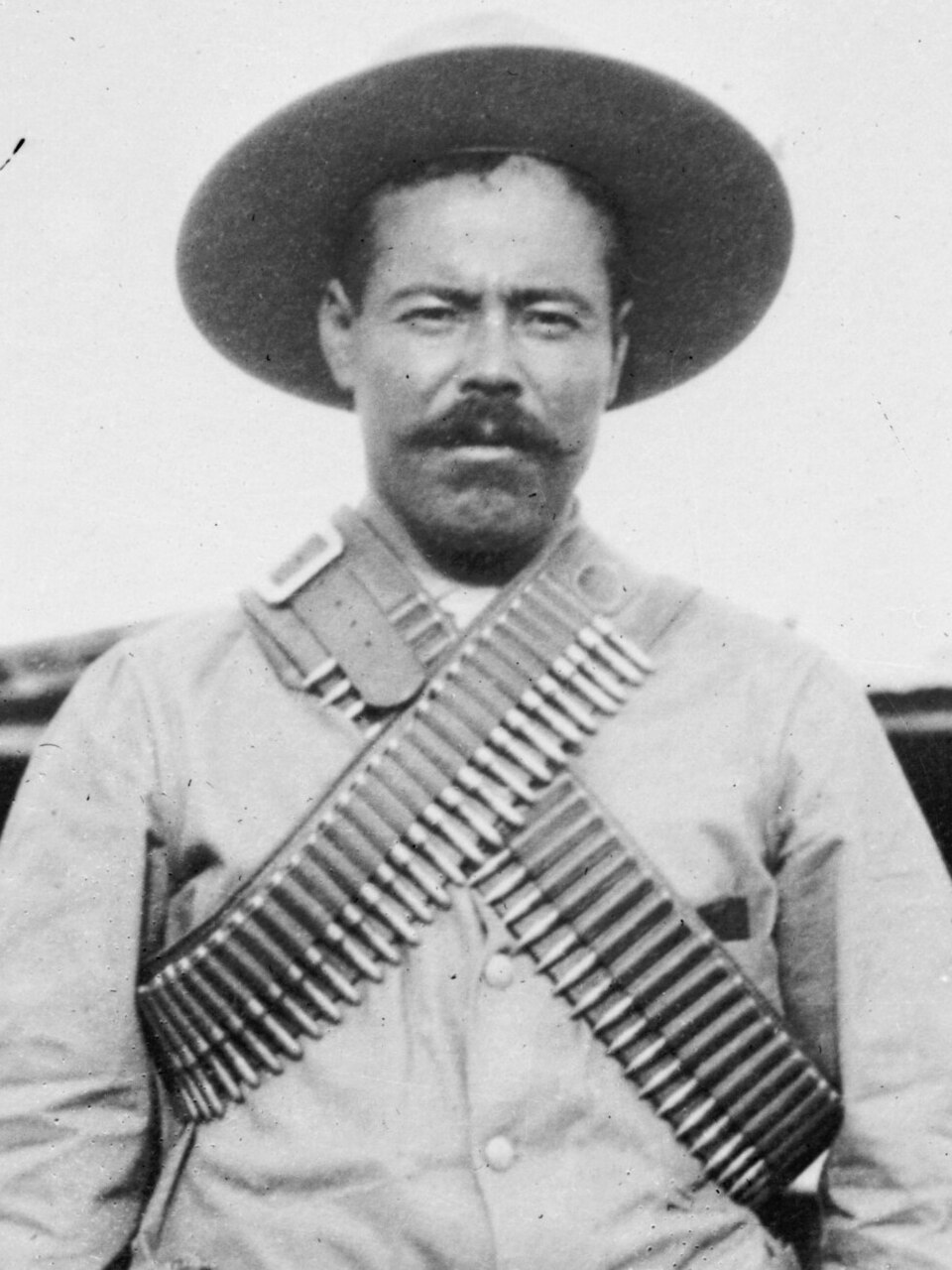
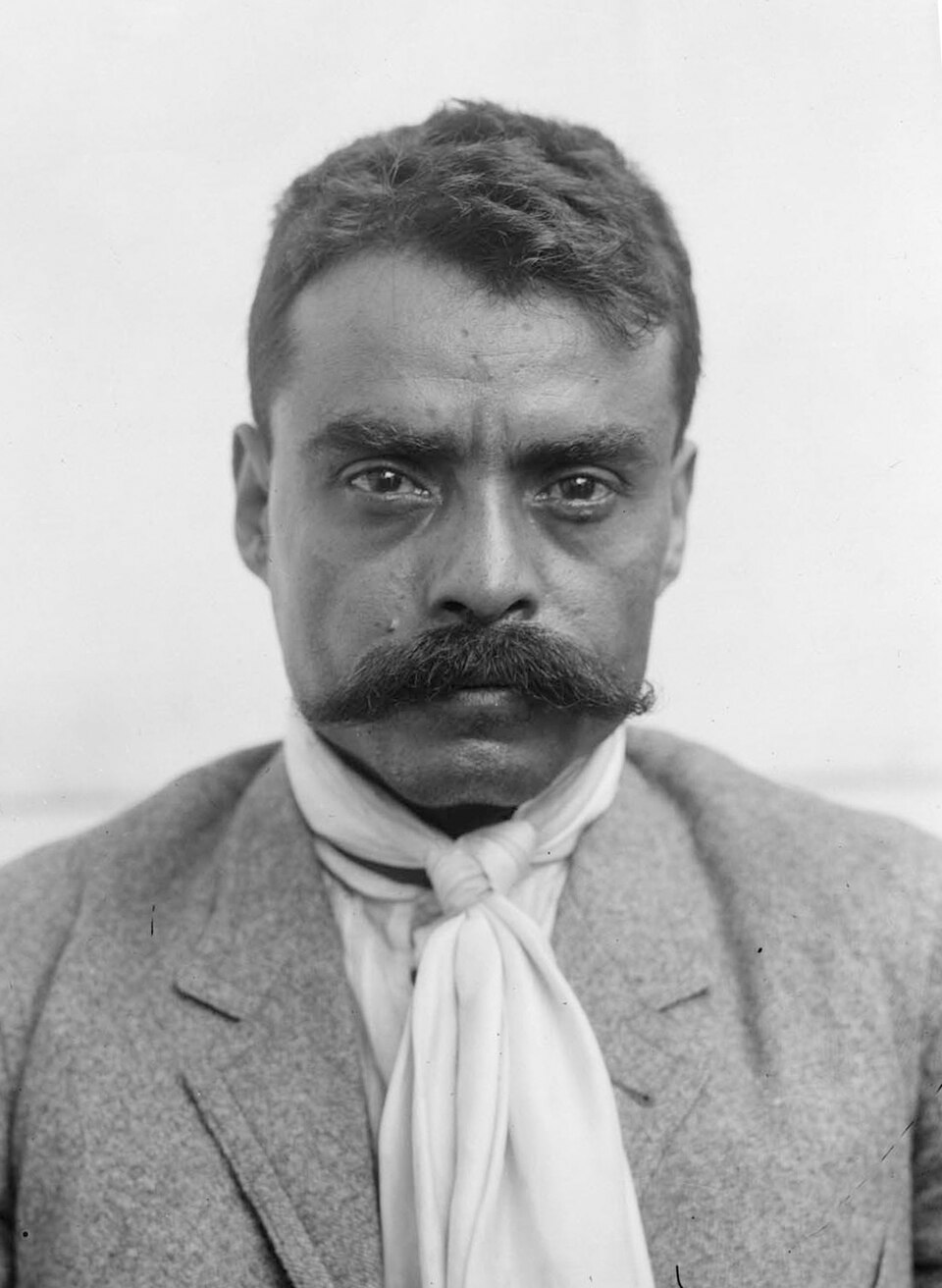
His face — broad-brimmed sombrero, heavy moustache, ammunition belts crossed over a white shirt, dark eyes that concede nothing — is the most reproduced image of the Mexican Revolution and one of the most recognisable faces in the political iconography of the Americas. It appears on murals across Mexico, on the walls of universities in Latin America, on banners at land rights protests from Chiapas to California. He is the patron saint of the dispossessed — not because he succeeded in giving them the land, but because he refused, with absolute consistency and at the cost of his life, to pretend the theft had not occurred.