At a Glance
Kabaka Yekka and the Constitutional Bargain of Independence
To understand Daudi Ocheng's political position, it is necessary to understand what Kabaka Yekka was and what it represented in the political geography of early independent Uganda. KY was not a conventional political party — it did not have a policy programme in the ordinary sense, did not seek to govern Uganda in its own right, and did not present itself as a vehicle for national political ambition. It was, rather, the organised expression of Ganda royalist political culture: the institutional form of the conviction that Buganda's relationship with the Ugandan national state had to be negotiated from a position of strength, and that the Kabaka Mutesa II's position as both the Kabaka of Buganda and the ceremonial President of Uganda was the guarantee of Buganda's special status within the independence settlement.
The KY-UPC alliance that brought Obote to power at independence in October 1962 was the political deal that made Ugandan independence work — at least in the short term. Obote's Uganda People's Congress could win a parliamentary majority only with Ganda votes, and it could get Ganda votes only by accepting the constitutional arrangements that gave Buganda its federal status and Mutesa II his ceremonial presidency. KY's willingness to enter the alliance was conditional on those arrangements being maintained, and Ocheng was among those who held Obote to those conditions — who used the parliament to insist that the bargain of independence was a binding commitment and not merely a tactical convenience to be discarded once the UPC was in power.
The Congo's Chaos and the Gold That Crossed the Border
The eastern Democratic Republic of Congo in 1964 and 1965 was one of the most violent and ungoverned territories on earth. The Simba rebellion — a complex armed movement that drew on Lumumbist political tradition, on the specific grievances of eastern Congolese communities, and on the leadership of figures like Gaston Soumialot and Christophe Gbenye — had captured large areas of the eastern Congo and was being suppressed by a combination of Congolese government forces, white mercenaries, and CIA-backed operations that included Cuban exile fighters. The conflict was also caught up in the Cold War competition between the United States and the Soviet Union, with both superpowers funnelling support and resources into the Congolese conflict through various proxies.
In the midst of this chaos, the eastern Congo's gold and ivory — its most portable and valuable commodities — were moving across borders in quantities that reflected both the breakdown of Congolese state authority and the active involvement of people with military capacity and cross-border connections in exploiting that breakdown. Uganda's western border with the Congo was the relevant transit point, and the Ugandan military's presence in the border region — managing the flow of Congolese refugees, maintaining the border, and engaging in the various activities that military presence in a resource-rich border area makes possible — created both opportunity and cover for the movement of looted goods.
The Parliamentary Moment: Raising What Could Not Be Ignored
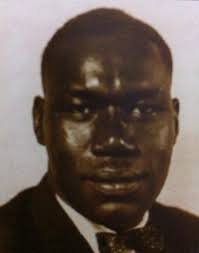
Ocheng's decision to bring the gold and ivory allegations to the floor of the Ugandan parliament in early 1966 was a decision to use the one institutional mechanism that democratic governance provides for holding the executive to account — the power of a legislator to raise, in a public forum with parliamentary privilege and a record, specific and documented allegations against executive officials and demand a response. The allegations he raised were not vague or general: he named names, cited specific transactions, and presented documentary evidence that gave his charges substance.
The parliamentary procedure was exactly the procedure that democratic theory says parliaments exist to perform — the scrutiny of executive conduct, the raising of allegations of official misconduct, the demand for investigation and accountability. The fact that the government's response was to suppress rather than investigate was the most direct possible demonstration that something was indeed very wrong, and that the something was not merely the specific gold transactions but the relationship between the executive, the military, and the legal system that made such transactions possible and investigation of them threatening.
The five cabinet ministers who signed the memorandum calling for an inquiry — Grace Ibingira, Mathias Ngobi, George Magezi, Emmanuel Lumu, and Balaki Kirya — were doing their constitutional duty as members of a cabinet in a parliamentary system: supporting the parliament's demand for accountability in relation to credible allegations of government misconduct. That Obote responded by arresting them was not only an abuse of executive power but a signal that the constitutional framework of independent Uganda was no longer functioning as its designers had intended.
Obote's Constitutional Coup and Its Consequences
The sequence of events that followed Ocheng's parliamentary allegations moved quickly. In February 1966, Obote arrested the five ministers. In April 1966, he suspended the constitution — abrogating the independence constitutional arrangements that had been so carefully negotiated at Lancaster House — and introduced a new constitution that gave the executive sweeping powers and effectively ended the federal arrangements that had guaranteed Buganda's special status. In May 1966, he ordered the army — under Idi Amin's command — to attack the Kabaka's palace on Mengo Hill, forcing Mutesa II to flee into exile in Britain, where he died in 1969.
The constitutional coup was the pivotal moment in Uganda's post-independence history — the moment when the fragile democratic framework that independence had produced was abandoned in favour of executive authoritarianism justified by the rhetoric of national unity and modernisation. Uganda had not been the only African country to experience such a moment in the 1960s — the pattern of military coups and constitutional suspensions was common across the continent — but the specific character of Uganda's crisis, with its origins in a parliamentary accountability exercise over gold smuggling, gave it a particular quality of tragic irony.
Amin Protected, Amin Empowered, Amin Triumphant
The relationship between Ocheng's allegations and Amin's subsequent political trajectory was one of the most consequential ironies in Ugandan history. Ocheng had named Amin as a participant in the gold smuggling — had put on the parliamentary record specific allegations about the army commander's conduct that, if investigated and proven, would have ended Amin's military career and presumably his freedom. Obote's response had protected Amin from those consequences, burying the parliamentary inquiry under the constitutional coup that the inquiry had helped to provoke.
Obote then used Amin to enforce the constitutional coup — it was the Ugandan army under Amin's command that attacked the Kabaka's palace and consolidated Obote's control over a Uganda that no longer had the constitutional structures to restrain what either Obote or Amin might choose to do. The army had become the decisive political actor, and Amin was its commander. When Amin turned against Obote in January 1971 — launching the coup that took power while Obote was in Singapore — he was using the instrument of power that Obote had built and handed to him, against the man who had built and handed it.
What Parliamentary Accountability Requires
Ocheng's career and its consequences raise a question that goes beyond the specific circumstances of Uganda in 1966: under what conditions can parliamentary accountability function, and what happens when those conditions are absent? The conditions that parliamentary accountability requires include a government willing to be held to account — willing to investigate credible allegations, to subject itself to scrutiny, to accept that parliamentary oversight is legitimate even when it is uncomfortable — and a legal system capable of enforcing consequences when accountability reveals misconduct.
Uganda in 1966 lacked those conditions. The government was not willing to be held to account — its response to parliamentary accountability was to suppress the parliament. The legal system was not capable of enforcing consequences — the executive controlled the instruments of force that the legal system's effectiveness ultimately depended on. In those conditions, parliamentary accountability not only failed to achieve its purpose but triggered a political response that destroyed the institutional framework within which such accountability could be attempted.
This is not an argument against parliamentary accountability — it is an argument for understanding the conditions that make it possible, and for recognising that those conditions are not automatically produced by the formal adoption of parliamentary institutions. Ocheng did what he was supposed to do, in the institutional role he occupied, with the evidence he had. The consequences were not a product of his failure but of the failure of the larger political system to support what he was doing.
1967: Death in the Shadow of What Had Happened
Daudi Ocheng died in 1967 — one year after the crisis, in a Uganda that was already fundamentally different from the country in which he had raised his parliamentary allegations. The kingdoms had been abolished, the federal arrangements of independence had been swept away, the five cabinet ministers who had called for an inquiry were in detention, and the constitution under which Uganda had been independent for barely five years had been replaced with one designed to prevent the kind of parliamentary accountability that Ocheng had attempted. He did not live long enough to see Amin's coup, or the full horror of what Amin's rule became, or the eventual fall of Amin in 1979 and the troubled period of reconstruction that followed.
What he left behind was the record of his parliamentary work — the specific allegations, the documented evidence, the parliamentary debate that had taken Uganda's political crisis from its subterranean existence in government corridors into the public record where it could not be entirely suppressed even if it could be responded to with unconstitutional force. That record became, in the subsequent decades of Ugandan political history, a reference point for understanding how the Amin era had begun — how the chain of events that produced one of post-colonial Africa's most destructive regimes had started with a parliamentarian doing his job in the Ugandan National Assembly in the first years of independence.
Ocheng's significance in Ugandan history is not that of a leader who built institutions or led a movement or governed a country through a critical period. It is the significance of the person who, at a particular moment, insisted that accountability was required — who used the tools available to him to demand that power answer for itself — and paid whatever price that insistence extracted, while the consequences of the demand itself shaped Uganda's political history for decades afterward.