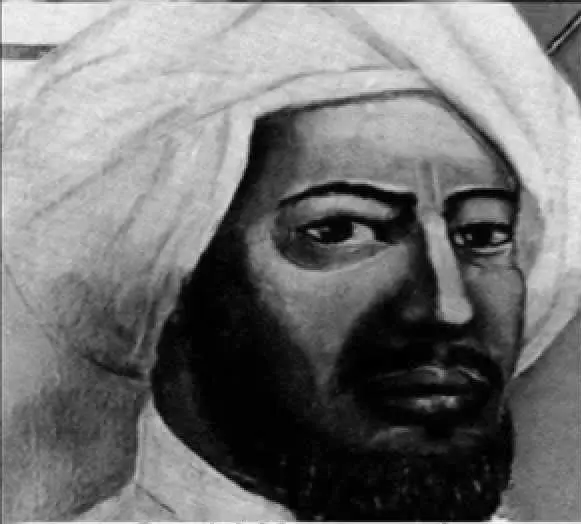
At a Glance
The Ogaden, the Dulbahante, and the Making of a Scholar-Warrior
Mohammed Abdullah Hassan was born in 1856 in the Ogaden — the vast semi-arid territory in the Horn of Africa whose Somali-speaking pastoral populations had maintained their traditional way of life largely outside the effective control of any centralised state until the late nineteenth century brought the simultaneous pressures of Ethiopian imperial expansion, British colonial establishment on the northern coast, and Italian colonial claims on the southern and eastern regions. His family's position within the Dulbahante clan's scholarly networks placed him in the specific stratum of Somali society where Islamic learning intersected with pastoral political authority — where the sheikh's religious credentials gave him social influence that extended beyond his clan networks and that could, in the right circumstances, be mobilised for purposes that transcended clan loyalty.
His early education combined Quranic study with the broader curriculum of the Islamic scholarly tradition — Arabic language and literature, Islamic law, theology, and the Sufi devotional practices that were central to Somali Islamic culture. This education gave him the intellectual formation of a scholar in a tradition that valued textual mastery, argumentation, and the ability to derive practical guidance from religious sources — a formation that would shape both the content of his resistance programme and the specific cultural form, the poem, through which he would communicate it to the pastoral Somali world.
The Journey to Mecca and the Salihiyya Encounter
Mohammed Abdullah Hassan made the hajj to Mecca in the 1890s — a journey that was simultaneously a religious obligation and an intellectual adventure, an immersion in the centre of the Islamic world at a moment when reformist currents were transforming the intellectual landscape of Sunni Islam. His encounter with Sheikh Muhammad Salih al-Rashid and his initiation into the Salihiyya order was the encounter that gave his subsequent career its specific theological direction: the Salihiyya's emphasis on strict observance, its critique of the innovation and laxity in Islamic practice that the Sheikh associated with Sufi syncretism, and its insistence on the obligation of Muslims to resist non-Muslim rule provided the religious framework within which Mohammed Abdullah Hassan would articulate his resistance programme upon his return to Somaliland.
The Salihiyya was not a revolutionary or explicitly political organisation, but its theological positions had direct political implications in the colonial context of British Somaliland in the late 1890s. The injunction to resist non-Muslim rule translated directly into resistance to British colonial authority; the critique of Somali leaders who accommodated colonial power became the foundation of Mohammed Abdullah Hassan's political attack on the clan chiefs and religious figures who collaborated with the British administration; and the Salihiyya's organisational network — the connections between initiates across the Islamic world — gave the movement he was building connections that extended beyond the specific territory of British Somaliland.
The Beginnings of Resistance: 1895–1900
Mohammed Abdullah Hassan returned to British Somaliland in 1895 and began what would become a five-year period of preaching, organising, and preparing for the armed resistance that his programme implied. His sermons attacked the British colonial presence directly — the Christian missionaries whose activities he saw as a threat to Somali Islamic practice, the colonial administrators whose authority he refused to recognise, and the Somali chiefs who had accepted British protection and thereby legitimised colonial rule. He built a following among the pastoral communities of the interior — people whose economic livelihood the colonial boundary-drawing and the restrictions on traditional raiding patterns had disrupted, and whose Islamic identity gave them the framework through which his resistance programme made sense.
The specific trigger for the shift from preaching to armed resistance is disputed in the historical record, but by 1899 the dervish movement was organising militarily and by 1900 the first major raid on the British-associated communities of the Ogaden and the Protectorate's interior had made the British colonial administration's problem explicit: there was, operating in the interior of British Somaliland and the adjacent territories, an armed movement under religious leadership that was beyond the reach of the Protectorate's small police and military forces and that was attacking the communities the Protectorate was supposed to protect.
Twenty-One Years of Dervish Warfare
The military history of the dervish resistance is the history of a movement that survived four major British military expeditions through a combination of tactical flexibility, geographic advantage, and the specific military culture of the Somali pastoral world — a culture in which mounted raiding, rapid movement, and the avoidance of set-piece battle were the traditional modes of military engagement. The dervishes were not a conventional army; they were a highly mobile force that operated in terrain — the semi-arid interior of the Somali peninsula, the broken country of the Ogaden — where conventional military forces moved slowly and expensively while the dervishes moved with the speed and knowledge of communities that had lived in these landscapes for generations.
The first British expedition of 1900 — a force of 1,500 men supported by Indian troops — pursued the dervishes into the interior without achieving decisive engagement. The second expedition of 1902–03 and the third of 1903–04 were similarly inconclusive, unable to force the set-piece battle that would allow British firepower advantages to determine the outcome. The 1905 Treaty of Illig — in which the dervishes were temporarily confined to the Ogaden under Italian administration in exchange for cessation of raiding — was a British recognition that military operations had not achieved the dervish movement's destruction, and the treaty's breakdown and the resumption of dervish raiding in 1908 led to the fourth expedition of 1908–10, which also failed to achieve decisive results.
Through all of these expeditions, Mohammed Abdullah Hassan maintained the movement's cohesion through the combination of military leadership and poetic communication that was his specific genius. His poems circulated across the Somali pastoral world as the movement's primary communication medium — recruiting followers, maintaining morale, explaining defeats and celebrating victories, attacking enemies, and articulating the theological and political philosophy that gave the resistance its meaning. The poems were simultaneously great literature and effective political communication: they worked because they were beautiful, and they were beautiful because they were true to the experience they described.
Taleh, the Airpower, and the End
The dervish state's political and military centre at Taleh — the network of mud-brick fortresses in the Ogaden that Mohammed Abdullah Hassan had constructed over years as the movement's administrative capital — represented both the achievement and the vulnerability of the dervish project. The construction of permanent fortifications was the transition from a purely mobile guerrilla force to a proto-state with fixed political geography; it was also the transition from a force that British conventional military operations could not catch to one that British airpower could destroy from above without the ground pursuit that the terrain had made so costly.
The 1920 expedition deployed the innovation that ended the resistance: the twelve aircraft of the RAF's Z Unit, operating in coordination with the Camel Corps and other ground forces, conducted the first bombing campaign in sub-Saharan African history against the dervish fortresses. The aerial bombardment of Taleh and Jid Ali, in January and February 1920, destroyed the physical infrastructure of the dervish state and scattered the dervish forces in ways that no previous British military operation had achieved. Mohammed Abdullah Hassan escaped the immediate destruction, retreating south into the Ogaden with a remnant of his forces, and died there in November 1920 — of influenza rather than in battle, a death that denied his resistance the martyrdom of combat but not the dignity of a life spent entirely in the service of the cause he had embraced at the turn of the century.
The Poetry: Literature as the Resistance's Soul
Mohammed Abdullah Hassan's poetic legacy is as significant as his military one — perhaps more so, because the poems have survived when the dervish state has long since passed into history, and because the specifically Somali form they embody, the gabay, remains the prestige form of the oral literary tradition that Somali culture maintains. His poems addressed his enemies by name, mocked them in terms that the Somali poetic tradition's specific conventions of insult made devastating, and articulated his own position — his faith, his determination, his understanding of what he was fighting for — in lines whose formal beauty and intellectual precision made them memorable in the specific way that oral poetry requires: quotable, rhythmically compelling, structurally memorable.
The poem in which he mourned the death of his favourite horse — the "Deyriyaha" or "Horse Poem" — is among the most celebrated texts in the Somali literary canon; the poems in which he attacked the British administrators who opposed him combined political argument with personal invective in the tradition of classical Somali oral combat poetry; and the poems in which he articulated his resistance programme combined the authority of Islamic scholarship with the specific imagery of the pastoral Somali world in ways that made his arguments comprehensible and compelling to the communities he was addressing. He was, in the fullest sense, a poet who happened also to be a military commander — not a military commander who happened to produce poems, but a man whose poetic gift was as central to his resistance as his tactical skill.
Legacy: The Father, the Poet, and the National Consciousness
Mohammed Abdullah Hassan died in November 1920 without achieving the independence he had fought for — the colonial powers remained in control of the Somali territories for another four decades. But his resistance had demonstrated something that would matter enormously to the subsequent independence movements: that Somali opposition to colonial rule could be organised, sustained, and militarily effective across a longer period than any previous anti-colonial resistance in British Africa had managed. The twenty-one years of the dervish resistance — the four British expeditions it had survived, the territories it had controlled, the communities it had mobilised — were the proof that Somali resistance was possible.
His status as the Father of the Somali Nation is the recognition that his resistance was the first articulation of specifically Somali national consciousness against the colonial partition — that before the Somali Youth League, before the independence movements of the 1940s and 1950s, before the First Republic and its democratic achievements, there was the Sayyid, who had said in 1900 that the colonial presence in Somali territory was illegitimate and who had backed that saying with twenty-one years of armed resistance. The specific form of that national consciousness — its combination of Islamic identity, pastoral Somali culture, and resistance to external domination — was the form that Mohammed Abdullah Hassan had given it, and the subsequent independence movement built on that foundation whether or not it always acknowledged doing so.
His poetry endures because it is genuinely great literature — because the specific combination of intellectual power, formal mastery, and authentic emotion that great poetry requires was present in his work in a degree that the oral tradition has preserved across a century. The poems are read, recited, and studied in Somali schools and cultural institutions not as historical documents but as living literature — as the expressions of a voice that the Somali language has not surpassed and that the Somali literary tradition regards as its classical foundation. He was a warrior, a religious leader, a political organiser, and a military commander; he was also, and perhaps most lastingly, a poet. The combination makes him one of the most remarkable figures in the entire history of African resistance to colonialism.