At a Glance
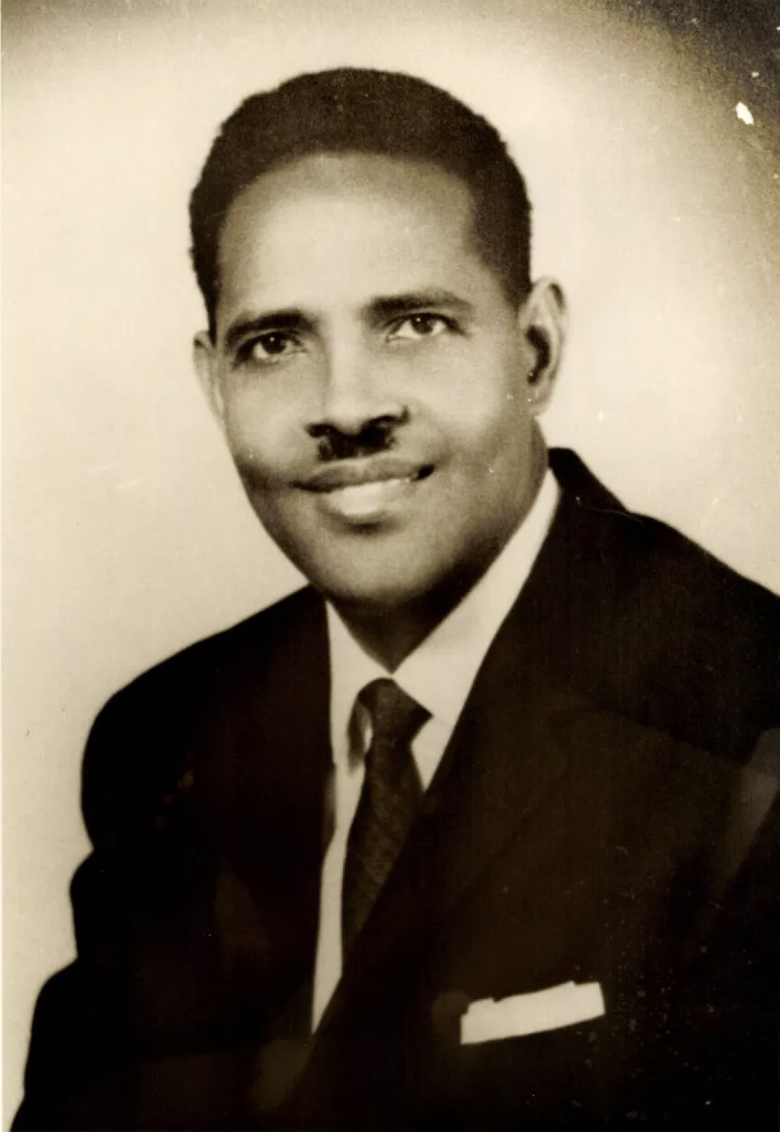
The Ogaden, the Darod Clan, and the Formation of a Democrat
Abdirazak Haji Hussein was born in 1924 in the Ogaden region, the vast Somali-inhabited territory whose contested status between Ethiopian sovereignty and Somali nationalist aspiration made it one of the defining geopolitical problems of the Horn of Africa. His family belonged to the Darod clan family — the largest of the major Somali clan confederations, whose members were distributed across British Somaliland, Italian Somalia, the Ogaden under Ethiopian control, and the Northern Frontier District of Kenya. This geographical dispersal of the Darod across colonial boundaries gave Abdirazak's political consciousness from the beginning a pan-Somali character that transcended the specific administrative unit of the Italian Trust Territory in which he would eventually build his political career.
His education through the colonial administrative system gave him the practical skills — Arabic and Italian literacy, administrative procedure, knowledge of the formal governance structures that colonialism had imposed — that the transition to self-governance would require. He was part of the generation that colonialism educated for subordinate administrative roles and that instead used that education to organise the independence movements that ended colonial rule. The specific formation of the colonial educated class in the Trust Territory — different in character from the Somaliland Protectorate's educated class, which had been shaped by British rather than Italian administrative culture — gave the southern Somali political leadership its particular institutional character, one that would both enable and complicate the post-independence union of the two territories.
The Somali Youth League: Building the Political Nation
The Somali Youth League, which Abdirazak joined and within which he developed his political career, was one of the most significant nationalist organisations in post-war East Africa — remarkable not merely for its role in achieving independence but for the breadth of its pan-Somali vision and the seriousness with which it attempted to build a genuinely national rather than merely colonial-territory-based political movement. Founded in 1943 by a group of young Somali civil servants and traders in Mogadishu, the SYL articulated from the beginning the aspiration that all Somali-inhabited territories — the Trust Territory, British Somaliland, the Ogaden, the NFD — should be united in a single independent Somali state.
This pan-Somali vision was simultaneously the SYL's greatest political achievement and the source of the irredentist foreign policy commitments that would strain independent Somalia's relations with Ethiopia and Kenya and contribute to the military's eventual justification for the 1969 coup. Abdirazak's engagement with this vision was genuine — he had personal connection to the Ogaden's contested status — but his practical political career was focused on the construction of functional governance within the Trust Territory, the administrative foundation that independence required. The tension between the pan-Somali vision and the practical requirements of governing the specific state that emerged from the 1960 union was a tension that ran through the entire First Republic period and that Abdirazak navigated more skillfully than most.
Cabinet Service and the Craft of Coalition Governance
Abdirazak served in multiple cabinet positions in the years following independence in July 1960 — the union of the Trust Territory with the former British Somaliland Protectorate that created the Somali Republic. The formation of the unified state immediately presented the governance challenges that its architects had perhaps underestimated: the two territories had different legal systems, different administrative structures, different educational and institutional cultures, and different clan compositions in their respective political leadership classes. The integration of these two systems into a single functional state required precisely the kind of patient administrative skill and political sensitivity that Abdirazak demonstrated in his cabinet service.
The parliamentary system that the Somali Republic inherited from the Trust Territory period was a proportional representation system that produced multi-party coalition governments — governments that required the continuous negotiation and renegotiation of clan and regional balances in cabinet formation, ministerial appointments, and budget allocations. This was not a system that rewarded simple majority rule; it rewarded exactly the skills that Abdirazak had developed: the ability to build and maintain coalitions across clan lines, to manage competing regional interests within a constitutional framework, and to deliver the governmental services and stability that legitimised democratic governance in the eyes of a population with no previous experience of it.
The Prime Ministership: 1964–1967
Abdirazak became Prime Minister in 1964 following parliamentary elections, leading a government of the Somali Youth League in the period when the First Republic faced its most serious external and internal pressures. The Shifta War — the guerrilla conflict fought by ethnic Somali fighters in Kenya's Northern Frontier District who sought incorporation into Somalia — had placed Somalia in direct conflict with Kenya and had strained the country's relations with the Organisation of African Unity, which took the position that colonial boundaries must be respected regardless of ethnic or cultural claims. Somalia under Abdirazak maintained its constitutional support for the Somali communities across the border while attempting to manage the diplomatic consequences of that support within the constraints of the Cold War international system.
Domestically, his government confronted the intensifying competition for state resources and patronage that the parliamentary system both reflected and amplified. The proliferation of political parties — many of them vehicles for individual clan or sub-clan interests rather than programmes of governance — and the fragmentation of the parliamentary majority that followed each election produced the governmental instability that critics of the parliamentary period cited most frequently as evidence of its failure. Abdirazak's response was to maintain the constitutional rules of the game rather than to seek the extra-constitutional concentration of power that the military would eventually impose: to govern through coalition, to negotiate rather than to coerce, and to accept the inefficiencies of parliamentary bargaining as the price of democratic legitimacy.
The specific policy achievements of his government — expanded education investment, continued infrastructure development, maintenance of the constitutional framework through the pressures of the Shifta War period — were real achievements accomplished in difficult conditions. They did not prevent the eventual coup, but they demonstrated that civilian democratic governance was functional in Somalia: imperfect, pressured, and slow by the standards that technocratic authoritarians would impose, but genuinely accountable, genuinely constitutional, and genuinely capable of the peaceful transfers of power that the military's coup permanently ended.
The Coup, the Prison, and the Exile's Position
The October 1969 military coup came with the specific swiftness that military coups always possess against civilian governments — the concentrated force of the armed institution against the dispersed and procedurally constrained authority of parliamentary democracy. President Shermarke had been assassinated days earlier; the military moved before the constitutional succession process could produce a new civilian government; and within hours, the parliamentary institutions that had governed Somalia since 1960 were dissolved, political parties were banned, and the leading figures of the First Republic — including Abdirazak — were in detention.
The imprisonment, whatever its duration and specific conditions, was part of the new regime's systematic delegitimisation campaign. Siad Barre's Supreme Revolutionary Council needed to justify its seizure of power by demonstrating that the parliamentary system it had overthrown had been not merely inefficient but corrupt — that the civilian politicians had so thoroughly failed the Somali people that military intervention had been the only responsible course. This narrative required the discrediting of the First Republic's political leadership, and Abdirazak's subsequent career was in significant part a sustained refutation of that narrative: the argument, maintained through decades of exile, that parliamentary democracy in Somalia had been genuinely functional and that its destruction by the coup had been a catastrophe rather than a liberation.
His years in the United States, which became his primary base after his eventual release and departure from Somalia, placed him within the growing Somali-American diaspora community that the state's collapse in 1991 dramatically expanded. He maintained his political voice, his constitutional perspective, and his connections to the Somali political class — the network of educated professionals and former officials who constituted the human capital from which any democratic reconstruction would eventually need to draw.
Legacy: The Democratic Statesman in a Country That Lost Its Democracy
Abdirazak Haji Hussein died in 2014 at ninety years old — a lifespan that encompassed the full arc of Somali political history from colonial administration through independence, through the democratic First Republic, through the Siad Barre dictatorship, through the state collapse of 1991, and through the slow and painful reconstruction of Somali federal institutions after 2000. He had outlived the state he had helped to build, outlived the dictatorship that destroyed it, and outlived the chaos that followed the dictatorship's fall. He returned to Somalia in his final years, though not to the functional democracy that remained the benchmark against which all subsequent Somali political arrangements have been measured.
His legacy is the legacy of constitutional democracy in a context where constitutional democracy proved fragile — where the combination of Cold War interference, irredentist military adventurism, and the coup of 1969 dismantled the institutions that the First Republic generation had built. That fragility does not diminish the achievement: the parliamentary period produced the peaceful transfer of presidential power in 1967 that Aden Osman's defeat of Shermarke represented, produced functional governance across a decade of independence, and demonstrated that Somali democratic self-governance was possible. Abdirazak was the First Republic's most capable parliamentary leader, and the Somalia that might have been — the democratic, constitutional, civilian state that the independence movement envisioned — was in important ways the Somalia he had spent his career attempting to construct and the rest of his life mourning.