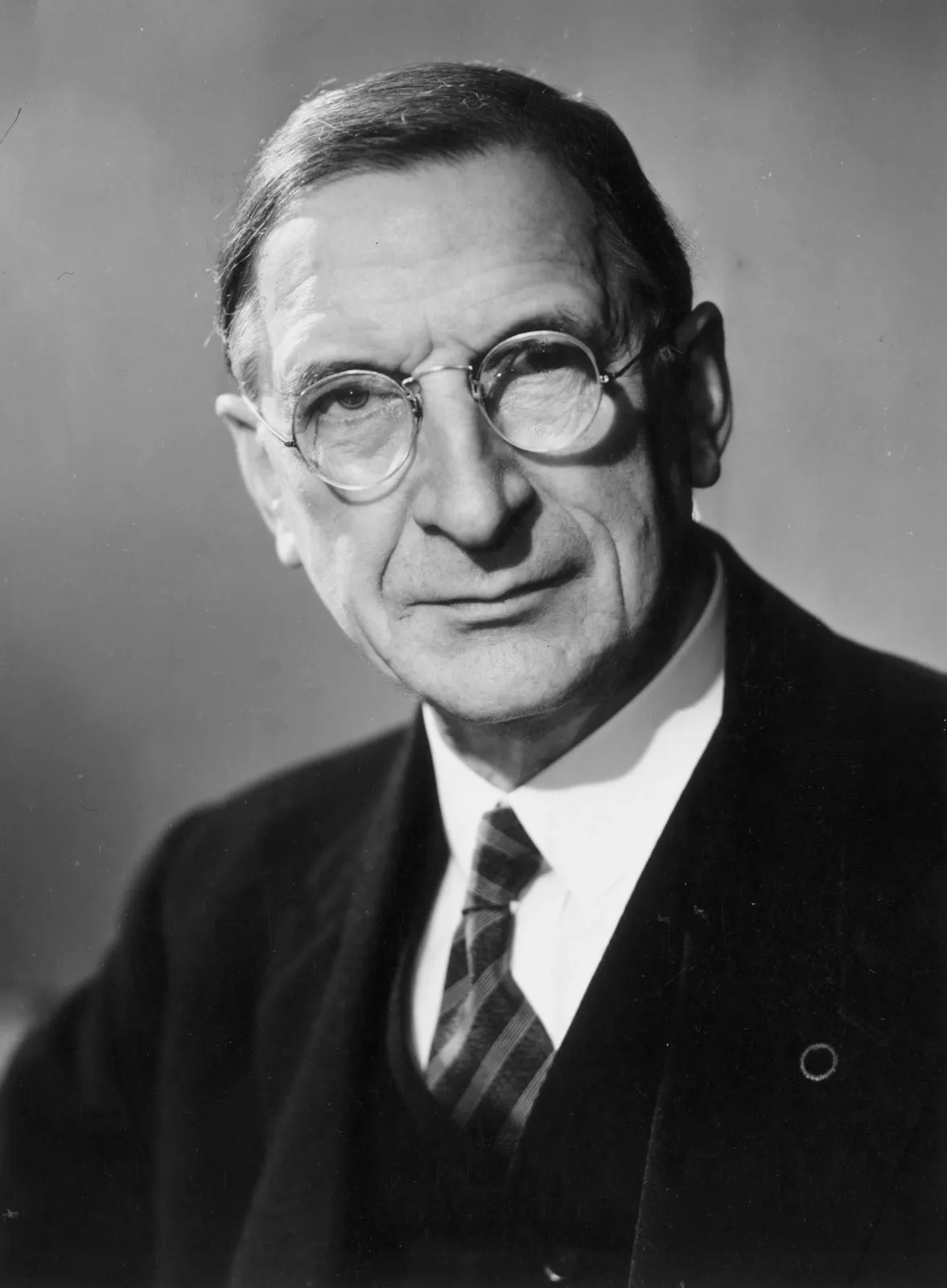
At a Glance
New York Birth and a Limerick Upbringing
The future leader of Ireland was born in New York City on 14 October 1882, the son of a Spanish-Cuban father, Vivion de Valera, and an Irish mother, Catherine Coll from County Limerick. His father died when Éamon was two years old, and his mother, struggling in New York, sent the child back to Ireland to be raised by her family in the rural townland of Bruree, County Limerick. He grew up in a labourer's cottage on the edge of a small Irish village, speaking Irish with his grandmother, attending the local national school, and having almost no contact with the America of his birth — a biographical fact that would later acquire political significance when his American citizenship apparently saved his life.
He excelled academically, won a scholarship, attended Blackrock College in Dublin, and eventually graduated from the Royal University of Ireland. He became a mathematics teacher — a career that informed the precision and occasionally the pedantry of his political thinking — and took an active interest in the Irish language revival through the Gaelic League, where he met his wife Sinéad Flanagan. His political radicalisation proceeded through the Gaelic League and the Irish Volunteers, the nationalist militia founded in 1913 as a counterweight to the Ulster Volunteer Force that had been organised to resist Home Rule. He was never a member of the Irish Republican Brotherhood — the secret revolutionary organisation that controlled much of the advanced nationalist movement — which was a fact that later shaped both his exclusion from certain inner circles and his freedom of manoeuvre.
Easter Rising 1916: Boland's Mill
During the Easter Rising of April 1916, de Valera commanded the Third Battalion of the Irish Volunteers, whose area of operations was the south-eastern approaches to Dublin and particularly the area around Boland's Bakery and Mill near the Grand Canal. His command was strategically significant: the garrison was positioned to interdict British reinforcements arriving from Kingstown (Dún Laoghaire) along the road from the coast, and it held out throughout Easter Week, longer in some respects than other positions, before surrendering following Pearse's general order on Saturday 29 April.
He was arrested, court-martialled, and sentenced to death — the fate of fifteen of the Rising's leaders, who were shot in the yard of Kilmainham Gaol between 3 and 12 May 1916. His execution was postponed, and ultimately commuted to life imprisonment, for reasons that have been debated ever since. The most widely accepted explanation is that his American citizenship — Ireland was under British rule, the United States was neutral in the war, and shooting an American citizen risked diplomatic complications with a country Britain desperately needed to bring into the war on the Allied side — gave the authorities a practical reason to pause. Whatever the reason, de Valera survived when almost all of his peers did not, and that survival was the foundation of everything that followed.
Political Resurrection: Sinn Féin and the 1918 Election
He was released under the general amnesty of June 1917 and entered politics immediately. He won the East Clare by-election in July 1917 on a Sinn Féin platform, and was elected president of Sinn Féin later that year. The transformation of Sinn Féin from a small political organisation associated with Arthur Griffith's dual-monarchy ideas into the dominant force in Irish nationalist politics was rapid and extraordinary, driven by the revulsion at the executions and the threat of conscription. In the December 1918 general election — the first conducted under the Representation of the People Act 1918, which gave women over thirty the vote — Sinn Féin won 73 seats in Ireland, crushing the old Irish Parliamentary Party.
The Sinn Féin MPs refused to take their seats at Westminster and instead convened as Dáil Éireann — the Assembly of Ireland — in January 1919, declaring themselves the parliament of an independent Irish Republic. De Valera, who was in Lincoln Gaol when the first Dáil met (having been re-arrested in 1918 in the "German Plot" arrests), was broken out of prison in a celebrated escape in February 1919. He was elected President of Dáil Éireann — effectively President of the Irish Republic — on his return, and spent much of 1919–1920 in the United States attempting to raise funds and secure recognition for the Irish Republic.
The Anglo-Irish Treaty and Civil War
The War of Independence — fought from 1919 to 1921 between the IRA under Michael Collins's direction and the British forces including the notorious Black and Tans and Auxiliaries — ended with a truce in July 1921. De Valera travelled to London for preliminary negotiations with Lloyd George and then, controversially, sent a delegation that included Collins and Arthur Griffith to negotiate the final Treaty while he remained in Dublin. The reasons he gave at the time and subsequently have never fully satisfied his critics: that he kept himself in reserve as a political resource if the Treaty failed, that he did not wish to be seen negotiating a settlement he suspected would fall short of a republic.
The Treaty, signed in December 1921, established the Irish Free State as a dominion of the British Empire, requiring an oath of allegiance to the Crown, partitioning the island with the six counties of the north remaining in the United Kingdom, and leaving the question of Ulster to a Boundary Commission. De Valera opposed it — principally on the grounds of the oath and the dominion status — and led the anti-Treaty faction in the catastrophic split that followed. The Dáil ratified the Treaty narrowly in January 1922. De Valera resigned the presidency. The anti-Treaty IRA took arms against the new Free State government. The Civil War that followed, from June 1922 to May 1923, was the most bitter and divisive conflict in modern Irish history — more destructive in some respects than the War of Independence, fought between men who had fought together against the British, producing deaths, atrocities, and hatreds that persisted in Irish political culture for generations.
Fianna Fáil: Entry into Constitutional Politics
After the Civil War's end, de Valera gradually led the anti-Treaty republican movement toward constitutional politics. In 1926 he founded Fianna Fáil — the "Soldiers of Destiny" — after a split from Sinn Féin over the question of whether to enter the Dáil (which required taking the hated oath). Fianna Fáil entered the Dáil in 1927, its deputies taking the oath under protest as what de Valera described as an "empty formula." The party built an organisation of extraordinary effectiveness, combining grassroots activism, a newspaper (the Irish Press, founded 1931), and a political programme that combined republican constitutional demands with a strong appeal to small farmers, urban workers, and the Catholic social ethos.
In the 1932 general election, Fianna Fáil won power — the first transfer of power in the history of the new state. De Valera became President of the Executive Council (effectively Taoiseach) and moved immediately and systematically to dismantle the Treaty settlement: abolishing the oath of allegiance, removing the office of Governor-General, suspending the land annuities payments to Britain, and beginning the constitutional revision that would culminate in the 1937 Constitution. The British responded with tariffs — the Economic War — which de Valera met with counter-tariffs, an episode of economic conflict that lasted until 1938 and was settled to Ireland's considerable advantage when Britain agreed to end the annuities dispute and hand back the Treaty ports (naval bases retained under the 1921 settlement).
The 1937 Constitution: Bunreacht na hÉireann
The 1937 Constitution, drafted largely under de Valera's personal direction, was his most enduring and most contested achievement. It abolished the Free State, creating a new state — named Ireland, or Éire — with a president as head of state and a Taoiseach as head of government. It asserted sovereignty over the whole island of Ireland (Articles 2 and 3, which claimed jurisdiction over Northern Ireland) while acknowledging the practical reality of partition. It was approved by referendum and remains the fundamental law of the state, though amended many times in the decades since.
The Constitution's social articles were deeply influenced by Catholic social teaching — the encyclicals Rerum Novarum and Quadragesimo Anno — and gave the Catholic Church a special position that was subsequently removed by referendum in 1972. The Articles on women recognised their role "within the home" in language that subsequent generations found objectionable. The document reflected the social conservatism of de Valera's Ireland — an Ireland of small farms, parish churches, and Gaelic cultural identity — and the tension between its republican framework and its Catholic social content has generated controversy ever since.
Neutrality and the Emergency
De Valera's most strategically consequential decision was the maintenance of Irish neutrality throughout the Second World War — the period known in Ireland as the Emergency. The decision was defensible on multiple grounds: Ireland was a small, newly independent state with virtually no military capacity; the return of the Treaty ports in 1938 had made neutrality practically feasible in a way it would not otherwise have been; a significant portion of the population had no desire to fight alongside Britain so soon after independence; and the constitutional claim to the whole island made participation in a war that would have required accepting partition uncomfortable.
De Valera maintained the policy with remarkable firmness under pressure from both sides — refusing Churchill's offers and Hitler's requests with equal resolution. That the "neutrality" was not entirely even-handed is clear from the historical record: German airmen were interned, Allied airmen were allowed to cross the border into Northern Ireland, Allied intelligence had reasonable access to Irish cooperation on specific matters, and German espionage operations in Ireland were comprehensively penetrated. But the formal neutrality was maintained, and when Churchill made his famous post-war speech attacking Irish policy, de Valera's reply — measured, dignified, refusing to be drawn into the emotion Churchill had deployed — was widely considered one of the finest speeches in Irish political history.
Later Career, the Presidency, and Death
De Valera served as Taoiseach until 1959, with interruptions when Fianna Fáil was out of power in 1948–1951 and 1954–1957. He was elected President of Ireland in 1959 and re-elected in 1966, serving until 1973 when he retired at the age of ninety — by which point he was almost entirely blind. He died on 29 August 1975, the last surviving commandant of the Easter Rising, ninety-two years old, his political career spanning from the gunfire of 1916 to the television age.
The assessment of his legacy remains genuinely contested. His defenders point to the consolidation of Irish sovereignty, the peaceful transfers of power, the 1937 Constitution, the settlement of the Economic War, and the maintenance of neutrality as achievements of the first order for a small new state navigating an extraordinarily dangerous international environment. His critics point to the Civil War — and specifically to the executions of anti-Treaty prisoners by the Free State government he had opposed, which he did nothing to prevent — the social conservatism of the state he built, the excessive deference to the Catholic hierarchy, the failure of economic development that drove emigration for decades, and a political style that was capable of extraordinary wiliness and that sometimes shaded into the duplicitous.
What is not in dispute is the scale of his dominance. For half a century, Éamon de Valera was Irish politics — not its only actor, but its indispensable pole, the figure around whom everything else arranged itself. The Ireland he shaped, for good and ill, was the Ireland that entered the European Community in 1973, and the transformations that followed — economic, social, cultural — were in large part transformations away from the world he had built. His shadow is long enough that the Ireland of the twenty-first century can still be understood, in part, as a conversation with the Ireland he made.