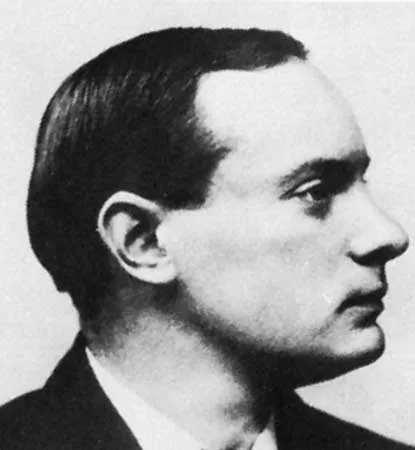
Dublin Origins: An English Father, an Irish Soul
Patrick Henry Pearse was born on 10 November 1879 at 27 Great Brunswick Street — now Pearse Street — in Dublin, the eldest son of James Pearse, an English sculptor specialising in ecclesiastical stonework, and his second wife Margaret Brady, an Irish woman from a County Meath family with deep roots in the Irish language and the Gaelic tradition. The combination was unusual and generative: his father was a man of the English artisan class, a Protestant who had converted to Catholicism on his second marriage, with a practical talent for beautiful objects and no particular interest in politics; his mother's family carried the Gaelic world — native Irish speakers from Meath, and a maternal grandfather who had supported the Young Ireland movement of 1848. His great-uncle James Savage had fought in the American Civil War. The household was bilingual in English and Irish, and the boy absorbed both.
Pearse was educated at the Christian Brothers' school at Westland Row, where he first encountered the systematic teaching of the Irish language and of Irish history as a subject of pride rather than shame. He had a cast in his right eye — a characteristic that made him deeply self-conscious and that is the reason he was almost always photographed in profile — and a shyness in personal relations that coexisted with an extraordinary capacity for public oratory. He attended the Royal University of Ireland, graduating in English, French, and Irish, and then studied law at the King's Inns, being called to the bar in 1901. But it was language rather than law that consumed him. At sixteen he joined the Gaelic League, founded in 1893 to preserve and revive the Irish language, and he was active on its committees from the first. By 1898 he was writing papers and poems for nationalist publications. In 1900 he became secretary of the League's publications committee and in 1903 he took the editorship of its newspaper, An Claidheamh Soluis — The Sword of Light — transforming it from a language journal into a vehicle for literary and political nationalism that reached a national audience.
St Enda's: Education as Resistance
In 1908, Pearse founded St Enda's College — Scoil Éanna — at Cullenswood House in Ranelagh, Dublin, as a bilingual secondary school for boys whose curriculum placed Irish language, literature, and mythology at its centre. The school's ethos was deliberately and systematically nationalist: its motto was taken from the mythological hero Cú Chulainn, its walls carried the epics, its teachers included Thomas MacDonagh and Pearse's brother Willie — both of whom would die with him in 1916. In 1910 the school moved to a mansion set in fifty acres of parkland at The Hermitage, Rathfarnham, operating as a boarding school. Pearse was a gifted teacher, widely admired by his students, and the school attracted families from across the nationalist and literary circles of Edwardian Dublin. Among its teachers, at least briefly, was the young James Joyce's Irish instructor — Pearse — a fact that places the two most important Irish cultural figures of the century in the same room, the austere republican and the transgressive modernist, almost certainly incomprehensible to each other.
The school was financially precarious from the beginning and remained so throughout its existence, sustained largely by Pearse's own fundraising tours of America — where the large Irish-American community was responsive to the combination of cultural revival and nationalist politics he represented — and by donations from sympathetic patrons. The financial difficulty was not merely administrative inconvenience: it meant that Pearse was perpetually anxious about money, perpetually dependent on external support, and perpetually aware that the project he cared most about could collapse at any moment. This anxiety did not diminish his political ambition but it sharpened his sense of urgency.
The Road to Revolution: Blood, Sacrifice, and the IRB
Pearse's politics evolved rapidly between 1912 and 1916. As late as 1912 he supported Home Rule — the proposal for a Dublin parliament within the United Kingdom — as an adequate solution to the Irish question. The formation of the Ulster Volunteer Force in 1913, and the willingness of the British Conservative Party to support armed resistance to Home Rule, convinced him that constitutional methods were insufficient. He became one of the founding members of the Irish Volunteers in November 1913, the nationalist militia formed as a counterweight to the UVF. In December 1913 he was sworn into the Irish Republican Brotherhood by Bulmer Hobson, and his political journey accelerated from that point. By 1915 he was a member of the IRB's Military Council — the small group secretly planning the armed insurrection — and he had developed the ideological framework that would justify it.
The framework was theological in structure and explicitly sacrificial in content. Pearse drew on Catholic devotional imagery and on the Gaelic heroic tradition to construct a politics in which the blood sacrifice of nationalist martyrs — men who died so that Ireland might live — was presented as not merely strategically necessary but spiritually redemptive. The oration he delivered at the graveside of the veteran Fenian O'Donovan Rossa in August 1915 — one of the finest pieces of political oratory in the English language — declared that the fools who thought they had pacified Ireland had left the Irish their Fenian dead, and while Ireland held those graves, Ireland unfree would never be at peace. The speech was at once a funeral oration, a political manifesto, and a declaration of intent. Standing at the graveside with Tom Clarke and Seán MacDiarmada, Pearse was already planning the Rising that would produce the next generation of graves.
Easter Week 1916: The General Post Office
The Easter Rising began on Easter Monday, 24 April 1916. The Irish Volunteers and the Irish Citizen Army — the workers' militia led by James Connolly — occupied key buildings across Dublin. The headquarters of the rebellion was the General Post Office on Sackville Street, where Pearse, Connolly, and the other leaders took command. Shortly after noon on Easter Monday, Pearse, Connolly, and the other officers emerged from the GPO and from its front steps Pearse read aloud the Proclamation of the Irish Republic. He was nominated as President of the Provisional Government and Commander-in-Chief of the Irish forces — though it was Connolly, the more experienced military man, who effectively directed operations.
The Rising was, in purely military terms, a failure. The British mobilised rapidly, bringing in heavy artillery and naval gunfire from the Liffey to shell the centre of Dublin. Civilian casualties mounted. Much of the city centre was destroyed by fire. The planned coordinated risings across the country did not materialise, largely because of Eoin MacNeill's countermanding order — issued when he discovered the Rising was planned without the sanction of the full Volunteer leadership — and the failure of the Aud to land German arms off Kerry. The GPO garrison held for five days before the building was destroyed by fire and shellfire and the garrison was forced to evacuate to nearby houses in Moore Street. On Saturday 29 April 1916, Pearse issued the order to surrender.
At his court-martial, Pearse was direct and undeflected. He accepted personal responsibility for the Rising and asked only that his followers receive clemency, since he had led them. He said that he had gone down on his knees as a child and told God he would work all his life to gain the freedom of Ireland. He was sentenced to death and executed by firing squad in the yard of Kilmainham Gaol in the early hours of 3 May 1916. He was the first of the fifteen leaders to be executed. His brother Willie — a sculptor who had taught at St Enda's and fought at the GPO — was executed two days later, despite having played no leadership role. Their bodies were thrown into a lime pit at Arbour Hill.
The Transformative Effect of the Executions
The Rising had been widely unpopular in Dublin at the time it occurred. Civilians had been caught in the crossfire, their homes and businesses destroyed, their city reduced to rubble over a week of fighting that seemed to most Dubliners pointless and irresponsible. Many of the insurgents were jeered as they were marched to captivity. But the executions transformed everything. The British general Sir John Maxwell, who ordered them, shot the Rising's leaders one by one over ten days — a process of deliberate judicial killing that turned each death into a news event, each martyr into a moral rebuke to British rule. Maxwell's own notes warn against Irish sentimentality turning the graves into martyrs' shrines. He proceeded to create exactly those shrines by the manner of the executions.
Pearse had understood this mechanism from the beginning. His theory of blood sacrifice was not, as it is sometimes presented, a morbid death-wish but a calculated political analysis: that a morally serious, conspicuously sacrificial act of rebellion would shift Irish public opinion more effectively than decades of parliamentary agitation. The calculation was correct, and the price of being correct was his life and the lives of his comrades. Within months of the executions, public opinion in nationalist Ireland had shifted decisively toward Sinn Féin. The 1918 election, two years later, returned 73 Sinn Féin MPs who refused to attend Westminster and instead constituted themselves as the First Dáil. The War of Independence followed. The Irish Free State was established in 1922. The Republic was declared in 1949. The arc from the GPO in 1916 to the declaration of the Republic ran through the graves Pearse had predicted.
Legacy: Poet, Prophet, and Contested Figure
Pearse's legacy is both vast and contested. As the primary author of the Proclamation of the Irish Republic — a document of genuine moral distinction that proclaimed the right to national self-determination, the equal rights of all citizens, and the religious and civil liberty of every Irishman and Irishwoman — he shaped the constitutional and ideological framework within which the independent Irish state defined itself. Pearse Street and Pearse Square in Dublin were renamed for him in 1926; the main railway station in the city centre was renamed Pearse Station in 1966, the fiftieth anniversary of the Rising; he appeared on the silver ten-shilling coin of the same year.
At the same time, the intellectual content of his political thought — particularly the blood-sacrifice theology, with its equation of national liberation with personal martyrdom, and its glorification of armed death as spiritually ennobling — has been subjected to searching critical analysis. Historians have pointed to the romanticism of a man who had never experienced actual war and whose idea of physical violence was derived from literary rather than military sources. The Pearse who marched out to read the Proclamation had never been in a battle; the Connolly who directed operations from the GPO had fought in the British Army and knew what modern warfare was. The gap between Pearse's sacrificial romanticism and the reality of what happened on the streets of Dublin during Easter Week — the civilian deaths, the burned buildings, the confused and frightened garrison — is a part of his legacy too.
His writing survives and is still read: the poems in both Irish and English, the short stories, the educational essays, the political speeches. The Pearse Museum at his former school in Rathfarnham preserves the physical environment in which he lived and taught. His grave at Arbour Hill, where the executed leaders are buried together, is a place of pilgrimage and commemoration. Whatever one thinks of the choices he made in the spring of 1916, the fact that he made them with full awareness of their cost — and the further fact that those choices changed the course of Irish history — places Patrick Pearse among the handful of individuals whose lives genuinely altered the trajectory of their country.