At a Glance
The Child of Kalofer: Poetry and Rebellion from the Start
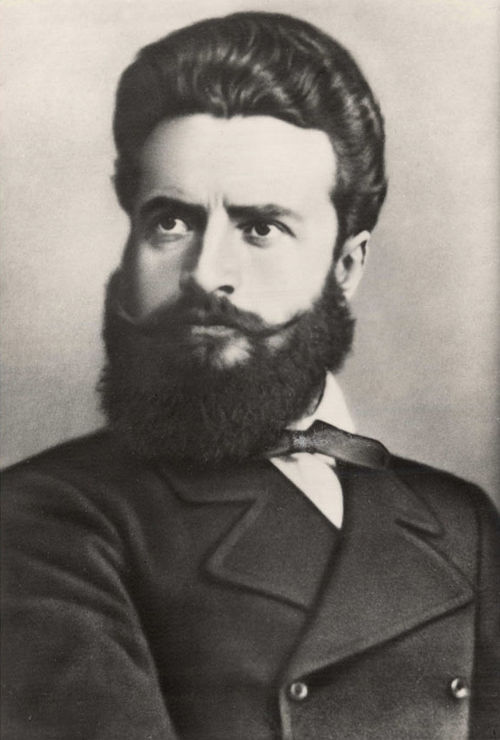
Hristo Botev was born on Christmas Day 1848 in Kalofer, a prosperous town in the central Balkan Mountains that was producing revolutionaries in quantities that far exceeded what its modest size might suggest. His father, Botyo Petkov, was a schoolteacher — one of the generation of Bulgarian educators who understood that the survival of Bulgarian language and culture under Ottoman rule was itself a form of resistance, and who taught his children accordingly. The household was intellectually alive, politically conscious, and steeped in the oral and literary traditions of Bulgarian folk culture that would saturate Botev's poetry from his earliest verses to his last.
He was sent to Russia for further education, studying in Odessa — a city that was simultaneously a major centre of Bulgarian exile political activity and a window onto the Russian revolutionary tradition that was beginning to generate the ideas and organisational models that would influence liberation movements across Eastern Europe. In Odessa, Botev encountered Russian radical thought — the nihilism, the populism, the conviction that the existing social order was fundamentally illegitimate and that it was the duty of the thinking young to act — and absorbed it with the intensity that characterised everything he did.
He returned to Bulgaria briefly, then left for Romania — the primary base of operations for Bulgarian revolutionary emigres since the 1850s. He was nineteen years old. He would never see Bulgarian soil again as a free man. The remaining nine years of his life were spent in Bucharest, writing, editing, organising, living in poverty, and building toward the moment of armed action that he always knew, with the certainty of a man who had already written his own epitaph in verse, was coming.
The Poet of the Uprising
Botev's poetry is small in quantity — fewer than twenty complete poems survive — and immense in impact. He wrote in a tradition shaped by Bulgarian folk song and the Romantic nationalism sweeping European literature in the mid-nineteenth century, but what he made of those materials was entirely his own: dense, passionate, technically sophisticated verse that moved between lament and defiance, between the grief of a people under oppression and the fierce insistence that oppression was not the final word.
The poem Hadzhi Dimitar — written in 1873 when Botev was twenty-four — is generally considered the pinnacle of Bulgarian Romantic poetry. It depicts a wounded Bulgarian fighter lying dying on a Balkan mountain, tended in vision by mountain spirits while the sun, the moon, the eagle, and the wolf bear witness to his sacrifice. The poem is at once a lament for the individual dead and a hymn to the value of dying for freedom — a statement that the act of sacrifice itself, regardless of its military outcome, possesses a dignity and a meaning that the oppressor cannot extinguish. Generations of Bulgarian schoolchildren have memorised it; it has been set to music, painted, and cited in political speeches from the nineteenth century to the present.
His poem on the execution of Vasil Levski — written after Levski was hanged by Ottoman authorities in February 1873 — is perhaps even more devastating in its emotional register. It transforms the execution of a single man into a cosmic event, a moment when the world itself goes dark in mourning, and it captures with terrible precision the experience of a people who have watched their best die one by one and must somehow continue to believe the struggle is worth the cost. That Botev himself would be dead three years after writing it, killed in the same cause that killed Levski, adds a biographical dimension that makes the poem almost unbearable to read in retrospect.
"He who falls fighting for freedom does not die — him the earth and sky, the beast and nature mourn and lament."
— from Hadzhi Dimitar, 1873
The Journalist and Political Organiser
Poetry was not Botev's only weapon. He was also a journalist of considerable force, editing several Bulgarian-language newspapers in Bucharest — most notably Duma na balgarskite emigranti (Word of the Bulgarian Emigrants) and Zname (Banner) — that combined revolutionary political commentary with literary content and reached Bulgarian communities both in Romania and, through clandestine distribution, inside Ottoman Bulgaria itself. His journalism was direct, angry, and sometimes savage in its attacks on what he regarded as the timidity of the moderate Bulgarian nationalist leadership, which he felt was too consumed by cultural autonomy to press for genuine political liberation.
He was closely associated with the Bulgarian Revolutionary Central Committee — the organisation that Vasil Levski had built and that was now, after Levski's execution, attempting to maintain the underground network inside Bulgaria while preparing for armed uprising. Botev was not the primary organiser of the April Uprising of 1876 — that role belonged to Georgi Benkovski and the regional committees inside Bulgaria — but he was one of its most committed advocates, and when the uprising broke out prematurely in April and was being crushed by Ottoman forces with ferocious brutality, he moved immediately to act.
The Crossing of the Danube
The April Uprising had been brutally suppressed by the time Botev was ready. The Ottoman response — carried out largely by irregular Bashi-bazouk forces — had included the massacre of thousands of Bulgarian civilians, most notoriously at Batak, where somewhere between three thousand and eight thousand people were killed in scenes that shocked European public opinion when reports reached the Western press. The uprising had failed militarily; Bulgaria was burning. Botev decided to go anyway.
On 17 June 1876, he and 205 volunteers — the force that history knows as Botev's detachment — seized the Austrian passenger steamer Radetzky on the Danube and forced it to land them on the Bulgarian bank of the river near Kozloduy. It was an audacious and near-suicidal act: the uprising was already over, Ottoman forces were concentrated in the region, and 200 men had no realistic prospect of sparking the popular revolt that might have given them a fighting chance. Botev knew this. He went anyway — because not going, allowing the sacrifice of those who had already died to pass without answer, was something he found worse than death.
The detachment moved south into the Balkan Mountains, fighting engagements with Ottoman forces as it went. The men were brave but vastly outnumbered and operating in terrain the Ottomans controlled. On 1 July 1876, near the town of Vratsa in northwestern Bulgaria, Botev was struck by a bullet during combat and killed. He was twenty-seven years old. The remnants of his detachment were dispersed; the few survivors eventually made their way back across the border.
The Death That Changed Everything
Botev's death, coming on top of the Batak massacre and the broader horrors of the April suppression, completed the process of internationalising the Bulgarian question in European opinion. British journalist Januarius MacGahan's eyewitness reports had already produced a storm of outrage across Europe. The Russian government, responding to Pan-Slavic public pressure and its own strategic ambitions, declared war on the Ottoman Empire in April 1877. The Russo-Turkish War ended with treaties that created the Bulgarian state — not the Greater Bulgaria of nationalist dreams, but a Bulgarian state nonetheless, covering most of the territory that Botev and his generation had fought and died for.
Botev did not live to see it. But the connection between his death and Bulgaria's establishment was understood immediately by both Bulgarians and international observers. His willingness to die — so publicly, so deliberately, so young — had given the Bulgarian cause a moral weight that diplomatic arguments alone could never have achieved. He was, in the most literal sense, one of the people whose sacrifice made Bulgaria possible.
In the century and a half since, his place in Bulgarian culture has only deepened. The date of his death, 2 July (adjusted for the calendar change), is observed as Botev Day — a national day of remembrance at which all traffic stops at noon, all trains halt, and the country observes a minute of silence for those who died for Bulgarian freedom. His poems are taught in every Bulgarian school. His image has appeared on banknotes; his name is on streets and institutions across the country. He is, alongside Vasil Levski, the human face of what Bulgarian independence cost — and the enduring reminder that the cost was paid by people who were young, talented, and fully aware of what they were giving up when they gave everything.
What makes Botev endure beyond the national mythology is the quality of the poetry itself — verse that has survived the political uses to which it has been put and retains its power as literature. In a country that has had reason to be sceptical of official heroes, Botev's poems continue to be read not because they must be but because they say something true about the experience of living under oppression, about beauty and violence, about love of country and the willingness to die for it. These are things the Bulgarian experience made immediate and that the poems render with a precision that time has not dimmed.