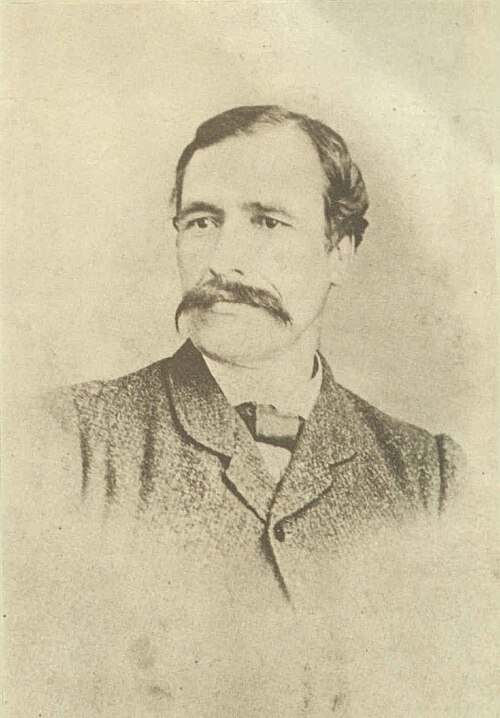
At a Glance
Kotel: The Cradle of Bulgarian Awakening
Georgi Sava Rakovski was born in 1821 in Kotel, a town in the Balkan Mountains of what was then the Ottoman province of Rumelia — a place that was, somewhat improbably given its modest size, producing a disproportionate share of the men and women who would define the Bulgarian National Revival of the nineteenth century. Kotel's wealth, derived from its sheep-herding economy and its role in the regional wool trade, had given it a literate and relatively prosperous merchant class whose children had access to education in a way that was exceptional in Ottoman Bulgaria, and whose contacts with the wider world — through trade routes that extended to Vienna, Odessa, and Constantinople — meant that ideas circulated there that had not yet reached most of the Bulgarian lands.
The family into which Rakovski was born was part of this prosperous merchant class, and he received an education unusual for a Bulgarian child of his era: schooling in Kotel, then in Constantinople, and reportedly contact with Greek educational networks that gave him access to the classical and modern European political thought that was filtering into the Ottoman world through Greek intellectual channels. He learned Greek, Serbian, French, and later Russian — linguistic resources that would be crucial for a life spent in exile, editing newspapers, organising across national borders, and appealing to different audiences simultaneously for support for the Bulgarian cause.
His political radicalisation came early and violently. He was involved in a conspiracy against Ottoman authorities in Constantinople in the early 1840s, was arrested, and spent time in Ottoman prisons — an experience that confirmed rather than tempered his revolutionary convictions. He escaped, went to Athens, and began the peripatetic life of the professional revolutionary exile that would characterise the next two and a half decades: moving between Serbia, Moldavia, Wallachia (modern Romania), Russia, and various other places where Bulgarian exiles gathered, editing newspapers, writing poetry and ethnographic studies, organising armed detachments, and building the intellectual and organisational foundations of what would eventually become the Bulgarian independence movement.
The Pen as Revolutionary Weapon
Rakovski understood before most of his contemporaries that a national liberation movement needed more than armed fighters — it needed a national consciousness, a shared sense of who Bulgarians were, what distinguished them from Greeks and Serbs and Ottomans, what they had lost under Ottoman rule and what they were fighting to recover. He threw himself into the task of constructing this consciousness with an energy and intellectual range that was extraordinary even by the standards of the nineteenth-century revolutionary intelligentsia, which was not short of polymathic overachievers.
His journalism was the most immediately effective vehicle. He founded and edited a series of Bulgarian-language newspapers in exile — in Serbia and in the Danubian Principalities — that circulated among Bulgarian communities both abroad and inside the Ottoman Empire, carrying news of the revolutionary movements stirring across Europe, arguments for Bulgarian national distinctiveness and the right to independence, and practical discussion of how liberation might be achieved. The Ottoman authorities regarded these publications as seditious (correctly), and their distribution inside Bulgaria was both illegal and dangerous, which only enhanced their prestige among the readers who passed them from hand to hand in secret.
His literary work was equally important in the longer term. His epic poem The Forest Traveller — depicting a Bulgarian hajduk, an outlaw who takes to the mountains rather than submit to Ottoman injustice — gave the Bulgarian romantic nationalist movement its defining image: the free man in the free mountains, beyond the reach of the oppressor, embodying both the spirit of resistance and the lost freedom that the Bulgarian people were fighting to recover. The hajduk as folk hero was not Rakovski's invention — the tradition was ancient — but he gave it a literary form and a nationalist political content that made it central to Bulgarian cultural identity in ways that persisted long after independence.
"A nation that does not know its history does not know itself. And a nation that does not know itself cannot be free — for freedom begins in the mind before it is won with the sword."
His ethnographic and linguistic work — attempts to establish the ancient origins of the Bulgarian people, to distinguish Bulgarian from related Slavic languages, to document Bulgarian folklore and oral tradition — was less reliable as scholarship than as propaganda, but as propaganda it was highly effective. At a time when the Greek Orthodox Church controlled Bulgarian religious life and promoted the use of Greek as the language of culture and religion, Rakovski's insistence on the distinctiveness and dignity of the Bulgarian language and people was a political act as much as a scholarly one. He was building the intellectual infrastructure of a nation.
The Guerrilla Strategist and His Detachments
Rakovski was never content with the pen alone. He believed — and argued consistently throughout his career — that Ottoman rule in Bulgaria could only be ended by armed force, that Bulgarian liberation would require Bulgarian fighters willing to die for it, and that the spark for a general popular uprising could be provided by organised guerrilla detachments (cheti) that would cross into Ottoman Bulgaria from the Danubian Principalities, inspire the population by their example, and create the conditions for a mass revolt.
This theory of revolutionary guerrilla action was not unique to Rakovski — it drew on the experiences of the Greek War of Independence, the Italian Risorgimento (particularly Garibaldi's campaigns), and the general romantic nationalist conviction that a people with sufficient will and sufficient courage could overthrow any oppressor. What Rakovski contributed was the application of this theory to Bulgarian conditions and the practical work of making it operational: recruiting fighters, obtaining weapons, establishing training grounds, and negotiating with the Serbian and later Romanian governments for permission to operate from their territory.
He organised two major expeditions of armed cheti into Ottoman Bulgaria, in 1861–62 and 1867. Both failed militarily — they were too small, too poorly equipped, and too dependent on a popular uprising that did not materialise on the timescale the planners hoped for. The peasant population of Ottoman Bulgaria was not yet ready to rise; the organisation was not yet deep enough; the coordination with internal networks was not yet adequate. Rakovski understood these failures and drew lessons from them, but he died before he could implement the revised strategy that his thinking was developing in the last years of his life.
The revised strategy that he was moving toward — a more systematic approach to internal organisation, to building networks within Bulgaria itself rather than relying on external detachments to spark a revolt from the outside — was the strategy that Vasil Levski would actually implement in the years after Rakovski's death. Levski acknowledged his intellectual debt to Rakovski explicitly, and the connection between the two men — the theorist and organiser who died too soon, and the practical revolutionary who put the theory into workable form — is central to the story of how Bulgarian independence was eventually achieved.
The Pan-Slavic Dimension and Its Limitations
Rakovski's political vision extended beyond Bulgaria to a broader Pan-Slavic framework — the idea that the Slavic peoples of the Balkans and Eastern Europe shared common interests and should cooperate in resisting both Ottoman and Habsburg domination. He sought alliances with Serbia, with Russian Pan-Slavic circles, and with various combinations of Balkan revolutionary movements, arguing that a coordinated uprising across the region would be more effective than isolated national struggles.
This vision had genuine strategic logic behind it, but it also ran into the reality that the interests of different Slavic national movements were often in direct conflict — Serbia and Bulgaria were competing for the same territories in Macedonia, and Russian Pan-Slavism was always at least partially an instrument of Russian imperial expansion rather than a genuine commitment to Balkan self-determination. Rakovski navigated these contradictions with varying degrees of success, forming alliances where he could and maintaining his own distinctive Bulgarian nationalist perspective when Pan-Slavic solidarity threatened to subsume it.
His relationships with Serbian political figures were particularly complex. The Serbian government hosted Bulgarian exiles and allowed the organisation of cheti from Serbian territory, but always with an eye to its own strategic interests — and those interests did not include the emergence of a strong, independent Bulgaria that might complicate Serbian expansion into the same regions Serbia was interested in. Rakovski understood this, and his later career showed increasing disillusionment with Pan-Slavic solidarity as a practical political strategy, even as he continued to invoke it as a rhetorical framework.
Death in Exile and the Legacy That Outlived Him
Rakovski died of tuberculosis in Bucharest on 9 October 1867, aged 46 — worn out by decades of exile, imprisonment, the physical demands of guerrilla life, and the relentless intellectual and organisational labour that he had never allowed himself to moderate. He did not live to see the April Uprising of 1876, the Russian-Turkish War of 1877–78, or the establishment of the Bulgarian state that his life's work had made possible. He died as he had lived — in exile, in poverty, working on projects that would not be completed, sustained by a conviction that the cause was right and that history would eventually vindicate it.
History did vindicate it, and sooner than even the optimistic Rakovski might have hoped. The men and women who carried Bulgarian nationalism from his death in 1867 to the April Uprising of 1876 — Vasil Levski, Hristo Botev, Lyuben Karavelov, and the network of the Bulgarian Revolutionary Central Committee — were all, in different ways, his intellectual and organisational heirs. Levski had met Rakovski personally and absorbed his thinking about internal revolutionary organisation. Botev had grown up in the cultural environment that Rakovski's journalism and poetry had helped create. The April Uprising that Botev died in and Levski had organised was, in the most direct sense, the realisation of what Rakovski had spent his life attempting to bring about.
The Russia-Turkey War that followed the uprising and created the Bulgarian state in 1878 owed something to Rakovski too — his decades of work in Russian Pan-Slavic circles had helped build the political environment in which Russian public opinion could be mobilised for intervention on behalf of Bulgarian liberation. The connections he had made, the arguments he had articulated, the consciousness he had helped create — all of these contributed to the political conditions that made the war, and therefore Bulgarian independence, possible.
In Bulgaria itself, his place in the national pantheon is secure and enthusiastically maintained. Streets, squares, and institutions bear his name across the country; the main boulevard of central Sofia — Rakovski Street — runs through the heart of the capital of the state he helped to create. His image on banknotes and postage stamps, his bust in public spaces, his portrait in schools — all attest to a national recognition that the generation that actually achieved independence understood very clearly: they were completing a project that Rakovski had begun, building on foundations that he had laid, embodying a vision that he had articulated at the cost of his health, his freedom, and ultimately his life. The father of Bulgarian nationalism never saw his children come of age — but the family he helped create has not forgotten him.