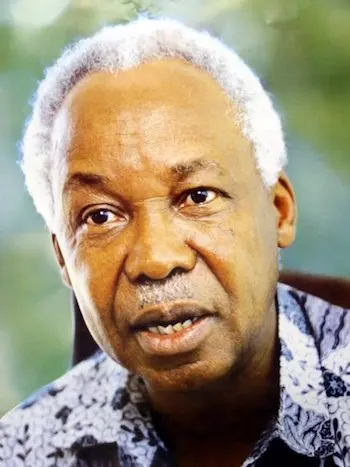
At a Glance
Son of a Chief, Student of the World
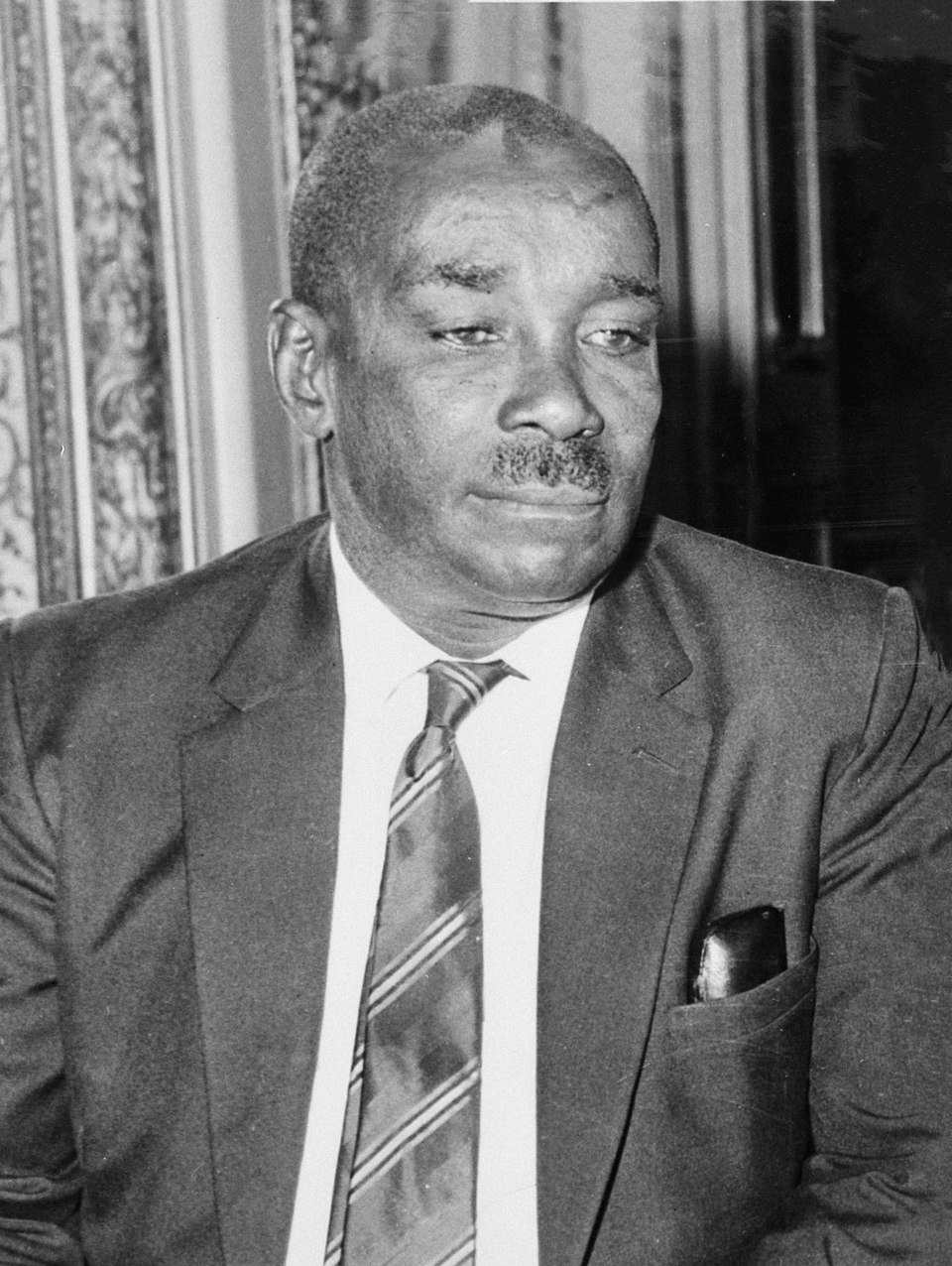
Julius Kambarage Nyerere was born on 13 April 1922 in the small lakeside village of Butiama, near the eastern shore of Lake Victoria, in what was then the British-administered territory of Tanganyika. His father, Nyerere Burito, was the chief of the Zanaki people — a small ethnic group with no particular prominence in the colonial order and no history of producing figures of continental significance. The son would change both of those things.
He attended Catholic mission schools and excelled — consistently, apparently effortlessly, in a way that those who taught him later recalled as something more than ordinary intelligence. He proceeded to Makerere College in Uganda, then the pre-eminent institution of higher education in British East Africa, and then, in 1949, to the University of Edinburgh — becoming only the second Tanganyikan to study at a British university. He read history and economics, translated Julius Caesar and The Merchant of Venice into Swahili for the pleasure of it, and returned to Tanganyika in 1952 with a master's degree and a political vision that he had been refining, in one form or another, since he had first understood what colonialism was.
He was, by temperament and training, a teacher. He took up a post at a Catholic school near Dar es Salaam and taught there for several years while simultaneously building the political organisation that would deliver his country's independence. His students and colleagues called him Mwalimu — the Teacher in Swahili — and the name followed him for the rest of his life, outlasting every official title he was ever given.
Founding TANU and the Non-Violent Path
In 1954, Nyerere transformed the Tanganyika African Association — an existing social and political body — into the Tanganyika African National Union, the party that would carry the independence campaign from beginning to end. The choice of name was deliberate: national, not tribal; union, not association. He was building a movement that had to reach across more than 120 ethnic groups spread over a territory of enormous size and diversity, and he understood from the outset that it would only work if it stood for something that all of them could recognise as their own.
The strategy he chose was the one that set Tanzania's independence movement apart from those of several of its neighbours: strictly non-violent, constitutionalist, and relentlessly focused on persuading the British administration that Tanganyika was ready for self-government. This was not naivety — Nyerere was acutely aware of the limitations of British goodwill — but a realistic assessment of the balance of forces. Tanganyika had no settler community of the size and entrenched power that made Kenya's path to independence so bloody. A non-violent campaign could win, he judged, if it was patient and disciplined and if it maintained the moral high ground.
He also took the argument directly to the international stage. In 1955 and 1956 he addressed the United Nations Trusteeship Council, making the case for Tanganyika's independence with a clarity and a command of the international legal framework that discomfited the British delegation and earned him recognition far beyond East Africa. He was thirty-three years old. He was arguing, on behalf of an African people, in the most powerful international forum in the world — and he was winning the argument.
"We, the people of Tanganyika, would like to light a candle and put it on top of Mount Kilimanjaro which would shine beyond our borders, giving hope where there was despair."
— Julius Nyerere, on Tanganyika's independence, 1961
Independence and the Challenge of Nation-Building
Tanganyika became independent on 9 December 1961. Nyerere became Prime Minister and, from December 1962, the country's first President under a new republican constitution. The transition was, by the standards of African independence, remarkably smooth. There was no armed conflict, no collapse of public administration, no mass exodus of colonial personnel that left essential services without trained operators. The British had not wanted to leave in any great hurry, but Nyerere had made the case for independence so effectively that resistance had become more expensive than accommodation.
The challenge that followed was the harder one: building a functioning state from a territory that colonialism had systematically under-invested in. Tanganyika at independence had a tiny number of university graduates, almost no African doctors or engineers or lawyers, a road network designed to move exports to the coast rather than connect communities, and an economy built around the export of agricultural commodities whose prices were set on markets in London and New York. Nyerere's government had to build institutions, train professionals, and construct a national identity — all simultaneously, without significant capital and without the luxury of learning from its mistakes slowly.
The union with Zanzibar in April 1964 added another layer of complexity. The United Republic of Tanzania — the name blending Tanganyika and Zanzibar — brought together a mainland with 120-plus ethnic groups, a socialist-leaning but moderate political culture, and a cautious foreign policy, with an island state whose revolution had been violent, whose politics were volatile, and whose new president, Abeid Karume, operated by entirely different rules. Managing that union, keeping it intact through decades of tension between the mainland and the islands, was one of Nyerere's most sustained political achievements — and one of his least celebrated.
Key Dates
The Arusha Declaration and Ujamaa
The Arusha Declaration of February 1967 was the defining statement of Nyerere's political vision and the document that gave Tanzanian socialism its philosophical foundation. It committed Tanzania to Ujamaa — a Swahili word meaning "familyhood" or "togetherness" — as its guiding principle, drawing on traditional African communal values to construct a model of development that rejected both Western capitalism and Soviet-style command economics in favour of something that Nyerere argued was authentically African.
The declaration also included a leadership code of striking austerity: no TANU or government leader could own shares or rental property, employ others for personal profit, or hold more than one salary. Nyerere himself lived by this code with a rigour that was, by the standards of post-colonial African leadership, genuinely exceptional. He died, in 1999, without significant personal wealth — a fact that, in a continent where the misappropriation of public resources by political leaders was endemic, placed him in a very small category indeed.
The Ujamaa programme's centrepiece was villagisation: the resettlement of Tanzania's dispersed rural population into planned communal villages where services could be delivered efficiently and cooperative agriculture could be organised. In its early, voluntary phase, the programme had real achievements. In its later, compulsory phase — between 1973 and 1976, when millions of Tanzanians were relocated by government directive — it produced disruption, resentment, and agricultural decline. Food production fell. The economy contracted. Nyerere acknowledged, in his 1985 farewell address, that Tanzania was poorer than it had been at independence.
It was a remarkable admission — but it was also, characteristically, only part of the picture. Tanzania at independence had one of the lowest literacy rates in sub-Saharan Africa. By the 1980s, it had one of the highest. The health infrastructure that Ujamaa built in the rural areas — the dispensaries, the water points, the village health workers — outlasted the economic disruption of villagisation. The political culture of accountability and national identity that Nyerere cultivated across three decades of leadership produced a stability that most of Tanzania's neighbours, through the violent 1970s and 1980s, could only envy.
The Uganda War and Continental Statesmanship
In 1978, Idi Amin's Uganda invaded and annexed the Kagera region of northern Tanzania. Nyerere's response was decisive and, at the time, controversial: he launched a full-scale military counter- offensive that pushed the Ugandan army back across the border and then continued all the way to Kampala, toppling Amin's regime in April 1979. It was the first time in post-colonial African history that one African state had used military force to remove another's government, and the Organisation of African Unity — committed to the principle of non-interference in member states' internal affairs — criticised Tanzania for it.
Nyerere's defence was simple and, in retrospect, persuasive: Amin had committed aggression against Tanzania, and the doctrine of non-interference did not extend to protecting a regime that had murdered hundreds of thousands of its own citizens. The argument was not universally accepted at the time, but history has been kinder to Nyerere's position than to those of the OAU members who defended Amin's right to govern without interference.
Beyond Tanzania, Nyerere was a consistent and principled voice for Pan-African unity, for the liberation movements of Southern Africa — supporting FRELIMO in Mozambique, ZANU and ZAPU in Zimbabwe, the ANC in South Africa, and SWAPO in Namibia — and for a new international economic order that would give developing countries greater control over the terms of their integration into the global economy. He chaired the South Commission in the 1980s and helped produce the South–South Report, an influential document on development economics.
Voluntary Departure and Lasting Legacy
In 1985, Julius Nyerere voluntarily relinquished the presidency — handing power to Ali Hassan Mwinyi and beginning a phased withdrawal from political life that was complete by 1990. He was sixty-three years old, healthy, and still the most authoritative political voice in Tanzania. He left anyway. The precedent he set — an African head of state choosing to leave power rather than being removed by death, coup, or electoral defeat — was rare enough to be remarkable.
He spent his final years writing, teaching, and reflecting. He was candid about Ujamaa's failures. He remained fiercely committed to his core principles: the dignity of Africans, the necessity of economic justice, the importance of education, and the possibility of a politics conducted without personal enrichment. He died of leukaemia in London on 14 October 1999, at the age of seventy-seven, and was buried in Butiama, the village where he had been born. He left behind a country that was, by African standards, politically stable, ethnically cohesive, and linguistically unified around Swahili — none of which was inevitable, and much of which was his work.
Julius Nyerere's legacy is not reducible to Ujamaa's successes or failures. It is the legacy of a man who brought intelligence, integrity, and genuine philosophical seriousness to the task of governing an African nation in the most difficult decades of the post-colonial era. He got some things seriously wrong. He was honest about it. There are not many leaders of whom the same can be said. In the long catalogue of Africa's founding presidents, Mwalimu stands almost alone.
Related Profiles — Tanzania