At a Glance
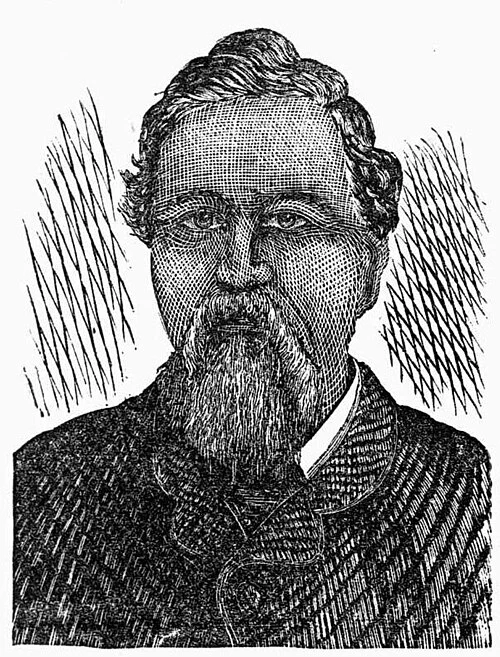
The Second Prophet: Understanding Tohu's Place at Parihaka
Any account of Tohu Kākahi must begin by acknowledging the particular challenge his historical profile presents: he has spent more than a century in the shadow of Te Whiti o Rongomai, his co-leader at Parihaka, whose oratory was more public and whose image has proved more easily rendered in the heroic singular. The two men were genuinely complementary — a partnership of temperament as well as politics — and the tendency to treat Parihaka as primarily Te Whiti's creation, with Tohu as a supporting figure, distorts the history of a movement that was built, sustained, and ultimately destroyed by two equal authorities working in deliberate concert.
Contemporary accounts are consistent on this point: Parihaka had two prophets, two teachers, two sources of spiritual authority, and the community understood itself as governed by both. Where Te Whiti's teachings tended toward the prophetic and the cosmic — the grand statement, the visionary declaration about the destiny of Māori and the ultimate failure of colonial power — Tohu's were more grounded, more concerned with the practical organisation of community life, the ethics of daily conduct, and the specific obligations that the Parihaka movement's commitment to non-violence placed on those who lived by it. Neither dimension was more important than the other. Parihaka required both, and it had both.
Born around 1828 in South Taranaki, Tohu came from Pakakohi and Tangahoe descent — iwi whose territories lay in the southern part of the Taranaki region, among the most heavily impacted by the Crown's land confiscations of the 1860s. His personal experience of dispossession was not theoretical or inherited from a previous generation; it was the immediate, lived reality of watching land that had fed and sustained his people for generations being surveyed, fenced, and handed to European settlers by the authority of a government that presented this theft as the necessary consequence of civilisation's advance.
Building Parihaka: The Practical Architecture of Resistance
The founding of Parihaka as a permanent, organised community is conventionally dated to the late 1860s, though its roots in the earlier gatherings of displaced Taranaki Māori at the site go back further. Tohu's contribution to the building of Parihaka was, characteristically, practical as well as spiritual: he organised agricultural production, managed the distribution of resources among a community that was drawing refugees from confiscated territories across the region, and helped establish the social structures — the meetings, the protocols, the systems of communal obligation — that gave Parihaka its distinctive character as something more than a refugee settlement.
The economic vitality of Parihaka at its peak was, in significant part, Tohu's achievement. The settlement's gardens and farms were productive enough to generate surpluses for trade. The community could feed itself and feed its many visitors. This material foundation was not incidental to the political programme; it was essential to it. A community that could not feed itself could not resist. A community that was dependent on outside resources was vulnerable to economic pressure. Parihaka's self-sufficiency was a form of sovereignty as concrete as anything Te Whiti proclaimed from the marae.
Tohu was also a gifted teacher whose monthly gatherings drew people from far beyond the immediate Parihaka community. His style was different from Te Whiti's — less given to prophetic pronouncements, more inclined toward the careful explication of principle through story and example — but the substance of his teaching was entirely consistent with the movement's broader commitment to the primacy of peace, the injustice of the confiscations, and the obligation of Māori people to resist those confiscations without adopting the methods of those who had perpetrated them.
"The plough does not lie. It turns the earth and says: here is work, here is food, here is occupation. Let them come with their papers and their guns — the plough will still be turning when the papers have crumbled."
The Ploughmen's Campaign: Resistance Without Fists
When Te Whiti launched the ploughing campaign in 1879 — sending young men to plough the surveyed confiscated lands as an assertion of agricultural occupation and a challenge to the Crown to justify its appropriation of farmed country — Tohu was its equal co-architect. The campaign's genius lay in its precision: it targeted the specific legal and moral contradiction at the heart of the Crown's land policy, which justified confiscation partly on the grounds that Māori were not making productive use of their land. Parihaka's ploughmen were making productive use of exactly that land, and submitting without resistance to arrest when Crown authorities came to stop them. Every arrest was a documented admission by the Crown that it was imprisoning men for farming — and the documentation accumulated with each passing week as more men went out and more arrests followed.
Tohu organised and led many of the ploughmen's expeditions personally, walking with the young men to the confiscated fields, watching them arrested, and returning to Parihaka to send the next group. The physical courage this required should not be underestimated: these were not symbolic acts performed in the safety of a sympathetic audience, but deliberate encounters with Crown authority conducted in isolated rural locations, at a time when the memory of military violence in Taranaki was less than a decade old and the attitudes of individual police officers and soldiers toward Māori resistance were not reliably constrained by any concern for the niceties of legal procedure.
The fence-building campaign of 1880 and 1881 followed the same logic. When European settlers fenced confiscated land, Parihaka men took the fences down — quietly, without confrontation — and were arrested in their hundreds. The prisons of New Zealand's North Island filled with peaceful farmers and fence-dismantlers from Parihaka, and the moral arithmetic of the situation became impossible for informed observers to avoid: here was a colonial government imprisoning people for acts of civil disobedience that were, by any reasonable ethical standard, a more legitimate response to dispossession than the dispossession itself.
The Invasion and Its Aftermath
On 5 November 1881, Crown forces invaded Parihaka. Tohu stood with Te Whiti as the troops marched in, was arrested alongside him, and was subsequently transported to the South Island and imprisoned without trial — held under emergency legislation specifically enacted to prevent the legal challenges that a normal trial would have required the Crown to answer. Both men were denied the opportunity to make the argument that would have embarrassed the government most: the argument that their actions had been lawful, proportionate, and morally justified responses to Crown illegality.
Prison did not break Tohu any more than it broke Te Whiti. Accounts from his time of imprisonment describe a man who maintained the same quiet dignity that had characterised his leadership at Parihaka, who continued to teach and to counsel fellow prisoners, and who emerged from confinement with his convictions intact and his capacity for leadership undiminished. Released in 1883, he returned to the ruins of what Parihaka had been and began the work of rebuilding — a work that was slower and more painful than the building had been, given the dispersal of the community, the destruction of its infrastructure, and the ongoing Crown hostility that made any large-scale reassembly of the settlement's former population politically fraught.
The later years at Parihaka were years of patient reconstruction under difficult conditions. The settlement never recovered the scale and vitality of its early 1880s peak — the community that had numbered 2,500 shrank to a fraction of that, as many of the dispersed residents found other lives and did not return. But a community persisted. The monthly gatherings continued. The teaching continued. And the tradition that Tohu and Te Whiti had built — the insistence on non-violence as the only response to violence that preserved the integrity of those who practised it — continued to be transmitted to subsequent generations.
Two Prophets, One Legacy
Tohu Kākahi died on 15 July 1907 at Parihaka, four months before Te Whiti, whom he had outlived by only a small margin. The two men had been inseparable for four decades — in building, in resistance, in imprisonment, in rebuilding — and their deaths within months of each other had the quality of a completion, two halves of a whole reaching their end together. The community they left behind was diminished but alive, carrying within it the living tradition of what they had taught and what they had endured.
New Zealand's formal reckoning with Parihaka came slowly. For most of the twentieth century the story was suppressed — not taught in schools, not discussed in mainstream public discourse, managed by the silence that settler societies habitually employ to avoid confronting the violence on which they were founded. The Māori renaissance of the 1970s and 1980s began to change this, and the Waitangi Tribunal's work on Taranaki land claims brought the evidence of Crown wrongdoing into a formal public record from which it could not subsequently be erased. The 2017 government apology to the people of Parihaka acknowledged the injustice of the 1881 invasion and the Crown's subsequent treatment of Te Whiti and Tohu, and named both men explicitly as leaders who had been wronged.
That acknowledgement matters, but it does not exhaust Tohu's significance. His real legacy is the tradition he helped create and transmit — a tradition of principled, disciplined, creative non-violent resistance conducted in the face of state violence — which stands as one of the most important contributions any New Zealander, Māori or Pākehā, has made to the global repertoire of political thought and action. Gandhi studied the Parihaka story. The parallels with the American civil rights movement's discipline of non-violent direct action are not incidental. Tohu Kākahi and Te Whiti o Rongomai were doing, in the 1870s and 1880s, what King and Gandhi would later make famous — and they were doing it in a country that spent a century pretending it had not happened.