At a Glance
South Taranaki and the Making of a Warrior
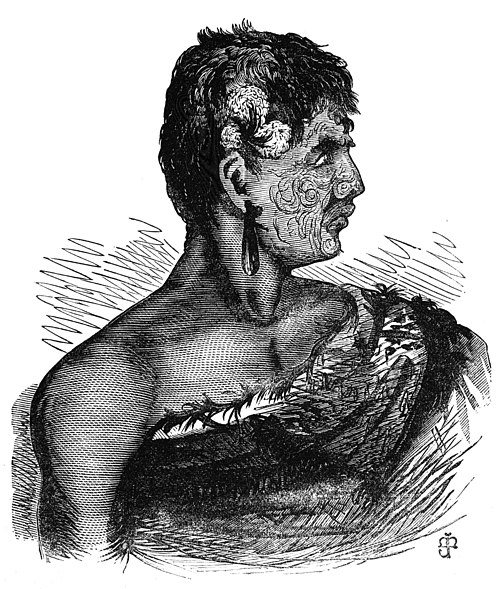
Riwha Tītokowaru was born around 1823 in South Taranaki, in the territory of Ngāti Ruanui — one of the iwi of the Taranaki confederation whose lands covered the fertile coastal plains and forested interior of the western North Island. South Taranaki was, by the time of his birth, already being transformed by European contact: missionary activity, the introduction of metal tools and firearms, and the first tentative movements of British settlement were all reshaping the political and cultural landscape in ways that the generation he grew up in was only beginning to understand. He was, by the accounts that survive, an exceptional young man — physically powerful, intellectually formidable, and possessed of a spiritual intensity that marked him as someone whose significance would extend beyond the purely martial.
Educated in part by the Wesleyan mission at Ōtoia, he could read and write, absorbed Christian teaching alongside Māori oral tradition, and developed a syncretic religious worldview that would eventually evolve into prophetic leadership. His early adult years coincided with the gathering crisis of Taranaki land politics: the Crown's insatiable appetite for Taranaki land, the fraudulent and coercive land purchases of the 1840s and 1850s, and the outbreak of the First Taranaki War in 1860 — a conflict that began when the Crown attempted to force through a land sale that the majority of Māori owners had explicitly refused.
Tītokowaru fought in the Taranaki conflicts of the 1860s and emerged from them profoundly changed. A musket ball had destroyed most of his left eye during one engagement — a wound whose disfiguring consequences he bore for the rest of his life, and which, in the Māori prophetic tradition, carried spiritual as well as physical significance. The wars also confirmed what the preceding decades had suggested: that the Crown would use whatever force was necessary to acquire Taranaki land, and that the treaties and agreements through which it justified its actions were instruments of appropriation rather than protection.
The Hauhau Movement and the Path to 1868
During the 1860s, Tītokowaru became associated with the Pai Mārire movement — known to settlers as Hauhau — the syncretic religious and military movement founded by Te Ua Haumēne that spread rapidly through Māori communities in the North Island as armed resistance to Crown land seizures intensified. Pai Mārire combined Christian elements with Māori spiritual tradition in a framework that explicitly rejected the legitimacy of colonial authority and affirmed the right of Māori people to defend their land and sovereignty by force. It attracted warriors across the western North Island, and Tītokowaru's involvement gave him both a spiritual framework for the conflict he was preparing to wage and a network of connections to other communities and leaders that would prove militarily valuable.
By 1868, the confiscations that had followed the Waikato War and the ongoing Taranaki conflicts had stripped Ngāti Ruanui of vast areas of their most productive land. Settlers were moving onto confiscated territory. Redoubts were being built on land that Māori regarded as their own. The pressure on communities that had managed to retain some of their country was relentless and systematic. Tītokowaru decided that the moment had come to fight — not with the aim of expelling Europeans from New Zealand, which he was realistic enough to understand was beyond any possible military outcome, but with the specific goal of inflicting sufficient military damage on Crown forces to make the continued occupation of confiscated South Taranaki land too costly to sustain.
Te Ngutu o te Manu: A Victory That Shook the Colony
On 21 August 1868, a Crown force of 150 men under Lieutenant Colonel Thomas McDonnell attacked Tītokowaru's pā at Te Ngutu o te Manu — the Beak of the Bird — a fortified settlement deep in the bush of South Taranaki. McDonnell was a veteran commander with considerable experience of Māori warfare, and he attacked with confidence that his numerical and material advantages would carry the day. Within hours, his force had been routed. Tītokowaru had anticipated the attack, prepared the ground with meticulous care, and deployed his warriors with a tactical sophistication that left the Crown forces stumbling through bush ambushes they could neither understand nor counter. McDonnell retreated with severe casualties and the unambiguous knowledge that he had met a commander his experience had not prepared him for.
A second attack on Te Ngutu o te Manu in September 1868 — this time led by McDonnell with a larger force and greater preparation — produced a similar result. The pā held, the Crown forces suffered further casualties, and McDonnell was again forced to withdraw. The military reputation of Tītokowaru spread rapidly through both Māori and settler communities: here was a commander who had twice defeated experienced Crown forces in engagements they had chosen on ground they had prepared, and who showed no sign of being overawed by the resources arrayed against him.
"I do not fight because I love war. I fight because the land that feeds my children has been taken, and the people who took it will not return it by any means but force."
The Battle of Moturoa on 7 November 1868 was the campaign's military zenith. Tītokowaru lured a Crown force under Major William Hunter into a carefully prepared ambush, inflicting the heaviest single-day casualty toll that Crown forces had suffered in the entire New Zealand Wars. Hunter himself was killed. The survivors retreated in disorder. The reaction in Wellington was one of near-panic: if Tītokowaru could not be stopped, the entire Crown position in South Taranaki — and potentially much of the North Island — was in jeopardy. Reinforcements were rushed from Auckland and from the Armed Constabulary. The government faced the most serious military crisis of the colonial period.
The Withdrawal: History's Most Debated Decision
In early 1869, with Crown forces massed around his new pā at Tauranga Ikā and widely expecting the definitive battle that would determine control of South Taranaki, Tītokowaru withdrew. His followers dispersed into the bush and the interior. No battle was fought. The Crown forces occupied the abandoned pā and declared victory, but the hollow quality of that declaration was apparent to everyone who knew the facts: Tītokowaru had not been defeated. He had chosen to stop.
Why he stopped remains one of the most debated questions in New Zealand historiography. The most commonly cited explanation involves a personal transgression — accounts from the period suggest that Tītokowaru was found to have violated the tapu of the campaign by sleeping with the wife of one of his warriors, an act that, in Māori spiritual logic, would have destroyed the protective power that had sustained his military success. If his men believed that the mana of the campaign had been broken in this way, their willingness to fight on would have been severely compromised regardless of the military situation.
Other historians have pointed to material factors: the failure of expected reinforcements from other iwi to arrive, the growing logistical difficulty of sustaining a large fighting force deep in the Taranaki bush, and the recognition that even Tītokowaru's tactical brilliance could not indefinitely hold off the resources that the Crown was now deploying. Whatever the precise combination of causes, the withdrawal ended the campaign without the decisive engagement both sides had been preparing for — and left Tītokowaru undefeated in the field, a status that the Crown's subsequent triumphalist account of the wars was never entirely able to erase.
Peace, Prophecy, and the Final Years
The years after the campaign saw Tītokowaru undergo a profound personal transformation. Converting to the Ringatū faith founded by Te Kooti Arikirangi — the visionary prophet whose own guerrilla campaign in the eastern North Island had run parallel to Tītokowaru's in Taranaki — he renounced violence and remade himself as a healer and spiritual leader. Communities sought him out for his healing gifts. His oratory, always celebrated, became the vehicle for teachings that combined the Ringatū tradition with the hard-won wisdom of a man who had seen what war could achieve and what it could not.
Crown authorities watched him with continuing suspicion but found no grounds to act against him. He had not been captured, had not surrendered, and had not been tried for any offence; the legal basis for persecution was absent, and the political cost of creating a martyr out of a man who was now preaching peace was obvious. He lived at Taipōiti in South Taranaki, farming, healing, and teaching, visited by followers from across the region, and died there on 14 August 1888 at approximately 65 years of age.
The Undefeated Commander and His Place in History
Tītokowaru's place in New Zealand history was for a long time deliberately obscured. The colonial narrative of the New Zealand Wars required a story of inevitable British triumph — the march of civilisation, the pacification of a warrior people, the establishment of law and order on what official memory preferred to describe as an empty or underused frontier. A commander who had twice routed experienced Crown forces, inflicted the worst casualties of the entire war on a single afternoon, and then walked away unbeaten did not fit that narrative, and official history managed him by the simple expedient of not discussing him.
The historian James Belich's rehabilitation of Tītokowaru's reputation in the 1980s — arguing that he was not merely a capable guerrilla commander but a military innovator whose tactical thinking was genuinely original and whose campaign had come closer than any other to reversing the military balance of the New Zealand Wars — transformed the scholarly understanding of his significance. The innovative pā design that Tītokowaru and his predecessors had developed, incorporating underground bunkers, sophisticated firing positions, and terrain features that neutralised the Crown's artillery advantage, was a genuine military achievement that deserved recognition alongside the great defensive commanders of any era.
Beyond the strictly military dimension, his significance lies in the combination of roles he embodied across his life: warrior and prophet, commander and healer, the man who defeated armies and then chose not to deploy that capacity again. The choice to stop fighting — whatever its precise causes — was in its own way as remarkable as the victories that preceded it, a demonstration that the purpose of resistance was never destruction for its own sake but the preservation of something worth preserving. Ngāti Ruanui and the wider Taranaki Māori community remember him as both, and the land over which he fought — much of which remained in Crown or settler hands despite his victories — is the subject of Treaty settlements that are still, in the twenty-first century, working their way toward resolution.