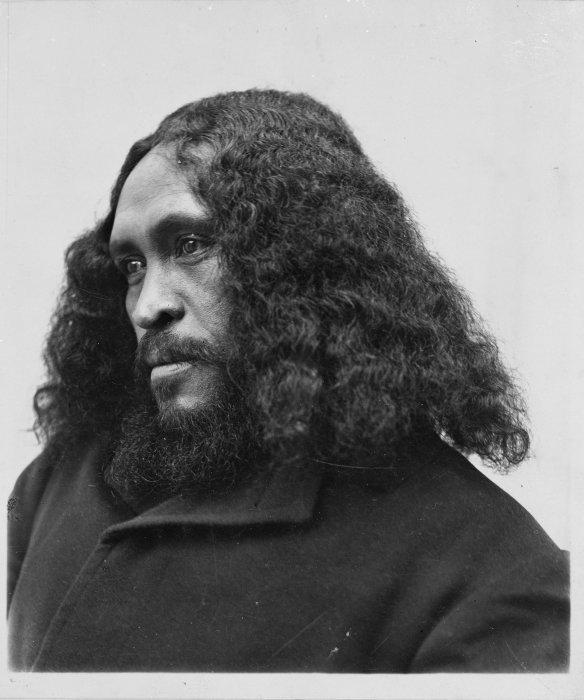
At a Glance
The People of the Mist: Tūhoe and the Urewera
No understanding of Rua Kenana is possible without first understanding Tūhoe — the iwi known as Ngāi Tūhoe, the Children of the Mist, whose territory in the Urewera ranges of the eastern Bay of Plenty represents one of the most remote and ecologically distinctive landscapes in the North Island of New Zealand. The Urewera is a place of dense forest, narrow river valleys, and dramatic mountain terrain that has historically served as both refuge and fortress — a landscape that resisted agricultural conversion and European penetration far longer than the more accessible coastal and riverine territories of other iwi, and that sustained, as a consequence, a degree of Tūhoe cultural and political autonomy that had been largely eroded elsewhere.
Tūhoe had not signed the Treaty of Waitangi in 1840. That refusal was not an oversight; it was a deliberate assertion that the treaty's framework did not apply to a people whose sovereignty had never been threatened by the British presence in the way that coastal iwi had experienced. The subsequent decades brought the Waikato War, the confiscations of the 1860s, and the guerrilla campaigns of Te Kooti Arikirangi Te Turuki — the visionary Ringatū prophet whose refuge in the Urewera the Crown had attempted to destroy but never fully succeeded in penetrating. Tūhoe had sheltered Te Kooti, had paid heavily for that shelter in Crown reprisals, and had emerged from the wars with their territory technically surveyed and subject to Crown sovereignty but practically still governed by their own institutions and their own spiritual leadership.
Into this world — shaped by prophecy, by war, by the memory of Te Kooti, and by the constant pressure of a Crown that wanted access to Urewera timber and land — Rua Kenana was born in 1869 at Maungapōhatu, the sacred mountain that sat at the heart of Tūhoe cosmology. He grew up steeped in the prophetic tradition that Te Kooti had established, and in the conviction — shared across much of Tūhoe — that the spiritual and the political were inseparable, and that the survival of the people required leadership that addressed both dimensions simultaneously.
Prophet and Builder: The Iharaira Community
Around the turn of the twentieth century, Rua Kenana began to attract a following among Tūhoe and neighbouring peoples on the basis of a prophetic message that combined the Ringatū religious tradition with a new political vision of Tūhoe autonomy. Proclaiming himself the Diamana — the diamond of Tūhoe prophecy, the successor to Te Kooti foretold in Ringatū teaching — he gathered hundreds of followers and established at Maungapōhatu a settlement that was, by any reasonable assessment, one of the most remarkable acts of Indigenous community building in New Zealand's colonial period.
The Iharaira community that Rua built at Maungapōhatu was not simply a religious retreat. It was a functioning autonomous society: it had its own circular meeting house — the Hiruharama Hou, or New Jerusalem — designed with a distinctive architecture that fused Māori building traditions with the symbolic geometry of Rua's prophetic vision. There was a community store, a police force operating under Rua's authority, a system of communal land management, and a set of social rules — including restrictions on alcohol, which Rua saw as a tool of colonial degradation — that distinguished the community from the chaos that many Tūhoe settlements were experiencing under the combined pressures of land alienation, poverty, and disease.
Thousands of people visited Maungapōhatu during the peak years of the community's vitality, drawn by Rua's reputation as a healer and a prophet, and by the tangible evidence that an alternative to colonial dependency was achievable. He organised petitions to the Crown — including a remarkable delegation to King Edward VII in 1908, in which he travelled to Auckland to present the Tūhoe case for the return of their confiscated lands — and maintained a running engagement with the New Zealand government that was simultaneously confrontational and formally correct, using the Crown's own language of rights and treaties to press demands that the Crown preferred to ignore.
"The land is not something we possess. We are something the land possesses. Take the land and you do not gain property — you gain a responsibility you do not know how to discharge."
The 1916 Raid: State Violence at Maungapōhatu
War changed everything. When the First World War broke out in 1914 and the New Zealand government began pressuring Māori communities to contribute men to the imperial military effort, Rua counselled his followers against enlistment. Tūhoe had no obligation to fight for a Crown that had confiscated their land, killed their people, and failed to honour the protections that even the inadequate Treaty framework had promised. This position — entirely reasonable given the history — was interpreted by the government as sedition, and it gave those in authority who had long wanted to break the Maungapōhatu community a pretext they had been waiting for.
On 2 April 1916, a force of more than 100 armed police descended on Maungapōhatu — a remote mountain community accessible only by difficult track — to arrest Rua Kenana. The scale of the force was grotesque relative to any legitimate law enforcement purpose; it was a military operation dressed as a policing exercise. In the confrontation that followed, Rua's son Toko was shot dead, and another community member was killed. Rua himself was arrested, subjected to a trial in which the proceedings were widely regarded as politically motivated, and convicted of sedition and resistance. He served time in prison and was released, his community disrupted and depleted, his authority formally undermined though never destroyed.
The raid on Maungapōhatu was, in the judgment of subsequent historians and eventually of the New Zealand government itself, an act of state violence that had no genuine justification in law or in the facts. The Tūhoe Treaty settlement of 2014 — one of the most significant Treaty settlements in New Zealand history — included an acknowledgement by the Crown that the 1916 raid was unjustified and that the Crown's historical treatment of Tūhoe, including the Maungapōhatu assault, had caused profound and lasting harm. That acknowledgement came nearly a century after the events it addressed, and it came too late for Rua Kenana himself, who had died in 1937 at the place where he had been born and to which he had always returned.
Sovereignty in the Mist: Rua's Enduring Significance
Rua Kenana died on 20 February 1937 at Maungapōhatu, aged 67, having spent the last two decades of his life attempting to rebuild what the 1916 raid had damaged. The community never fully recovered the vitality of its pre-raid years, and the pressure of the twentieth century — continued land alienation, the decline of the Urewera forest under logging, the pull of wage labour in coastal towns — gradually eroded the conditions that had made Maungapōhatu possible.
His significance in the history of New Zealand is multiple and still contested. Within Tūhoe, he remains a central figure of spiritual and political identity — a leader who embodied the refusal to accept colonial terms, who built something genuinely autonomous in the most remote corner of his people's territory, and who was destroyed by the state precisely because that autonomy threatened the completeness of Crown control. The 2014 Treaty settlement, which included a formal Crown apology and the return of Te Urewera to Tūhoe management under a unique legal framework that recognised the forest as a legal entity in its own right, was in significant part a belated recognition of the claims that Rua had been making throughout his life.
Across the wider landscape of New Zealand history, he represents a tradition of Māori prophetic leadership — running from Te Kooti through Rua to later figures — that responded to colonial violence and dispossession not merely with military resistance or legal argument but with the creation of alternative worlds: communities built on different principles, governed by different authorities, oriented toward different futures than the ones that colonial power was imposing. That those communities were ultimately constrained and damaged by colonial power does not diminish what they achieved while they flourished; it simply confirms what Rua always knew, which was that the contest between Tūhoe sovereignty and Crown control was never going to be resolved by goodwill alone.