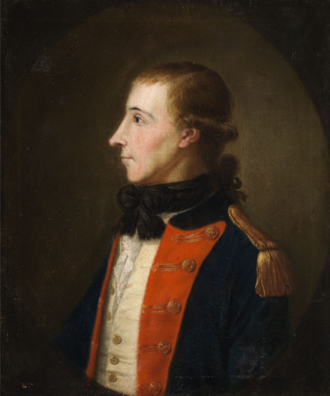
At a Glance
Dublin Origins: An Enlightenment Education
Theobald Wolfe Tone was born on 20 June 1763 in Dublin, the eldest son of Peter Tone, a coachmaker, and Margaret Lamport. The family was Protestant, of middling means — comfortable enough to provide an education but not elevated enough to insulate the young Theobald from the realities of Irish society under the Penal Laws that excluded the Catholic majority from property, education, and political life. He was educated at Trinity College Dublin, where he read law and absorbed the Enlightenment political philosophy that was then reshaping European political thought: Locke, Rousseau, Paine, the theorists of natural rights and popular sovereignty who were providing the intellectual arsenal for revolutions in America and France.
He was called to the Irish Bar in 1789, the year the Bastille fell, and it is impossible to overstate the significance of that coincidence. The French Revolution provided the generation of Tone's political formation with both a model and a vocabulary: the assertion that sovereignty resided in the people, that inherited privilege was without rational foundation, that the division of humanity by birth into the privileged and the excluded was a crime against nature — these were not abstract propositions in 1789 but living political realities enacted on the streets of Paris and demanding response from every thinking person in Europe.
Tone responded with characteristic energy and directness. He was not a man for gradual positions or careful qualifications. His mind moved rapidly from diagnosis to prescription, and the diagnosis he arrived at by the early 1790s was uncompromising: Ireland's problems — the poverty of the Catholic majority, the political exclusion of Dissenters, the corruption of the Protestant Ascendancy, the subordination of all Irish interests to English ones — were all expressions of a single structural reality, namely the colonial relationship between Britain and Ireland. The prescription followed necessarily: independence, achieved if possible by political means and if necessary by force.
An Argument on Behalf of the Catholics of Ireland
In 1791, Tone published the pamphlet that made his reputation: An Argument on Behalf of the Catholics of Ireland. The text was striking less for its specific proposals — Catholic emancipation, the reform of the Irish Parliament — than for its framing. A Protestant barrister arguing on behalf of Catholics was unusual enough in itself. But Tone went further: he argued that the interests of Protestant Ireland and Catholic Ireland were identical, that the divisions maintained between them by the Penal Laws and by British policy were artificial and deliberately maintained precisely because a united Irish population would be politically irresistible. The pamphlet was both a political argument and an act of solidarity — a Protestant addressing Catholics not as a patron condescending to support an inferior cause but as a fellow Irishman identifying a common enemy.
The pamphlet attracted immediate attention and earned Tone an invitation to Belfast, where the Presbyterian merchant community — radical, dissenting, influenced by the Scottish Enlightenment, and deeply hostile to both the Anglican Establishment and what they regarded as English economic exploitation of Ireland — had been following the French Revolution with intense sympathy. Belfast in 1791 was arguably the most politically radical city in Ireland: the Presbyterians who dominated its commerce and intellectual life had their own history of exclusion from the Anglican Establishment and their own reasons for identifying with Enlightenment republicanism. Tone and the Belfast radicals found each other with the recognition of kindred spirits.
The Society of United Irishmen: A Revolutionary Organisation
On 18 October 1791, in Belfast, Tone and a group of like-minded radicals — including Samuel Neilson, Henry Joy McCracken, and Thomas Russell — founded the Society of United Irishmen. The name was programmatic: the society's founding purpose was to end the divisions of Catholic, Protestant, and Dissenter that kept the Irish population fragmented and exploitable, and to substitute for those divisions the unifying identity of the common Irish citizen, equal in rights regardless of religious confession. A Dublin branch was established shortly after, drawing in figures from across the Protestant and Dissenter communities who shared Tone's analysis.
Initially the Society was a political reform organisation, calling for parliamentary reform and Catholic emancipation through legal means. But the British government's increasingly repressive response to Irish radicalism — driven partly by alarm at the French Revolution and partly by the specific threat posed by a united Irish opposition — pushed the Society rapidly toward more radical positions. The outlawing of the Society in 1794, the intensification of coercive legislation, and the spread of sectarian violence deliberately fomented by loyalist organisations convinced Tone and the United Irishmen leadership that reform within the existing system was impossible and that independence, achieved with French military assistance, was the only viable path.
The transformation of the United Irishmen from a parliamentary reform society into a revolutionary organisation conspiring with a foreign power was rapid and comprehensive. By 1795, the Society was reorganised on a cell-based secret structure borrowed from the Defenders, a Catholic agrarian secret society with whom they sought alliance. Membership was sworn on oath. Communication with the French government was established. Tone himself was the primary diplomatic agent, the man who would travel to Paris and make the case for French intervention in Ireland.
Paris: Negotiating a Revolution
Tone left Ireland in 1795, exiled under the terms of an agreement that spared him prosecution in exchange for departure. He went first to America and then, in 1796, to France — where the Directory was governing a republic at war with Britain and not disinclined to support any operation that would weaken the British war effort. Tone spent months in Paris, navigating the bureaucracy of the French Republic, making his case to ministers and generals, demonstrating in his characteristically direct way that an Irish rebellion, properly supported by French troops and French naval power, could open a second front that would stretch British resources beyond breaking point.
He was received seriously. The French were interested, and General Lazare Hoche — one of the ablest French commanders — was assigned to lead an expedition to Ireland. The result was the Bantry Bay expedition of December 1796: a French fleet of forty-three ships carrying some 14,000 troops that reached Bantry Bay in County Cork only to be driven back by storms before landing. It was one of the most dramatic near-misses in Irish history. The fleet was in sight of the Irish coast for days, close enough that Tone, who was aboard, wrote in his journal that he could have swum to the shore. The weather would not relent, and the expedition returned to France having achieved nothing military but having demonstrated that the strategic concept was sound and that France was genuinely committed to Irish intervention.
The failure of Bantry Bay was a severe setback but not a fatal one. Tone continued to lobby in France and the United Irishmen continued to organise in Ireland, their membership now numbering in the hundreds of thousands across Ulster, Leinster, and Connacht. A second French expedition was planned, and in May 1798 — before it arrived — the rebellion broke out prematurely, driven partly by the arrest of the United Irishmen leadership in Dublin in March and partly by the brutal campaign of house-burning and torture conducted by the Crown forces under General Lake in Ulster, which effectively destroyed much of the Northern organisation but provoked rising elsewhere.
The Rising of 1798: Blood and Fire
The 1798 Rebellion was, in military terms, a catastrophe for the United Irishmen. The arrests of the Dublin leadership in March had decapitated the organisation at its centre. In Ulster, the disarming campaign had shattered the most disciplined element of the movement. When rising did occur — most extensively in County Wexford, where it was led by the Catholic priest Father John Murphy and achieved several significant early victories — it did so without the coordination that Tone and the United Irishmen leadership had planned and without the French support that was supposed to accompany it.
The Wexford rising was suppressed with ferocious violence. The battle of Vinegar Hill in June 1798 effectively ended organised resistance in the south. Thousands of rebels and thousands of civilians were killed, many of them in atrocities by Crown forces that would burn in Irish memory for generations. French expeditions that arrived later in the summer — a small force that landed at Killala Bay in County Mayo in August — achieved some initial success but were ultimately overwhelmed, and the men who had come to fight for Irish freedom were taken prisoner. A larger French fleet, carrying Tone himself now holding the rank of Adjutant-General, was intercepted by a British squadron at Lough Swilly in October 1798. After a fierce battle, the French ships were captured and Tone, in French uniform, was taken prisoner.
Trial, Death, and the Question of the Wound
Tone was brought to Dublin, tried by court martial — he rejected the jurisdiction of the court but conducted his own defence with a dignity and eloquence that impressed even his enemies — and sentenced to death. He requested, as a soldier, to be shot rather than hanged, arguing that he had served as an officer in the French Army and was entitled to a military execution. The request was denied; he was to be hanged like a common criminal. He was found in his cell on the morning of 12 November 1798 with a serious wound to his throat.
Whether Tone attempted suicide or was murdered by his captors has been disputed ever since. The wound was not immediately fatal, and he lingered for seven days in agony before dying on 19 November 1798. The British government, denied the spectacle of a public execution, attempted to minimise the significance of his death; the government's embarrassment at the failure to hang the man they had convicted was evident. Tone himself, according to those present at his bedside, remained coherent and composed to the end — refusing to regret what he had done, clear that his cause was just and that its time would come.
He was thirty-five years old. He left a wife, Matilda, and three children. Matilda Tone, who outlived her husband by many decades, kept his memory alive with a fierce devotion, editing and publishing his journals and letters and ensuring that the fullness of his personality — the wit, the humanity, the intellectual vitality, the passionate commitment — was preserved alongside the political legacy.
The Father of Irish Republicanism: An Enduring Legacy
Tone's place in the Irish republican tradition is foundational in the most literal sense: every subsequent generation of Irish republicans has defined itself in relation to him. The ideal he articulated — the unity of Catholic, Protestant, and Dissenter under the common name of Irishman; the achievement of independence from Britain; the establishment of an Irish republic — became the standard against which all subsequent republican programmes measured themselves. To claim continuity with Tone was to claim the authentic tradition; to be identified with that tradition was to inherit both its authority and its obligations.
The annual commemoration at his grave in Bodenstown, County Kildare — the Bodenstown Commemoration — became one of the central rituals of Irish republicanism. Different organisations have marched at Bodenstown in different periods: the IRA, Sinn Féin, various socialist republican groups, the Official IRA, the Provisionals, the INLA. The speeches delivered at Bodenstown have been used to signal policy shifts, announce ideological developments, and stake claims to Tone's legacy. The grave itself — a simple headstone in a small churchyard — functions as the symbolic centre of the republican tradition, the point from which all its subsequent trajectories diverge and to which they all, in their self-understanding, return.
The Wolfe Tone Society, founded in Dublin in 1963 to mark the bicentenary of his birth, played a significant role in the political debates of the 1960s that eventually produced the split in the IRA and Sinn Féin and the emergence of the Provisional movement in 1969. The society brought together republican activists, trade unionists, and leftist intellectuals to discuss the future direction of the movement, and its debates directly influenced the political strategies of the subsequent decade.
Tone's own writings — above all his journals, which are among the most readable and humane documents in Irish political literature — have ensured that he remains a living presence in Irish intellectual life rather than simply a sculptural icon. He was funny, self-deprecating, occasionally vain, deeply in love with his wife, frustrated by French bureaucracy, terrified at Bantry Bay, unfailingly honest about his own failures and doubts. The journals reveal a man of full human dimensions, not a marble hero, and it is precisely this humanity that makes his commitment — maintained without weakening through exile, failure, imprisonment, and death — so compelling. He knew exactly what he was doing and why, and he did it anyway.
Two centuries after his death in a Dublin prison, Theobald Wolfe Tone remains the indispensable figure of Irish republicanism — the man who gave the tradition its language, its ideal, and its first martyrdom. The question he posed — whether Ireland could be a nation in which religious difference was irrelevant to civic identity — remains, in the twenty-first century, as urgent and as unresolved as it was in the age of Enlightenment and Revolution. That the question is still alive is itself a measure of his importance. That it is still posed in his terms is the measure of his genius.