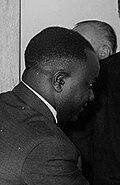
Three Times Prime Minister — Shot on the Fourth Day of the Third
Pierre Ngendandumwe's biography contains one of the most precise and devastating ironies in the history of post-independence African politics. He served as Prime Minister of Burundi three times — a fact that testifies simultaneously to his political standing and to the extraordinary instability of a country cycling through governments faster than any constitutional framework could survive. His third appointment came on 11 January 1965. On 15 January, four days later, a Rwandan Tutsi refugee employed as a clerk at the American embassy in Bujumbura shot him dead at the Prince Regent Hospital, where he had gone to visit a patient.
He was Burundi's first Hutu Prime Minister. In a country where the question of whether the Hutu majority could exercise genuine executive power — and survive doing so — was the central, violent, unresolved question of independence politics, his appointment was not merely a personnel decision. It was a declaration of political possibility: that a Hutu politician could hold the country's highest executive office, form a government, exercise authority, and be recognised as legitimate by the full range of political forces Burundian society contained. His repeated appointments confirmed that possibility across successive governments and successive political crises.
His assassination on the fourth day of his third term destroyed that possibility at precisely the moment when it most needed to demonstrate its durability. January 1965 was not a month chosen at random; it was the opening of a year in which Burundian constitutional democracy would be definitively ended — the year of the failed Hutu coup in October, the army's systematic purge of Hutu leaders, and the execution of Prime Minister Joseph Bamina. Ngendandumwe's murder was the year's first act, and it set the key in which everything that followed would be played.
Formation: Excellence in a System Designed to Limit It
Ngendandumwe was born around 1930 in Burundi under Belgian colonial administration. His family was Hutu, which in the colonial system the Belgians had built across Ruanda-Urundi meant occupying the lower position in a racially classified hierarchy backed by administrative preference and enforced through identity documents that determined what appointments, educational opportunities, and social positions a person could reach.
He was educated in Catholic mission schools — the primary route to literacy available to Burundians of either ethnicity — and distinguished himself with the kind of academic capability that the system, for all its structural prejudices, could not entirely suppress. He pursued further training that placed him among the very small class of educated Hutu Burundians capable of competing for the professional and political positions that would define the country's post-independence leadership. His advancement required not merely talent but the sustained application of talent against institutional obstacles that more advantaged contemporaries did not face.
He aligned with UPRONA after its founding, drawn by Rwagasore's cross-ethnic vision as the framework most likely to produce the kind of stable, inclusive governance that newly independent Burundi required. As a Hutu intellectual of genuine ability and moderate political instincts, he was precisely the figure that Rwagasore's UPRONA needed to give its cross-ethnic claim organisational reality. He rose through the party's structures and into the first post-independence governments, building the administrative experience that would eventually bring him to the premiership.
Three Terms: Governing Under Impossible Conditions
Ngendandumwe's first appointment as Prime Minister came in 1963, in the turbulent period following Rwagasore's assassination and the rapid deterioration of Burundi's constitutional politics in its first year of independence. His appointment was itself a signal: in a country whose independence movement had been built on cross-ethnic nationalism, the appointment of a Hutu Prime Minister was a statement that the UPRONA vision had not been entirely abandoned with Rwagasore's death.
His first term was brief and contested. The political environment in which he operated — a constitutional monarchy whose palace had its own executive ambitions, a Tutsi-dominated army whose officers regarded civilian authority with increasing scepticism, and an UPRONA party splitting along ethnic lines under the pressure that Rwagasore's death had removed the last force capable of containing — made governing in any substantive sense almost impossible. He nonetheless formed a government, conducted the business of the premiership, and maintained the formal constitutional machinery for long enough to demonstrate that Hutu executive leadership was not inherently incompatible with the stability of the Burundian state.
His second and third terms followed the same pattern on an accelerating timeline. Each appointment confirmed his political standing as the most credible Hutu figure available for the role. Each term was shorter and more contested than the last. Each government he formed operated against the same combination of palace interference, military pressure, and factional opposition within UPRONA itself. He worked within the constitutional framework not because he was naive about the forces arrayed against it but because the alternative — abandoning the constitutional framework for some form of ethnic mobilisation or armed confrontation — would, he understood, produce outcomes worse than the imperfect democratic process he was defending.
In this he was consistent and, in his consistency, admirable. He was not a man of dramatic gestures or confrontational politics. He was a man who believed that constitutional governance was worth defending through the patient, daily work of actually governing, even when the conditions for governance were actively hostile. That belief cost him his life.
11–15 January 1965: Four Days
Ngendandumwe's third appointment as Prime Minister, on 11 January 1965, came in the context of renewed political crisis. The constitutional monarchy was under pressure from multiple directions simultaneously: continuing ethnic tensions, deteriorating relations between the palace and the parliament, the destabilising effects of the ongoing conflict in the neighbouring Congo, and the growing assertiveness of Tutsi-dominated military officers who were developing the institutional confidence that would produce the October coup attempt.
He was forming his government. He had four days. On the afternoon of 15 January, he was at the Prince Regent Hospital in Bujumbura — visiting a patient, an entirely ordinary act of social obligation that had nothing to do with politics. Gervais Burundara, a Rwandan Tutsi refugee employed as a clerk at the American embassy, approached him and shot him dead.
Burundara was arrested at the scene. The investigation into who had recruited and financed him produced a tangled record of Burundian factional politics that was never fully resolved in public. The motivations attributed to the assassination ranged from ethnic politics to factional rivalry within the Burundian political establishment to possible external influences. What was clear was that Burundara had obtained access to the hospital with deliberate intent and that the act was political in both commission and consequence, regardless of the precise chain of command behind it.
Ngendandumwe was in his mid-thirties. He left behind a family and a political record that, considered honestly, represents one of the most significant demonstrations in early post-independence African history that moderate, constitutional, cross-ethnic Hutu politics was possible — and that those who found it threatening were willing to kill rather than allow it to prove itself through governing.
1965: The Year Democracy Died in Burundi
To understand what Ngendandumwe's death meant requires following the year it opened. In May 1965, parliamentary elections produced a clear Hutu majority in the National Assembly — the democratic mandate that Ngendandumwe's three terms as Prime Minister had been building toward. Mwami Mwambutsa IV refused to appoint a Hutu Prime Minister despite the results, choosing instead a Tutsi figure. The palace's contempt for democratic legitimacy was explicit and unmistakable.
In October, Hutu military officers launched a coup attempt against the palace. It failed. The army's response — a systematic purge of Hutu officers and political leaders — eliminated what remained of the moderate Hutu political generation that Ngendandumwe had represented. Prime Minister Joseph Bamina, who had himself served in the role that Ngendandumwe had pioneered, was arrested and executed in January 1966. The military officer Michel Micombero abolished the monarchy entirely in 1966 and established a single-party Tutsi-dominated republic that governed Burundi for the next decade and that carried out, in 1972, the systematic massacre of educated Hutu that killed between 100,000 and 300,000 people.
Every step of this sequence follows from Ngendandumwe's assassination. Not mechanically — individuals made choices at every point — but structurally. His death removed the figure who had demonstrated, across three terms, that Hutu executive leadership within a constitutional framework was viable. Without that demonstration, the argument for constitutional process was harder to make to Hutu politicians who had watched moderation produce assassination. With it gone, the space for violent alternatives widened. The October coup attempt was, in part, the political consequence of a moderation that the forces arrayed against it had chosen to murder.
Legacy: The Cost of Constitutional Moderation
Pierre Ngendandumwe's place in Burundian history is at once central and underappreciated. He is documented in the historical record primarily as a data point in the narrative of political violence — one assassination among many in a country that produced an extraordinary number of them in a short time. This placement is accurate as far as it goes, but it undersells what his life represented and what his death cost.
He was the proof of concept for a different Burundi. Not a utopian Burundi without ethnic division — the divisions were real and deep, the product of decades of colonial systematisation and pre-colonial social hierarchy — but a Burundi in which those divisions were managed through democratic institutions, in which the Hutu majority's legitimate political claims could be expressed and partially realised within a constitutional framework, and in which a Hutu Prime Minister and a Tutsi military and palace could coexist in the structured tension of a functioning democracy. His three terms proved this was not merely theoretical. It was real, it was happening, and it could be sustained.
His assassins — whoever ultimately commissioned the shooting — understood this better than the constitutional theorists. They did not kill him because he was dangerous in the way that armed militants are dangerous. They killed him because he was dangerous in the way that functioning proof of concept is dangerous to those who insist something is impossible. As long as he was governing, the argument that Hutu constitutional leadership was incompatible with Burundian stability was refuted by the fact of his government. The refutation had to be removed.
He was thirty-four or thirty-five years old. The Burundi that might have been built on the foundation of his three terms — democratic, cross-ethnic, constitutionally governed — never got the chance to exist. What existed instead was the Burundi of the 1966 coup, the 1972 massacre, and the civil wars that followed. The distance between those two Burundis is the measure of what was lost when Gervais Burundara raised his weapon in the corridor of the Prince Regent Hospital on 15 January 1965.
Further Reading
- René Lemarchand, Rwanda and Burundi (1970)
- René Lemarchand, Burundi: Ethnic Conflict and Genocide (1994)
- Warren Weinstein & Robert Schrire, Political Conflict and Ethnic Strategies: A Case Study of Burundi (1976)
- Filip Reyntjens, L'Afrique des Grands Lacs en crise (1994)
- Human Rights Watch, Proxy Targets: Civilians in the War in Burundi (1998)