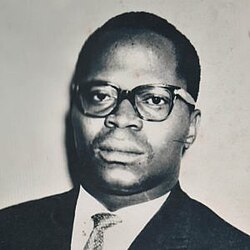
Burundi's Brief Democratic Moment and Its Violent End
Burundi achieved independence from Belgium on 1 July 1962 in circumstances fundamentally different from those of its northern neighbour Rwanda. Where Rwanda's independence had been preceded by a Hutu social revolution that swept away the Tutsi monarchy, Burundi retained its royal house — the mwami Mwambutsa IV — within a constitutional monarchy framework intended to balance the competing political forces of a society similarly divided between Hutu and Tutsi, but with a distinct colonial inheritance and a distinct political settlement.
UPRONA, the party that Prince Louis Rwagasore had built on a vision of cross-ethnic Burundian nationalism, was the dominant political force. But Rwagasore's assassination in October 1961 — just two weeks after he became Prime Minister — had removed the one figure capable of holding the cross-ethnic coalition together by force of personality. Without him, the party split along ethnic and factional lines with a speed that confirmed how much had depended on a single man. The constitutional monarchy struggled to provide the institutional continuity his death had made necessary.
Joseph Bamina was the moderate Hutu politician who served as Prime Minister in this collapsing environment, attempting to hold the constitutional framework together against pressures from all sides simultaneously: a palace with its own political ambitions, a Tutsi-dominated army with no interest in civilian authority, and Hutu political forces who saw the persistence of Tutsi power in the military and civil service as a betrayal of independence's promises. He was arrested following the failed October 1965 coup attempt and executed in January 1966. He had committed no act of violence. He was killed because he represented the possibility of Hutu constitutional governance — and that possibility was exactly what the forces who had consolidated power in the coup's aftermath found intolerable.
Formation: Education and Political Emergence in Colonial Burundi
Bamina was born around 1916 in Burundi, which was then administered by Belgium as part of Ruanda-Urundi, a League of Nations mandate that the colonial power had attached administratively to the Belgian Congo. His early years were spent under a colonial system that had inherited from the Germans and then systematised for its own purposes the pre-colonial Hutu-Tutsi social distinction — transforming a flexible social category rooted in cattle ownership and service relationships into a fixed racial classification backed by identity cards and enforced through administrative preferment.
He was educated in Catholic mission schools, the primary and effectively only route to literacy and professional advancement available to Burundians of either ethnicity under Belgian rule, and emerged from that education as part of the tiny class of educated Burundians — Hutu and Tutsi alike — who would form the country's political leadership in the independence era. His Hutu identity, in a country where that designation carried specific disadvantages within the colonial administrative system, meant that his advancement required greater application and faced greater obstacles than equivalent Tutsi contemporaries would have encountered.
He aligned with UPRONA after its founding, drawn by Rwagasore's vision of a Burundian national politics that transcended ethnic origin — a vision that, for a moderate Hutu politician of Bamina's temperament, offered the most promising framework for building the kind of functional democratic governance that independent Burundi would require. He was not an ethnic militant; he was a man who believed in the rule of law, in constitutional process, and in the possibility that Burundi's ethnic divisions could be managed within democratic institutions rather than resolved through violence.
Prime Minister in an Impossible Position
Bamina's appointment as Prime Minister placed him at the centre of a political system that was simultaneously under pressure from every direction. The palace — Mwami Mwambutsa IV and the court networks around him — had its own political ambitions that frequently conflicted with the constitutional framework's requirement of parliamentary accountability. The army, overwhelmingly Tutsi in its officer corps and increasingly confident of its own political weight, regarded civilian authority as a convenience to be respected when convenient and overridden when not. And the Hutu majority political base that Bamina nominally represented was growing frustrated with the pace and substance of change in a country where independence had not visibly altered the ethnic distribution of military and administrative power.
Navigating between these forces required constant compromise and produced constant criticism from all sides simultaneously. Those who wanted more aggressive Hutu political assertion saw Bamina as insufficiently confrontational with the Tutsi establishment. Those who wanted to maintain Tutsi administrative dominance saw any Hutu Prime Minister as a threat to the existing order. The palace wanted a Prime Minister who would serve its interests rather than the parliament's. The army wanted a Prime Minister who understood that real power resided in the barracks, not the cabinet.
He served in these conditions with the stoic competence of a man who understood that the job was impossible but had accepted it anyway — because someone had to attempt it, and because the alternative to attempting constitutional governance was ceding the field to those who had no interest in it. His tenure was marked not by dramatic achievements but by the daily, unglamorous work of keeping a government functioning in circumstances designed to prevent it from functioning.
May 1965: The Election That Changed Everything
In May 1965, Burundi held parliamentary elections that produced a result of historic significance: a clear Hutu majority in the National Assembly. For the first time, the Hutu numerical majority — approximately 85 per cent of the population — had been reflected in an electoral outcome. The democratic logic was straightforward: a Hutu majority parliament should produce a Hutu Prime Minister and a government accountable to the Hutu majority electorate.
Mwami Mwambutsa IV refused. Despite the election results, he appointed a Tutsi figure — Léopold Biha — as Prime Minister rather than a Hutu politician. The affront to democratic legitimacy was unmistakable and impossible to misread: the palace was asserting that election results did not bind the executive, that the constitutional framework was decorative rather than operative, and that Tutsi dominance of the executive would be maintained by royal prerogative regardless of what voters chose.
The response among Hutu political and military figures was fury. The moderate path — accept the constitutional framework, work within institutions, build democratic momentum through successive elections — had produced a clear mandate that the palace had simply overridden. The argument for patience and process had been publicly destroyed by the very institution that was supposed to provide constitutional continuity. What followed was almost inevitable.
October 1965: The Coup, the Purge, and the Executions
In October 1965, a group of Hutu military officers and gendarmerie launched a coup attempt against the palace. The attempt was poorly coordinated and ultimately failed. The Mwami fled the country. The Tutsi-dominated elements of the army, under the command of Captain Michel Micombero, suppressed the coup and took control of the government's response — a response that proved far more consequential than the coup itself.
What followed was a systematic purge of Hutu military officers and political figures that went far beyond any legitimate security response to a failed coup. Dozens of Hutu officers were arrested and executed. Hutu politicians who had no connection to the coup attempt were arrested on the basis of their ethnicity and their prominence alone. The purge was not a response to specific criminal acts; it was a preventive elimination of Hutu leadership capacity — an attempt to remove, permanently and in advance, any figure capable of organising effective Hutu political action in the future.
Bamina was arrested in the aftermath of the coup. He had not participated in it. He had not planned it, funded it, or encouraged it. He was the Prime Minister, a constitutional officeholder committed to democratic process precisely as an alternative to the kind of coup that had just been attempted. None of this protected him. He was the most prominent Hutu political figure in Burundian public life, and his prominence was itself the charge against him.
He was executed in January 1966. The trial, to the extent there was one, was a formality. The verdict had been decided before any legal process began. He was fifty or thereabouts. He had committed no act of violence in his political life. He died because the forces that had seized control of Burundi's government in the coup's aftermath understood that the most dangerous thing in Burundian politics was not a Hutu with a gun but a Hutu with constitutional legitimacy, legal training, and the ability to organise a democratic majority within the framework of the rule of law.
Legacy: What His Death Announced
The execution of Joseph Bamina was not merely an act of political violence. It was a declaration of political principle — an announcement of the rules that would govern Burundian politics for the next generation and beyond. The rules were these: Hutu politicians who operated within constitutional frameworks and won democratic mandates would not be protected by those frameworks or those mandates when the army decided to act. The constitutional machinery would be maintained as decoration. Real power resided in the barracks and the palace, not the cabinet or the parliament. Hutu political ambition, however moderate, however constitutional in its methods, was incompatible with the survival of those who held it.
The consequences of this declaration unfolded across the following decade with a terrible predictability. Micombero formally abolished the monarchy in 1966 and declared himself president of a republic — a republic in which Tutsi military dominance was no longer mediated by any constitutional fiction. In 1972, following a Hutu uprising in the south, the Burundian army carried out what many historians characterise as genocide: a systematic campaign of killing directed specifically at educated Hutu men — teachers, civil servants, students, anyone with a secondary school certificate — that killed between 100,000 and 300,000 people and destroyed the Burundian Hutu professional class for a generation.
The 1972 massacre was the logical continuation of the policy that Bamina's execution had announced in 1966: that Hutu leadership capacity — specifically the educated, professional, politically capable leadership that could organise effective challenge to Tutsi military dominance — was to be eliminated systematically and pre-emptively rather than competed with democratically. Bamina did not die in the genocide. He died seven years before it. But he died of the same decision, made by the same class of people, for the same reason.
He is remembered in Burundian history as one of the earliest and most clearly innocent victims of the ethnic violence that would define the country for decades. He is also, more specifically, a figure of warning about the limits of moderation in polarised political environments: a man whose commitment to constitutional process, to democratic legitimacy, to working within the rule of law, provided no protection whatsoever when the forces arrayed against him decided that the rule of law was inconvenient. His death is not an argument against moderation. It is an argument about what moderation requires to survive — and what Burundi, in 1966, conspicuously lacked.
Further Reading
- René Lemarchand, Rwanda and Burundi (1970)
- René Lemarchand, Burundi: Ethnic Conflict and Genocide (1994)
- Warren Weinstein, Political Conflict and Ethnicity in Burundi (1976)
- Filip Reyntjens, L'Afrique des Grands Lacs en crise (1994)
- Human Rights Watch, Proxy Targets: Civilians in the War in Burundi (1998)