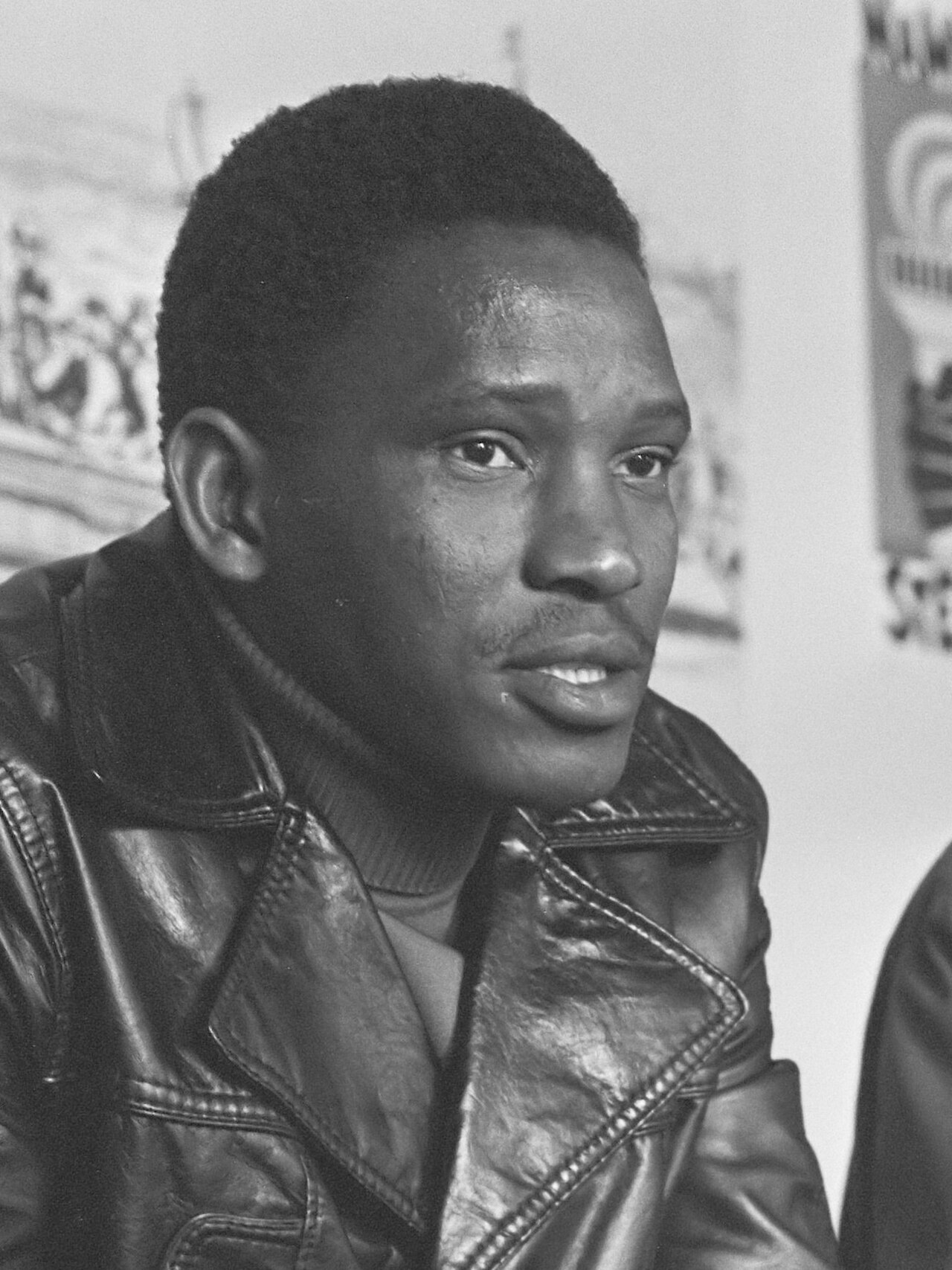
The Caprivi Strip: A Territory Apart
To understand Mishake Muyongo it is necessary first to understand the Caprivi Strip — one of the stranger geographical anomalies bequeathed by the scramble for Africa to the modern map of southern Africa. A narrow finger of territory stretching eastward from the main body of Namibia to touch the Zambezi River, the Caprivi was created by the 1890 Heligoland-Zanzibar Treaty between Britain and Germany, who exchanged colonial territories with the breezy indifference of men trading playing cards. The strip was designed to give German South West Africa access to the Zambezi — and through it, in theory, to the Indian Ocean — and was named after the German Chancellor Leo von Caprivi who negotiated the deal.
The Caprivi's population — predominantly the Lozi-speaking Mafwe and Masubia peoples, with cultural and linguistic connections that ran east and north into Zambia, Zimbabwe, and Botswana rather than south and west into Ovamboland — was enclosed within South West Africa's administrative boundaries without particular regard for ethnic or cultural geography. This mismatch between colonial borders and human communities would generate political tensions that persisted long after independence: a significant current of Caprivi political opinion held that the region had been attached to Namibia arbitrarily and that its people had legitimate claims to autonomy or even to the self-determination that Namibian nationalism claimed for the territory as a whole.
Mishake Muyongo was born into this world on 30 January 1940 — a Masubia man whose political life would be shaped as fundamentally by the specific circumstances of Caprivi as by the general condition of colonial subjugation that he shared with every other Namibian.
SWAPO's Unlikely Co-Founder from the East
The founding of SWAPO in 1960 was primarily a project of Ovamboland — the densely populated north whose men dominated the contract labour system and whose communities provided the mass base that made the movement viable. That Muyongo, a Caprivi man, was among those present at or near the founding of the organisation, and that he rose to its vice-presidency, reflects both the breadth of anti-colonial sentiment across the territory and the particular energy and ability that Muyongo brought to the work of political organisation.
He was educated, politically alert, and possessed of a quality essential in any liberation movement operative: the capacity to represent the movement convincingly to audiences whose trust had to be earned rather than assumed. In the early years of SWAPO — when the organisation was still establishing its credentials as the representative of all Namibians rather than simply of the Ovambo majority — a figure of Muyongo's background and capabilities was genuinely valuable. His presence at the leadership table was both symbolically important and practically effective.
He worked in SWAPO's external structures through the 1960s and into the 1970s, spending years in exile in the frontline states as the movement built its organisational and military capacity. He served as Vice-President of SWAPO — the second-ranking position in the organisation's hierarchy — and was, for a period, one of the most senior figures in the liberation movement that the world associated with the Namibian cause.
"The people of Caprivi have a right to determine their own future. That right does not disappear simply because a colonial treaty placed us inside someone else's borders."
— Mishake Muyongo, articulating the Caprivi autonomy caseThe Break with SWAPO
The rupture between Muyongo and SWAPO was one of the most consequential splits in the history of Namibian liberation politics, and it cannot be understood without taking seriously the political substance behind it rather than reducing it to personal ambition or South African manipulation — though both those elements were present in the story as well.
Muyongo's core argument was about the Caprivi. He maintained that the region's people had not been adequately consulted about, and did not fully consent to, their incorporation into a Namibian state defined and led by the Ovambo-dominated SWAPO. The Caprivi, he argued, had its own political identity, its own cultural connections to neighbouring territories, and its own claims to self-determination that were not simply subsumed by the broader Namibian nationalist project. This was a serious argument — it engaged real questions about the relationship between anti-colonial nationalism and ethnic or regional identity that were unresolved across post-colonial Africa.
SWAPO's position, consistent with the mainstream of African nationalism, was that the borders inherited from colonialism — however arbitrary their origins — must be respected as the boundaries of post-colonial states. To accept ethnic or regional claims to secession would be to open a door that, once opened, could not easily be closed: every territory on the continent contained communities that could make analogous arguments. The Organisation of African Unity had made territorial integrity one of its foundational principles precisely for this reason. SWAPO applied this logic to Namibia and regarded Muyongo's Caprivi advocacy as, at best, a dangerous distraction and, at worst, a tool of South African destabilisation.
South Africa was indeed interested in the Caprivi question. The apartheid state's strategy of destabilisation in southern Africa relied on exploiting internal divisions within liberation movements and neighbouring governments — supporting RENAMO in Mozambique, UNITA in Angola, and various spoiler movements elsewhere. The Caprivi's strategic position — bordering Zambia, Zimbabwe, and Botswana, with the Zambezi River running through it — gave it military significance. Whether Muyongo's break with SWAPO was primarily driven by genuine political conviction, by South African encouragement, or by some mixture of both is a question that his biographers have not fully resolved and that he himself addressed with varying degrees of candour at different moments in his life.
Expulsion and the Opposition Path
Muyongo was expelled from SWAPO in 1980, charged with secessionist activities and collaboration with South Africa. The expulsion was a defining moment — it placed him permanently outside the liberation movement's mainstream and forced him into a political alignment that would define the rest of his active career.
He joined the Democratic Turnhalle Alliance (DTA), a political grouping that had been created under South African auspices in the context of the Turnhalle Constitutional Conference — South Africa's attempt to construct an internal Namibian settlement that would forestall SWAPO's internationally recognised claim to power. The DTA drew on ethnic community organisations and included figures from various Namibian communities who, for different reasons, were not part of SWAPO. Its critics — and they were numerous and internationally prominent — characterised it as a South African puppet organisation, a vehicle for denying legitimate Namibian nationalism its rightful claim to govern.
Muyongo's association with the DTA placed him in deeply uncomfortable company and severely damaged his credibility among those who regarded the organisation as compromised by its South African origins. He served as a DTA leader and as a member of the South West Africa Legislative Assembly — bodies that SWAPO and the international community refused to recognise as legitimate representatives of the Namibian people. He argued, from within this position, that the DTA represented a genuine multiethnic alternative to SWAPO's dominance, that not every Namibian who opposed SWAPO was a collaborator, and that political pluralism within Namibia was a legitimate and desirable condition rather than a South African trick.
Independence and the UDF
When Namibia achieved independence in 1990, Muyongo did not disappear from politics — he adapted. He became the leader of the United Democratic Front (UDF), which positioned itself as an opposition party in independent Namibia, primarily drawing on Caprivi and Kavango voters and advocating for the interests of communities outside Ovamboland. In the context of independent Namibia's political landscape — where SWAPO commanded overwhelming majorities through its identification with the liberation struggle and its deep roots in the Ovambo majority community — the UDF represented a genuine if marginal political current.
Muyongo contested elections, sat in the National Assembly, and maintained the argument that Namibian democracy required genuine political competition rather than the single-party dominance that SWAPO's structural advantages tended to produce. This was a coherent democratic argument, whatever one's view of his liberation-era record. He also continued to raise the Caprivi autonomy question, which remained live in the region's politics.
The Caprivi Secessionist Crisis
The most explosive episode of Muyongo's post-independence career came in 1998–1999, when he went into exile in Botswana and Denmark after the Namibian government accused him of involvement in a secessionist conspiracy in the Caprivi Strip. In August 1999, a group of armed Caprivi separatists launched an attack on Katima Mulilo, the regional capital, targeting the police station, the Namibian Defence Force base, and the state broadcaster. The attack was suppressed within hours; several people were killed and hundreds arrested.
Muyongo denied direct involvement in the attack while in exile, and the Namibian government's case against him specifically was complicated by the difficulties of extradition and evidence. He was granted refugee status in Denmark, where he lived in exile for years — a strange echo of his earlier decades of SWAPO-aligned exile in the frontline states, now reversed: the man who had once been the liberation movement's vice-president was now a refugee from the government that liberation had produced.
The Caprivi treason trials that followed the 1999 attack were among the most significant legal proceedings in Namibian history — hundreds of defendants, charges of high treason, and proceedings that stretched for more than a decade. The trials raised serious concerns from human rights organisations about conditions of detention and the length of pre-trial imprisonment. They also forced Namibian society to confront, in a legal setting, the legitimacy or otherwise of the Caprivi's claims to self-determination — a question that the independence settlement of 1990 had papered over rather than resolved.
"I am a Namibian. But being Namibian does not mean that the specific history and identity of the Caprivi people should be invisible in the state we all now share."
— Mishake Muyongo, interview in exile, early 2000sLegacy: Nationalism and Its Discontents
Mishake Muyongo's life is one of the more instructive and uncomfortable in Namibian political history precisely because it resists the simple narrative of liberation and betrayal that his former SWAPO colleagues preferred, and equally resists the simple narrative of principled regional advocacy that his supporters preferred. The truth, as in most political lives of this complexity, lies somewhere in the uncomfortable middle.
He was genuinely part of SWAPO's founding generation — a man who committed years of his life to the liberation of Namibia from South African colonialism and who held real convictions about the wrong of that colonialism. He also held convictions about the Caprivi that SWAPO's majoritarianism could not accommodate, and those convictions led him into associations — with the DTA, with South African-connected structures — that permanently compromised his standing in the mainstream of Namibian liberation politics.
His argument that a free Namibia needed genuine political pluralism — that SWAPO's liberation credentials did not give it the right to unchallenged dominance in a democratic state — was a legitimate democratic argument, even when made by a man whose own path to opposition had taken him through some deeply compromised terrain. The question of how post-colonial African states manage the claims of ethnic and regional minorities — how they build national identities capacious enough to hold diverse communities without suppressing difference into dangerous resentment — is one that Muyongo's life dramatises with painful clarity.
He returned to Namibia in his final years, and the question of his ultimate historical rehabilitation — whether he is remembered as a traitor to the liberation cause, a defender of Caprivi rights, or simply as a complicated man who stood at the intersection of multiple legitimate but irreconcilable claims — remains open and contested in a country still working through the meanings of its own freedom.
Key Dates
-
1940Born on 30 January in the Caprivi Strip, South West Africa (present-day Namibia), into the Masubia community.
-
1960Present at or near the founding of SWAPO; joins the liberation movement's external apparatus as it begins its campaign for Namibian independence.
-
1960s–1970sRises to Vice-President of SWAPO; serves in exile in the frontline states as the movement builds its organisational and military capacity.
-
1980Expelled from SWAPO on charges of secessionist activities and collaboration with South Africa; the most significant split in the liberation movement's history.
-
1980sJoins the Democratic Turnhalle Alliance (DTA); serves in South West Africa Legislative Assembly structures that SWAPO and the international community refuse to recognise.
-
1990Namibia achieves independence; Muyongo continues in opposition politics as leader of the United Democratic Front (UDF).
-
1990sContests elections under the UDF banner; sits in the National Assembly; continues to advocate for Caprivi interests and political pluralism.
-
1998–1999Goes into exile in Botswana and then Denmark after Namibian government accuses him of involvement in Caprivi secessionist activities; August 1999 Katima Mulilo attack triggers mass arrests and treason trials.
-
2000sLives in exile in Denmark, granted refugee status; the Caprivi treason trials proceed in Namibia against hundreds of defendants.
-
Later yearsReturns to Namibia; his historical legacy remains contested between narratives of betrayal and regional advocacy.