At a Glance
The PAIGC Army: Origins, Values, and the Burden of Inheritance
The army that Pansau Na Isna served in as a young fighter was one of the most unusual military organisations in the history of African liberation. Amílcar Cabral had designed it with a deliberateness and a sophistication that distinguished it from most guerrilla forces of the era. He had insisted on political education as a requirement for every fighter — that the men and women who carried weapons in the PAIGC's name had to understand why they were fighting, what kind of society they were fighting to create, and what standards of conduct toward the civilian population the movement required of them. He had imposed strict codes of behaviour: no theft from villages, no abuse of the civilian population, payment for goods taken, humane treatment of prisoners. He had integrated the military campaign with the political and social programme of building liberated zone institutions, insisting that fighting and building were not separate activities but expressions of the same project.
This was the army in which Pansau Na Isna developed as a military figure. Its culture — the combination of political commitment, community embeddedness, and disciplined conduct that Cabral had imposed — was the formation that shaped the liberation war generation of Guinean officers. They had learned to be soldiers in a context where being a soldier meant being a political educator, a community organiser, and a disciplined representative of the movement's values as well as a fighter. The standard they were held to was demanding, and most of the evidence from the liberated zones suggests that it was, imperfectly but genuinely, maintained.
The problem was what happened to this army after independence — after the war it had been built to fight was over, after the moral clarity of anti-colonialism had been replaced by the murkier politics of resource allocation within an independent state, after Cabral's personal authority and the emergency conditions that had made his discipline possible were both gone. The army that had been shaped by the liberation war had to become a professional military institution in a post-colonial state with almost no resources, no tradition of civilian control of the military, and a political culture in which the armed forces' liberation war service gave them a claim to political influence that civilian institutions were unable to effectively challenge.
Military Service and the Post-Independence Political Order
The post-independence Guinea-Bissau that Pansau Na Isna served as a military officer was a country struggling with conditions that made effective governance extraordinarily difficult. It was desperately poor — among the poorest nations on earth at independence and not significantly less poor in the decades that followed. Its state infrastructure was thin, its educated class tiny, its economy dependent on groundnut exports and foreign aid in proportions that left it perpetually vulnerable to external economic conditions it could not influence. Its political institutions — the party, the assembly, the government — had been built within the liberation movement and carried the movement's organisational culture into the post-independence period, for better and for worse.
The relationship between the military and the political leadership was, from the beginning, one of the central tensions of post-independence Guinean governance. The liberation war had produced two kinds of authority within the PAIGC: the political authority of the party leadership, which was disproportionately Cape Verdean and which derived from the movement's intellectual and organisational traditions, and the military authority of the field commanders, which was disproportionately Guinean and which derived from the lived experience of combat and the loyalty of the men who had fought under them. Luís Cabral's government attempted to manage this tension through the mechanisms of single-party rule — absorbing military figures into the party structure, providing senior officers with positions and resources that aligned their interests with the government's stability. It was managing, imperfectly, when Nino Vieira's coup of 1980 demonstrated that the military's political authority could not be contained within the party's institutional framework when a sufficiently senior military figure chose to challenge it.
The Armed Forces as Political Actor
The 1980 coup established a pattern that Guinean politics has been unable to escape in the decades since: the pattern of military intervention as the ultimate arbiter of political disputes. After 1980, no Guinean government could govern without the acquiescence of the armed forces, and the armed forces — understanding their position — demanded acquiescence in return, in the form of resources, appointments, operational independence, and freedom from the civilian oversight that the constitutional framework nominally required but that military commanders could veto in practice by threatening or executing another coup. Senior officers like Pansau Na Isna operated within this system — a system in which the formal institutional hierarchy of the armed forces coexisted with informal political authority structures that did not necessarily follow the same lines of command.
The civil war of 1998–99 was in many respects the system's most destructive expression. The conflict began as a military rebellion against Vieira's government, mobilised significant popular support, destroyed large parts of Bissau's already limited infrastructure, and ended with a peace settlement that resolved none of the underlying tensions between the civilian government and the military that had generated the conflict. The post-civil-war period was one of sustained political instability — multiple coups, governmental transitions, and the increasing entanglement of the military with international drug trafficking networks that provided resources independent of state control and that further undermined the prospects for civilian authority over the armed forces.
The Cocaine Transit Route and the Militarisation of Criminal Economy
Guinea-Bissau's emergence in the early 2000s as a significant transit point for South American cocaine moving to European markets is one of the most important and least discussed factors in understanding the country's post-civil-war political history. The country's geography — its remote islands, its extensive mangrove coastline, its position on the Atlantic routes between South America and Europe — made it a natural waypoint for trafficking networks seeking routes outside the reach of more heavily policed maritime corridors. The weakness of the state's law enforcement capacity and the corruption that poverty and institutional fragility had generated made it a permissive environment for criminal organisations willing to pay for access and protection.
The armed forces were central to this dynamic. Senior military officers used their institutional position and their operational control of the country's coastline and airspace to facilitate trafficking operations, in exchange for financial compensation that vastly exceeded anything the state budget could provide. This created, within the armed forces, financial interests that were wholly independent of the state and that gave senior officers powerful incentives to maintain the political conditions — weak civilian oversight, institutional impunity, governmental instability — that made their criminal economic activities possible. The armed forces became, in the assessment of multiple international organisations, a major obstacle to the governance reforms that would have been necessary to disrupt the drug trafficking economy.
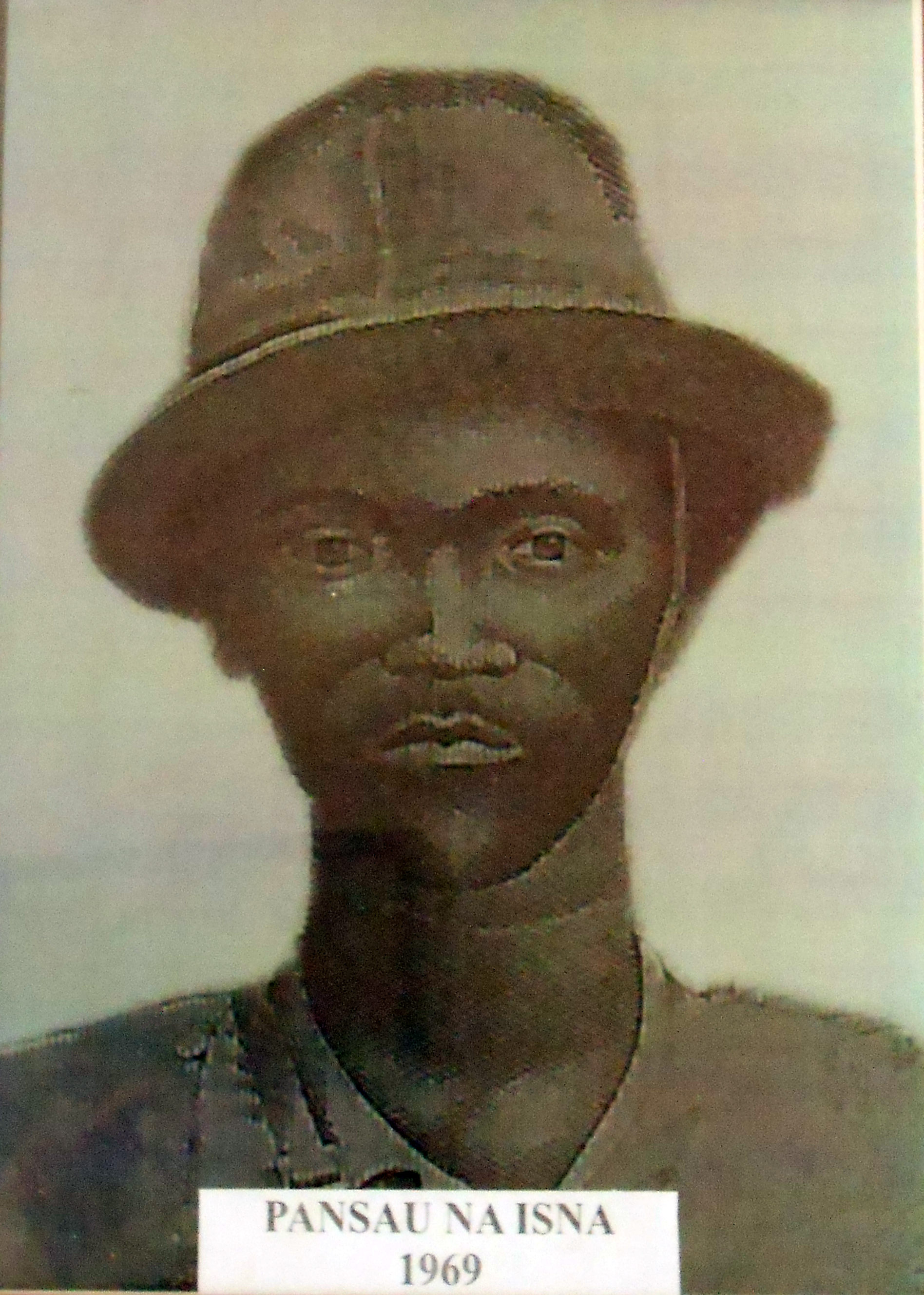
Pansau Na Isna's position as Chief of Staff placed him at the apex of this institutional structure during one of its most complex periods — a position that carried both formal authority and the specific burdens and dangers of operating at the intersection of military command, political power, and criminal economy in one of the world's most fragile states. The exact contours of his involvement in the various episodes of political turbulence that characterised the period are not fully documented in publicly available sources, and the historical record will require access to more complete documentation before a definitive account of his role can be written.
What the Liberation War Left Behind
The distance between the PAIGC army that fought in the liberated zones — the organisation that Amílcar Cabral built, trained, and disciplined, that maintained its codes of conduct under the pressure of combat, that built schools and clinics alongside its military operations, that embodied in its own organisation the values it claimed to be fighting for — and the armed forces of post-independence Guinea-Bissau is one of the most painful gaps in the liberation generation's legacy. The army that won independence became, over the decades that followed, an institution that embodied not the PAIGC's ideals but the structural conditions of a post-colonial state too weak to contain the military force it had inherited from the liberation war.
This is not a story unique to Guinea-Bissau. The armed forces of many African liberation states followed similar trajectories — from revolutionary armies embedded in political movements with genuine popular mandates to professional militaries whose institutional interests diverged increasingly from the populations they were nominally defending. What is specific to Guinea-Bissau is the combination of extreme poverty, institutional fragility, geographic vulnerability to criminal economies, and the particular political culture that the liberation war's social composition had produced — a culture in which the military's liberation war service gave it a claim to political authority that civilian institutions consistently proved unable to challenge successfully.
Pansau Na Isna's career is a record of this trajectory — its possibilities and its costs. He was formed in one of the most remarkable military organisations that African liberation produced. He served in the institution that organisation became after the liberation was achieved. The gap between the two is Guinea-Bissau's story, as much as the liberation war itself.