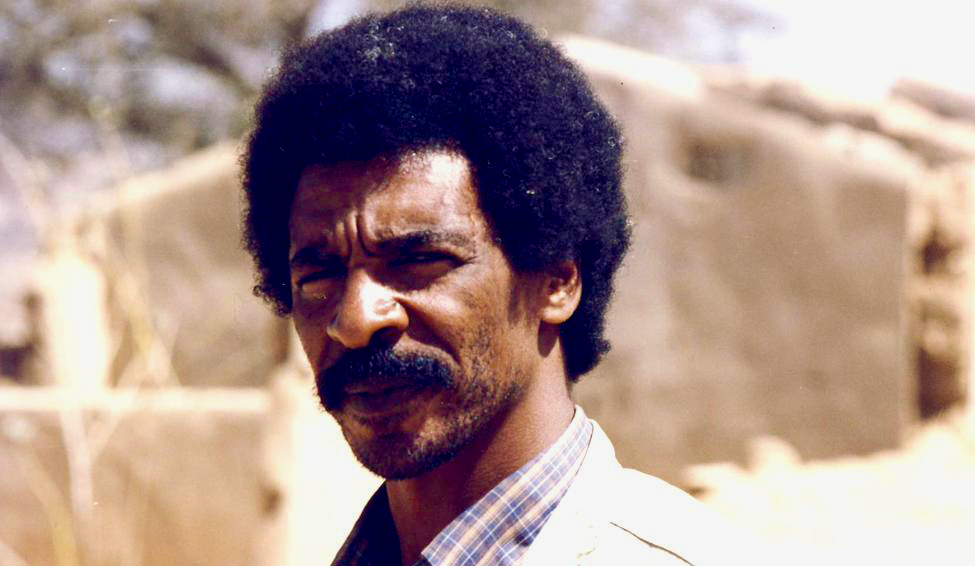
At a Glance
The EPLF Military Commander: Building the Force That Won Freedom
Mesfin Hagos's military career in the EPLF was formed in one of the most demanding environments that African liberation produced — the Eritrean liberation war's three decades of guerrilla struggle against Ethiopian occupation under conditions of minimal external support, terrain that required tactical innovation, and an enemy whose firepower advantage was consistently superior. The EPLF that he served was an organisation that had evolved from the small breakaway group of the early 1970s into, by the late 1980s, a conventional military force capable of defeating the Derg's Soviet-equipped army in set-piece battles of considerable complexity.
His seniority within this organisation — evidenced by his appointment as the new state's first Defence Minister — placed him among the relatively small group of EPLF commanders who had the combination of tactical battlefield experience, strategic understanding, and political reliability that senior military command required. The liberation war's military history is, as noted in the Ibrahim Afa profile, incompletely documented; the field commanders who built and led the EPLF's forces have received less historical attention than the political figures who represented the movement internationally. But the fact that Mesfin Hagos was trusted with the Defence Ministry at independence — the most sensitive security portfolio in the government of a state that had been born through armed struggle — is evidence of the regard in which his military capabilities were held by the movement's leadership, including by Isaias Afwerki himself.
The relationship between the EPLF's military commanders and its political leadership was, in the liberation war years, generally collaborative — the movement's collective decision-making structures, however imperfect, provided a framework within which military and political considerations were weighed together. It was only in the post-independence period, and particularly in the context of the 1998–2000 border war with Ethiopia, that the relationship between Isaias and the military commanders who questioned his strategic decisions began to deteriorate into the confrontation that produced the G-15 letter and the September 2001 arrests.
Eritrea's First Defence Ministry: The Impossible Task of Military Transformation
The transformation of the EPLF's guerrilla forces into the national defence establishment of an independent state was one of the most complex institutional tasks that any post-liberation government has faced in African history. The EPLF at independence had between 95,000 and 100,000 fighters — an enormous number for a country of Eritrea's size — organised in military units whose command structures, political education systems, and internal cultures had been shaped by three decades of guerrilla warfare rather than by the norms of professional military institutions. Transforming this force into something that could function as a national defence establishment while simultaneously demobilising the majority of its fighters and reintegrating them into a civilian economy that was itself in the process of being built from the ruins of thirty years of war was a challenge of exceptional complexity.
Mesfin Hagos's tenure as Defence Minister was the period in which the framework for this transformation was established. The tasks were simultaneously institutional, legal, administrative, and political: creating the Ministry of Defence as a functioning bureaucratic body, establishing the legal framework for national military service, developing the officer corps and the rank structures of a professional military, managing the demobilisation of the fighters whose liberation service was complete, and maintaining the defence capability that a new state in a volatile region required. These tasks were performed in conditions of considerable constraint — financial resources were extremely limited, international military assistance was modest, and the government's priorities were necessarily spread across multiple urgent domains simultaneously.
The national service system that was established in the early independence years — originally conceived as a relatively time-limited programme combining military service with a "national development" component — became, under the pressure of the border war and Isaias Afwerki's subsequent governance choices, the indefinite forced labour system that now constitutes one of Eritrea's most serious human rights violations. Whether Mesfin Hagos, as the first Defence Minister, bears any responsibility for establishing the framework that the subsequent government weaponised is a question that requires distinguishing between the system as originally conceived and the system as it was subsequently developed — a distinction that matters for any fair assessment of his role.
The G-15 Letter: Democratic Dissent from a Former Minister
The open letter that Mesfin Hagos and his fourteen co-signatories addressed to Isaias Afwerki in 2001 carried, coming from a former Defence Minister and senior EPLF military commander, a particular weight that the same words from a civilian or a junior official would not have had. Mesfin Hagos knew the EPLF from within — knew its organisational culture, its internal decision-making processes, its specific failures and achievements — and his signature on the letter was a statement that someone with that insider knowledge had concluded that the direction the government was taking was wrong and that the constitutional framework provided by the 1997 constitution needed to be implemented.
The letter called for democratic dialogue, the implementation of the constitution, the convening of a national congress, and accountability for the governance failures of the border war — including the dismissal and detention of military officers who had disagreed with Isaias's strategic decisions. These were demands that Mesfin Hagos, as a former senior military figure who had relationships with the dismissed officers and who understood the military dimensions of the border war, was particularly well-positioned to make with credibility. His signature was not the signature of a civilian intellectual making abstract democratic arguments; it was the signature of someone who had been inside the system and who was saying, from that inside position, that the system was failing.
His absence from Eritrea when the arrests came on 18 September 2001 was the circumstance that preserved his freedom — the difference between his fate and that of Haile Woldetensae, Petros Solomon, and the others who were present and were taken into custody was not principle but geography. He has lived with that accident of survival ever since, and the weight of obligation it creates — to continue the democratic advocacy that his imprisoned colleagues cannot perform, to bear witness to their situation, to use the freedom he was spared by luck to advance the cause they were imprisoned for — is evident in the consistency and the seriousness of his exile activism.
The Voice of the Escaped: Exile Activism and Democratic Advocacy
Mesfin Hagos has been, since 2001, one of the Eritrean democratic opposition's most substantive voices — a man whose insider knowledge of the EPLF and the post-independence government gives his analysis of Eritrea's political situation a depth and a credibility that most exile commentators cannot match. His writings on the specific failures of the Isaias government — the abandonment of the constitution, the militarisation of Eritrean society through indefinite national service, the imprisonment of the G-15, the systematic destruction of every institution that might have provided a check on presidential power — combine the analytical framework of someone who has governed with the moral clarity of someone who has chosen principle over complicity.
His advocacy for the release of the imprisoned G-15 members has been consistent and prominent. He has testified before international bodies, spoken at diaspora conferences, and written for publication about the conditions of the detainees — or rather about the impossibility of knowing those conditions, since the Eritrean government has maintained its information blackout with a completeness that has prevented even confirmation of whether all the detainees are still alive. The advocacy has not produced releases; the international community's leverage over the Eritrean government has been insufficient to compel them. But the record it creates — the consistent documentation of a crime against liberation veterans by the government they helped build — is itself a form of historical accountability, a refusal to allow the disappearance to be accepted as normal.
Legacy: The Witness and What Witnessing Requires
Mesfin Hagos's significance in the history of the Eritrean liberation struggle and its post-independence aftermath rests on two distinct contributions: his military service in the EPLF during the liberation war, which helped achieve the independence that the Eritrean people voted for overwhelmingly in 1993, and his democratic advocacy in exile, which has helped maintain the historical record of what the Isaias government has done to the country that liberation created. The first contribution he shares with the other EPLF commanders who built and led the liberation movement's military forces. The second is more distinctively his own — the product of the accident of survival that gave him the freedom to bear witness.
The question his career poses for the broader history of African liberation is the question of accountability: how a movement that achieves genuine liberation can prevent itself from becoming an instrument of the oppression it replaced, what institutional safeguards are necessary to prevent the concentration of power that produces the Eritrean outcome, and what the people who were part of the liberation movement owe to the people in whose name they fought when the movement betrays its own stated values. Mesfin Hagos has spent more than two decades attempting to answer the last of these questions through his own practice — and the consistency of his answer, maintained across twenty-plus years of exile and the knowledge that his imprisoned colleagues paid the price for the same position he holds, is itself a form of integrity that the historical record should acknowledge.