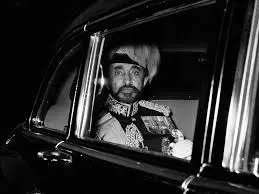
At a Glance
The Solomonic Dynasty and the Weight of an Ancient Claim
To understand Haile Selassie it is necessary first to understand the political and theological world from which he emerged — the Ethiopian Empire's extraordinary claim to be the world's oldest continuous monarchy, descended from the union of Solomon and Sheba and maintained through three millennia of Solomonic succession. This claim was not merely historical decoration but the active foundation of imperial legitimacy: the belief that the Emperor was the Elect of God, the Lion of Judah, the inheritor of a covenant between the divine and the Ethiopian people that pre-dated Christianity and Islam and that gave the Ethiopian state a sacred character unavailable to the secular monarchies of Europe or the colonial administrations of the rest of Africa. The Kebra Nagast — the "Glory of Kings," the Ethiopian national epic that narrated the story of Solomon and Sheba and the establishment of the Solomonic line — was not merely a historical text but a theological document that defined the nature of Ethiopian political authority.
Haile Selassie grew up in this world and absorbed it completely — not cynically, as a political tool to be deployed when useful, but as a genuine framework for understanding his own role and his country's destiny. He believed, or acted as if he believed, that he was the divinely ordained ruler of a divinely favoured nation, and this belief gave him both the extraordinary personal dignity and the extraordinary political inflexibility that characterised his long reign. It made him capable of the magnificent defiance of the 1936 League of Nations speech — the small man in the white uniform who stood before the representatives of the great powers and refused to be ashamed of his country's defeat or to diminish the moral force of his accusation — and it made him incapable, ultimately, of the modernisation and the sharing of power that Ethiopia's twentieth-century crises demanded.
The Road to Power: Regent, King of Kings, Emperor
Tafari Makonnen's rise to power was a masterpiece of Ethiopian court politics — patient, calculated, and conducted over more than a decade against rivals whose advantages of birth or military power were greater than his own. After his father Ras Makonnen's death in 1906, the young Tafari navigated the factional politics of Menelik II's declining years and the succession crisis that followed Menelik's death in 1913 with a combination of political intelligence, personal charm, and strategic alliance-building that gradually established him as the dominant figure among the competing claimants to power. He became regent and heir apparent under Empress Zauditu in 1916, effectively governing the country while Zauditu maintained the ceremonial dignity of the throne, and consolidated his position through two decades of careful institutional reform — abolishing slavery, seeking Ethiopia's admission to the League of Nations in 1923, modernising the bureaucracy, and building the international relationships that would prove crucial when the Italian crisis came.
His coronation as Emperor Haile Selassie I on 2 November 1930 was one of the great ceremonial events of the twentieth century, attended by dignitaries from across the world and reported with fascination by the international press. Among those in attendance was Evelyn Waugh, whose subsequent novel drew on the experience; among those who watched from afar were the Jamaican followers of Marcus Garvey's Pan-African movement, who had been predicting since the 1920s the crowning of an African king who would lead the continent's liberation — and who found in the young Emperor's coronation the fulfilment of a prophecy that would evolve into the Rastafari movement, one of the twentieth century's most remarkable religious and cultural phenomena.
1935–1936: Italian Invasion, Resistance, and the Geneva Speech
Mussolini's Italy had been preparing for the conquest of Ethiopia since the early 1930s — seeking revenge for the humiliation of Adwa in 1896, seeking to establish the African empire that Italian nationalism had been demanding since unification, and using the pretext of a border incident at Wal Wal in December 1934 to justify a war that had been decided in Rome long before. The Italian invasion began in October 1935 with an overwhelming force equipped with the most modern weapons of the period — tanks, aircraft, and poison gas, including mustard gas, whose use against the Ethiopian population and military was a war crime that the League of Nations documented and failed to act upon.
Haile Selassie led the Ethiopian resistance personally, taking command at the front in the final desperate months before Addis Ababa fell. The Ethiopian military, largely equipped with rifles and fighting on foot against mechanised Italian columns supported by air bombardment, could not hold the Italian advance; the use of poison gas, which caused terrible casualties and against which the Ethiopians had no protection, was militarily decisive. When it became clear that the capital would fall, Selassie's advisors urged him to leave — partly to ensure the continuity of the imperial government in exile and partly because his capture by the Italians would have been a propaganda triumph for Mussolini that the Ethiopians could not afford. He left Ethiopia in May 1936, stopping in Jerusalem before travelling to Geneva to address the League of Nations.
The speech he delivered at the League of Nations on 30 June 1936 was the defining moment of his life and one of the defining moments of the twentieth century's anti-colonial history. Speaking through an interpreter — he delivered the speech in Amharic, refusing to use the language of the colonial powers for the most important address of his reign — he catalogued the Italian use of poison gas with clinical precision, asked the League's member states why the principle of collective security had been applied when Japan invaded Manchuria but abandoned when Italy invaded Ethiopia, and issued a warning that reverberated through the decade that followed: "It is us today. It will be you tomorrow." The Italian journalists in the gallery booed him. The world's press reported the speech with admiration. The League did nothing effective. And within three years, the continent whose governments had abandoned Ethiopia to Mussolini was consumed by the war that Selassie had predicted.
Return, Cold War Ethiopia, and the Contradictions of Imperial Modernisation
Haile Selassie returned to Ethiopia in May 1941 as British and Ethiopian forces drove the Italians from the country, and his return was greeted with the kind of popular celebration that a five-year occupation's end and a beloved emperor's restoration together produce. He spent the following decades attempting to modernise Ethiopia — establishing a parliament, developing the education system, building the bureaucratic infrastructure of a modern state — while simultaneously ensuring that none of these developments threatened the fundamental structure of imperial power and feudal land tenure on which his rule rested.
The contradiction was ultimately irresolvable. Ethiopia needed genuine land reform — the feudal system under which the peasantry worked land owned by the nobility and the church was the foundation of the poverty and the periodic famine that devastated the country — but land reform would have destroyed the aristocratic class whose support was the foundation of imperial power. Haile Selassie chose, consistently, to protect the power base rather than transform the conditions of the majority, and the result was a country that remained, beneath the surface of institutional modernisation, essentially unchanged in its fundamental economic and social structures.
His conduct of Ethiopian foreign policy was considerably more sophisticated than his management of domestic affairs. He positioned Ethiopia as a leader of African decolonisation — hosting the OAU, supporting liberation movements across the continent, presenting Ethiopia as the living proof that African states could maintain sovereignty against European colonialism — while simultaneously conducting a realpolitik that allied Ethiopia with the United States and made it a significant partner in Cold War African strategy. The alliance with Washington gave Haile Selassie military and economic support that strengthened his position but also deepened his government's dependence on a patron whose own interests did not always align with Ethiopia's developmental needs.
Eritrea: The Annexation and Its Thirty-Year Consequence
The annexation of Eritrea in 1962 was one of the most consequential and most damaging decisions of Haile Selassie's reign. Eritrea had been an Italian colony from 1890 until the Second World War, and after the war the United Nations had established a federation in which Eritrea would be autonomous within an Ethiopian-Eritrean federation — a compromise that reflected the competing claims of Ethiopian sovereignty and Eritrean self-determination. Haile Selassie had accepted the federation in 1952 while systematically undermining Eritrean autonomy throughout the decade that followed: dissolving the Eritrean parliament, banning Eritrean political parties, suppressing the Tigrinya and Arabic languages in favour of Amharic, and gradually absorbing Eritrean institutions into the Ethiopian imperial structure.
The formal annexation of Eritrea as an Ethiopian province in 1962 abolished the federation agreement entirely and triggered the armed resistance that would eventually become the Eritrean liberation war. The Eritrean Liberation Front, founded in 1961, and later the Eritrean People's Liberation Front — the organisation led by Isaias Afwerki that would eventually win independence — fought a thirty-year guerrilla war against Ethiopian occupation that cost hundreds of thousands of lives, displaced millions of people, and consumed resources that both Ethiopia and Eritrea desperately needed for development. The annexation was the decision of a ruler who prioritised territorial integrity over the rights of the people within that territory, and its consequences outlasted his own reign by nearly two decades.
The 1974 Revolution, the Famine, and the End of the Solomonic Line
The revolutionary crisis that ended Haile Selassie's reign had multiple causes that had been building for years — the land question, the urban middle class's frustration with a political system that offered them no meaningful participation, the military's grievances over pay and conditions, the ethnic and regional tensions that the empire's centralising Amhara nationalism had generated. But the immediate trigger was the famine of 1972–1974, which killed somewhere between forty thousand and two hundred thousand Ethiopians in the Wollo and Tigray regions while the imperial government attempted to conceal its existence from the international community and from the Ethiopian population outside the affected areas.
Jonathan Dimbleby's BBC documentary "The Unknown Famine," broadcast in 1973, brought the reality of the famine to international attention — and the film's juxtaposition of footage of starving Ethiopians with footage of imperial banquets and the feeding of Haile Selassie's dogs from silver platters became one of the most devastating indictments of a government's moral failure in the history of broadcast journalism. The film was shown on Ethiopian television by the military officers who were moving against the emperor, and its effect on Ethiopian public opinion was electric. The Derg military committee that had been coordinating opposition to the imperial government moved to depose Selassie in September 1974, removing him from the palace in a Volkswagen Beetle — a deliberate humiliation — and confining him to house arrest.
He died in custody on 27 August 1975. The Derg claimed he had died of complications following a prostate operation. When the Derg government was itself overthrown in 1991 and the new government began investigating the crimes of the military junta, his remains were found buried under a concrete slab beneath a toilet in the Menelik Palace — evidence of a disposal that suggested murder rather than natural death. His remains were eventually given a state funeral in 2000, attended by members of his family and representatives of the Rastafari movement from across the diaspora.
Rastafari, Symbol, and the Complexity of a Liberation Icon
The Rastafari movement — which emerged in Jamaica in the 1930s from the confluence of Marcus Garvey's Pan-Africanism, Ethiopian Orthodox Christianity, and the millenarian expectations generated by Haile Selassie's 1930 coronation — has made him the central figure of a living religious tradition that has spread from the Caribbean across the world. For Rastafarians, Haile Selassie is Jah — the returned messiah, the fulfilment of biblical prophecy, the divine figure who will lead the African diaspora back to the promised land of Ethiopia. This theological status makes the historical Haile Selassie — the autocratic feudal emperor, the concealer of famine, the annexer of Eritrea — difficult for Rastafari believers to engage with, and the movement has developed various theological strategies for reconciling the divinity of Jah with the humanity and the failures of the historical person.
For secular Pan-Africanists and anti-colonial historians, the challenge is different: how to recognise the genuine significance of Haile Selassie's contribution to the symbolic politics of African liberation — his 1936 speech, his role in the OAU, the symbolic power of Ethiopia as the one African state that had resisted European colonisation — while also reckoning honestly with the authoritarian and feudal character of his rule and the real harm that his policies caused to the peoples under his authority. The answer is not to resolve the contradiction but to hold it — to understand that historical significance and historical failure can coexist in the same person, and that the project of liberation history requires the honesty to acknowledge both.