Key Facts
Origins: The Scholar Who Could Not Stay Silent
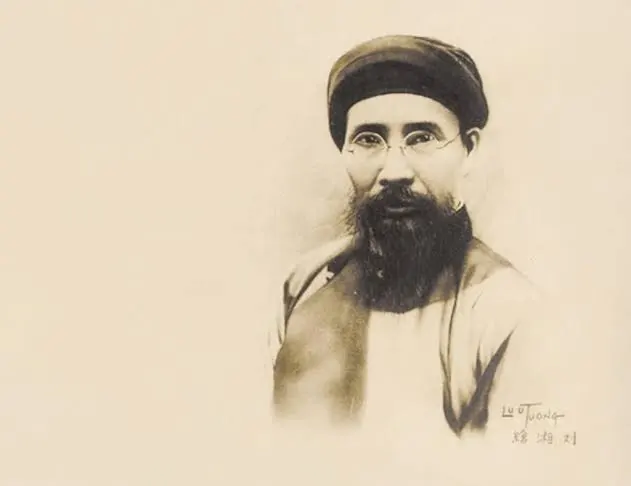
Phan Boi Chau was born on 26 December 1867 in Dan Nhiem village in Nam Dan District, Nghe An Province — the same province that would produce Ho Chi Minh a generation later, and a region with a long tradition of Vietnamese scholarly resistance to foreign rule. The geographical coincidence is not incidental: Nghe An's culture of education, its relative poverty compared to the wealthier lowland provinces, and its history of producing men who combined classical learning with fierce independence of spirit created the specific conditions in which both men were formed.
He was educated in the classical Confucian tradition — the system of learning built around the Chinese canonical texts that had provided the framework for Vietnamese intellectual and official life for centuries, and that the French colonial system was in the process of systematically dismantling. He was an outstanding student, passing the regional civil examinations with distinction and being recognised across the scholarly community of central Vietnam as a man of exceptional literary and intellectual gifts. He wrote poetry in classical Chinese forms that was widely circulated and admired, and his reputation as a scholar gave him a platform for political engagement that other forms of credentials could not have provided in the world of late-nineteenth-century Vietnamese intellectual life.
The world he was formed in was one undergoing cataclysmic transformation. France had completed its conquest of Vietnam in the 1880s, suppressing the last formal resistance of the Vietnamese imperial court and establishing the colonial regime that would govern the country for the next sixty years. The classical educational system that had given Phan Boi Chau his formation — the system of examinations, scholarships, and official positions organised around Chinese Confucian learning — was being systematically replaced by a French colonial system designed to produce Vietnamese administrators compliant with colonial governance rather than independent thinkers steeped in an autonomous intellectual tradition. The generation of scholars formed in the classical tradition faced a choice: collaborate with the colonial system that was replacing the world they knew, retreat into private life, or resist.
Phan Boi Chau chose resistance, and he chose it with a completeness and consistency that he never abandoned across the seven decades of his life. He reportedly failed the metropolitan civil examinations deliberately — answering the papers in ways designed to demonstrate his rejection of a system that had become merely a mechanism of colonial governance — and turned from the path of official service to the path of revolutionary organising.
The Duy Tan Hoi and the Japan Strategy
In 1904, Phan Boi Chau founded the Duy Tan Hoi — the Modernisation Society — in central Vietnam: one of the first organised anti-colonial political associations in Vietnamese history. The Duy Tan Hoi was explicitly monarchist in its political programme, aiming at the restoration of Vietnamese sovereignty under the Nguyen dynasty rather than at republican governance — a reflection of the political horizons of its time and of Phan Boi Chau's Confucian formation, which placed legitimate authority in the emperor rather than in popular sovereignty.
The strategy he developed to pursue Vietnamese independence was equally shaped by his historical moment: the Dong Du, or "Journey to the East" movement, which aimed at sending Vietnamese students to Japan for modern education. Japan's rapid modernisation in the Meiji era and its decisive military victory over Russia in 1905 — the first defeat of a European power by an Asian nation in modern history, an event that sent shockwaves through every Asian anti-colonial movement — made Japan the obvious model for what an Asian nation could achieve through the combination of Western technology and non-Western cultural identity. Phan Boi Chau made multiple journeys to Japan, meeting with Japanese pan-Asian political figures, establishing connections with the exiled Chinese revolutionary movement, and working to channel Vietnamese students into Japanese educational institutions.
The Dong Du movement sent hundreds of Vietnamese students to Japan between 1905 and 1909, when Japanese authorities, under French diplomatic pressure, expelled the Vietnamese students and forced the movement to collapse. Phan Boi Chau himself was expelled from Japan and relocated to China, where he continued his organising work in the networks of revolutionary exiles that had gathered around the Chinese republican movement.
The China Years and the Viet Nam Quang Phuc Hoi
The Chinese Revolution of 1911, which overthrew the Qing dynasty and established the Chinese Republic under Sun Yat-sen, transformed the political landscape for Asian anti-colonial movements. The success of a republican revolution in the largest country in Asia, drawing on a combination of nationalist politics, modern organisational methods, and mass mobilisation, offered a new model for what Vietnamese independence might look like and how it might be achieved.
Phan Boi Chau responded to the Chinese Revolution by transforming his political programme. In 1912 he founded the Viet Nam Quang Phuc Hoi — the Vietnam Restoration Society — in Guangzhou, abandoning the monarchism of the Duy Tan Hoi in favour of a republican programme modelled on the Chinese Nationalist movement. The new organisation was explicitly republican in its political goals and attempted to build a more systematic organisational structure for Vietnamese resistance, including plans for armed operations inside Vietnam.
The operations that the Viet Nam Quang Phuc Hoi attempted in Vietnam between 1912 and 1916 — bombings, assassinations of colonial officials, and attempts to provoke uprisings — were largely unsuccessful. French colonial security forces were effective at penetrating the organisation's networks inside Vietnam, and the Vietnamese exile community in China, while politically committed, lacked the organisational capacity and the resources to sustain coordinated armed operations across the border. A French colonial tribunal tried Phan Boi Chau in absentia in 1913, convicted him of treason, and sentenced him to death. He continued his activities from exile.
The years between 1913 and 1925 were a period of frustration and regroupment. His organisations repeatedly attempted and failed to establish sustained armed resistance inside Vietnam. The death sentences of key associates, the penetration of his networks by French intelligence, and the internal divisions of the exile community made consistent progress almost impossible. He maintained his political activity, writing prolifically — histories, political essays, poetry, revolutionary tracts — and maintaining his networks across East Asia, but the gap between his organisational aspirations and the actual capacity of the exile movement was becoming increasingly apparent.
Arrest, Return, and House Arrest in Hue
In June 1925, Phan Boi Chau was arrested by French Surete agents in Shanghai. The circumstances of his arrest have been debated by historians: he appears to have been betrayed, though by whom exactly and under what arrangement remains somewhat unclear. He was returned to Vietnam, tried before a French colonial criminal court in Hanoi, and convicted of anti-colonial activities. The death sentence that had been imposed in absentia in 1913 was not carried out: the French government, responding to widespread public protests both in Vietnam and in France, commuted the sentence to house arrest in Hue.
The decision to commute rather than execute was politically calculated. Phan Boi Chau at fifty-eight was still the most revered figure in Vietnamese anti-colonial politics, and his execution would have produced a martyr of incalculable symbolic power. House arrest in Hue kept him alive but contained, visible but controlled — a man who could not organise but whose continued existence prevented him from becoming the martyr that his execution would have made him.
He spent the last fifteen years of his life under house arrest in a modest residence in Hue, watched continuously by French colonial police, permitted to receive visitors but not to engage in political activity. Thousands of Vietnamese — students, scholars, ordinary people — came to Hue specifically to visit him, to pay their respects to the man they regarded as the father of Vietnamese nationalism. He received them, wrote poetry, worked on his memoirs, and watched from his house arrest as the next generation of Vietnamese anti-colonial activists — Ho Chi Minh, the Indochinese Communist Party, the VNQDQ of Nguyen Thai Hoc — took the movement he had founded in directions he had not fully anticipated and could not fully endorse.
He lived long enough to see the Nazi occupation of France in 1940, which he understood as the beginning of the end of French colonial power in Asia. He died on 29 October 1940, two months after the German occupation of France was complete and one year before Ho Chi Minh founded the Viet Minh. He did not live to see the August Revolution of 1945 or the independence he had spent his life pursuing. His bones, as the Vietnamese revolutionary tradition would say, had not yet risen.
His Relationship with Ho Chi Minh
The relationship between Phan Boi Chau and the generation that eventually achieved Vietnamese independence — particularly Ho Chi Minh — was one of respectful but real divergence. Ho Chi Minh had encountered Phan Boi Chau's work and reputation from childhood in Nghe An and was deeply influenced by the older man's example of commitment and sacrifice. In his early years in Paris and the international revolutionary underground, Ho corresponded with Phan Boi Chau and sought his counsel.
But Ho's analysis of the path to Vietnamese independence differed fundamentally from Phan Boi Chau's. Where Phan Boi Chau looked to Japan and then to the Chinese Nationalist model, Ho looked to the Soviet Union and to Marxist-Leninist revolutionary theory. Where Phan Boi Chau's organising was centred on the educated nationalist elite, Ho focused on peasant and working-class mass mobilisation. Where Phan Boi Chau's organisations remained relatively loosely structured, Ho built the tight, disciplined party structure of the Indochinese Communist Party. The older man's methods had produced decades of frustrated exile; the younger man's methods would produce the August Revolution.
Phan Boi Chau was not unaware of this divergence. In his later writings he acknowledged that the movement he had pioneered had been superseded by approaches he had not developed — that the communist movement, whatever his reservations about its ideology, had found the organisational methods and the mass base that his own generation had failed to reach. This acknowledgment, from a man of his intellectual pride and historical stature, was itself a kind of historical assessment of considerable honesty.
Legacy
Phan Boi Chau's place in Vietnamese history is that of the founding father of anti-colonial nationalism: the first Vietnamese political figure to articulate, organise, and sustain — across forty years of exile, imprisonment, and house arrest — the proposition that Vietnam should and could be independent. The organisations he built, the writings he produced, the international networks he established, and the example of his personal commitment gave the Vietnamese anti-colonial movement its initial form and its early momentum.
That the movement he founded was eventually carried to success by a generation and a methodology different from his own does not diminish what he did. Every revolutionary movement has its founding generation — the people who make the break with acceptance of the existing order and begin the work of imagining and building alternatives — and a later generation that inherits that break and finds the means to complete it. Phan Boi Chau was the founding generation of Vietnamese anti-colonial politics. Ho Chi Minh's generation was the completing one. The achievement belongs to both.
His literary legacy — the poetry, the historical writings, the political essays, the autobiography he wrote under house arrest — endures as one of the significant bodies of work in modern Vietnamese literature. He wrote in both classical Chinese and in Vietnamese, bridging the two literary traditions of his culture at a moment when that bridge was itself being destroyed by colonial modernisation. The quality of his writing is one of the reasons that the Vietnamese revolutionary movement, which valued literacy and education deeply, treated him with such sustained reverence even as it moved beyond his political positions.
Streets, schools, and institutions throughout Vietnam bear his name. His birthplace in Nghe An is a site of national commemoration. He is officially remembered as the first great figure of Vietnamese anti-colonial nationalism — the man who began the work that others completed, and who paid for that beginning with forty years of exile, fifteen years of house arrest, and a death before independence. That is the specific weight of his biography, and it deserves the respect it has received.